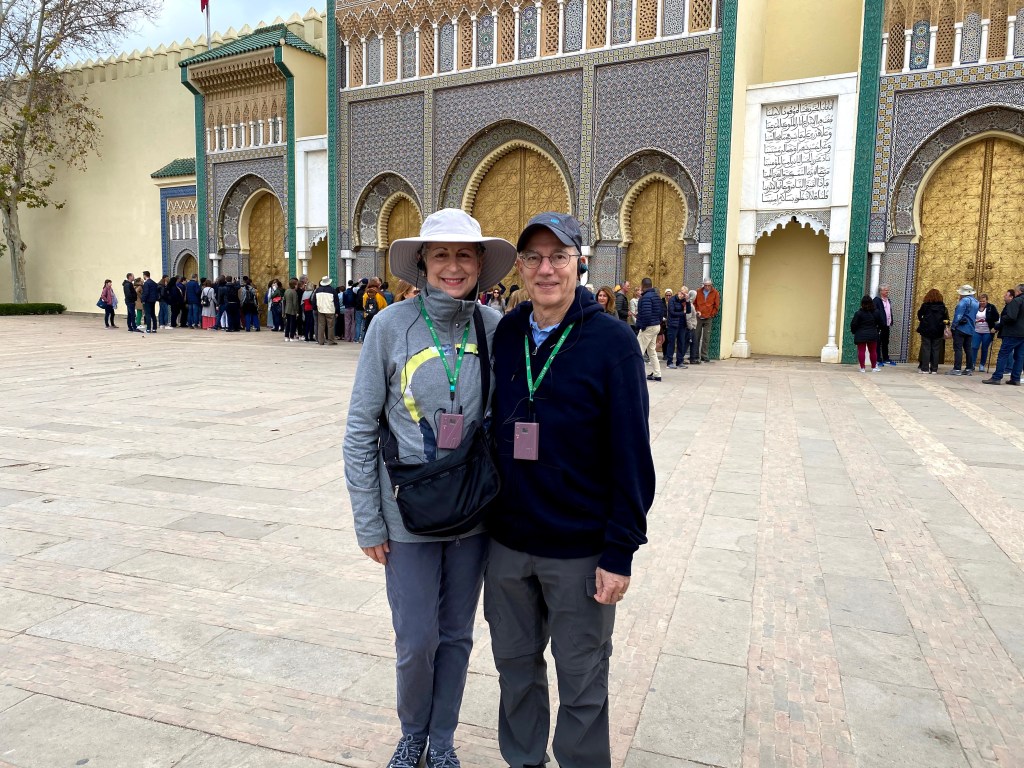
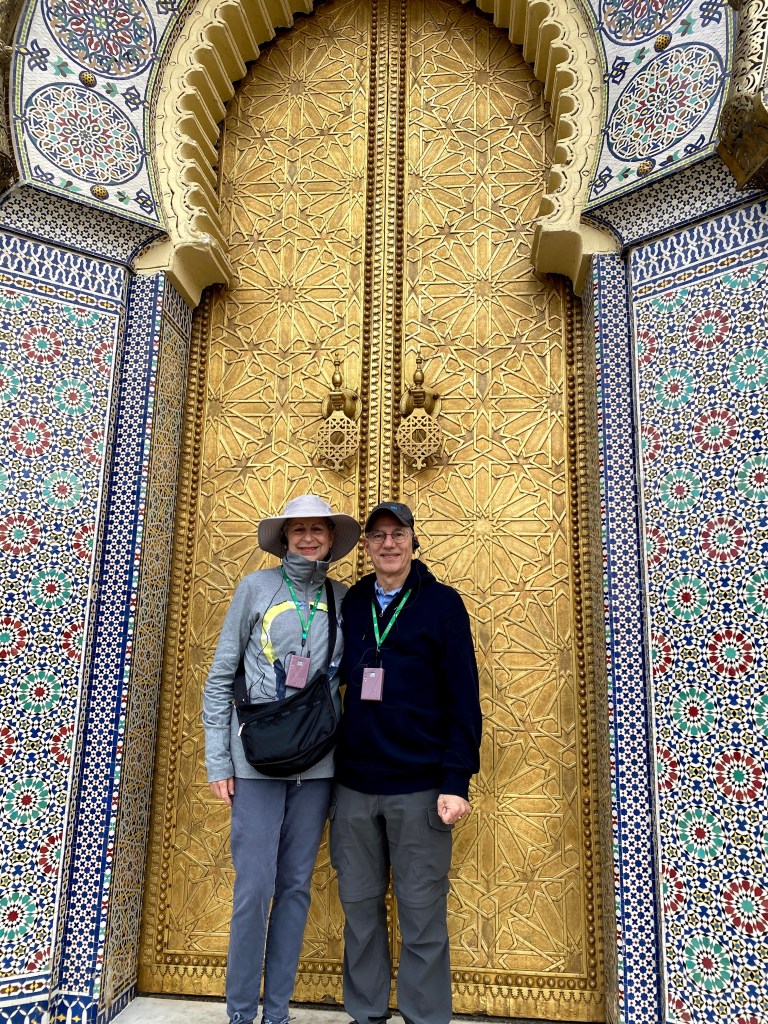
We boarded the bus at 9:00 this morning, which was later than normal, and drove to one of the king’s palaces, where we stopped for pictures.
We then had a choice of three different walking tours – culinary, artisan, or Jewish heritage. We chose the Jewish heritage walking tour, as did almost all of the other Jews on the tour. There were eleven people, including us, on the tour.
The old Jewish areas of Moroccan cities are called “mellahs”, which means salt. This is because the Jews were active in the salt trade. The mellahs are always right next to the king’s palace, supposedly because many Jews were important advisors to the kings.
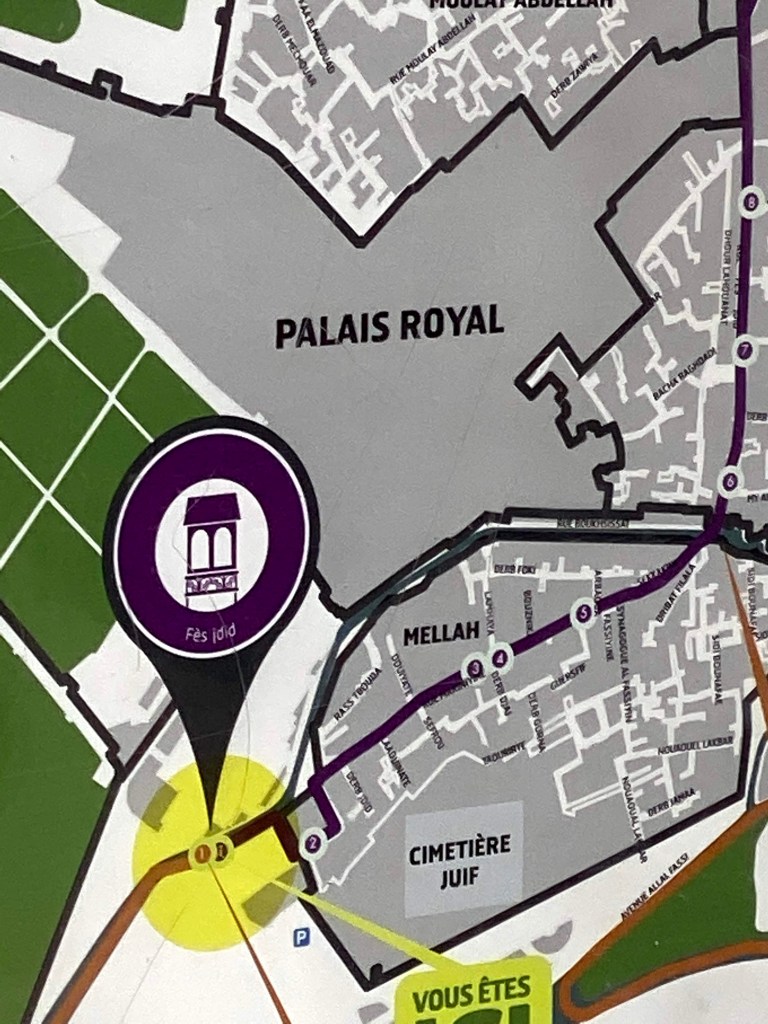
There are no Jews currently living in the Fez Mellah, which is now a very poor neighborhood (think of Jewish migration from Chicago’s south and west sides), but there are a lot of artifacts left over, such as indentations from mezuzahs.
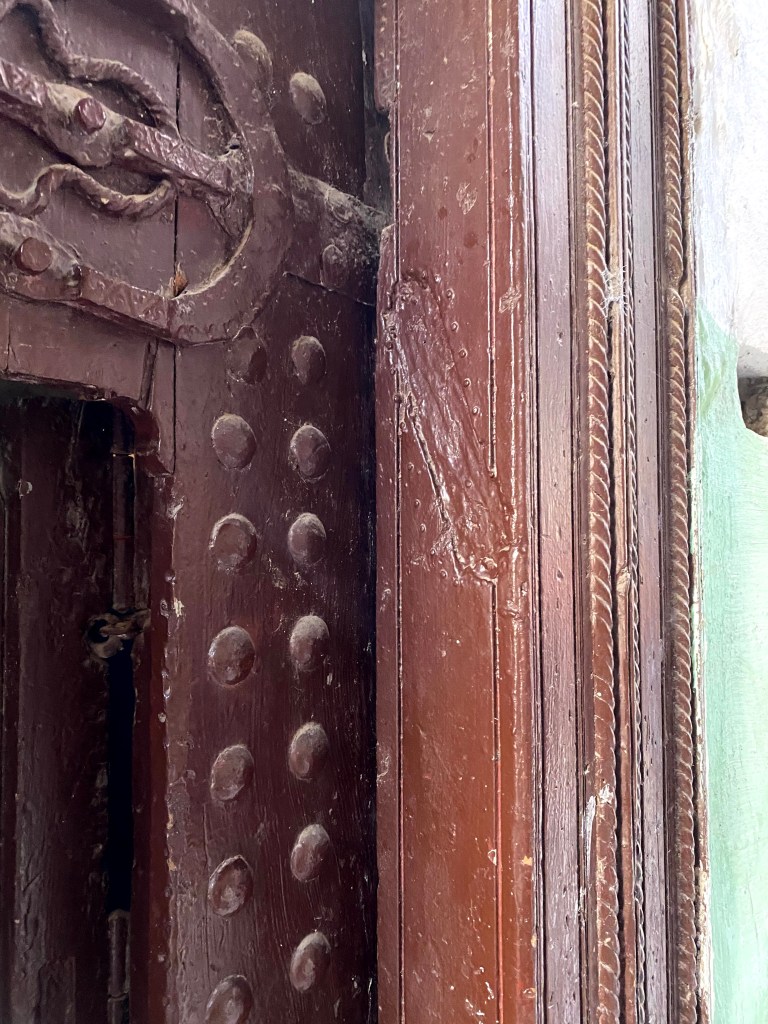
We started out in the Jewish cemetery.
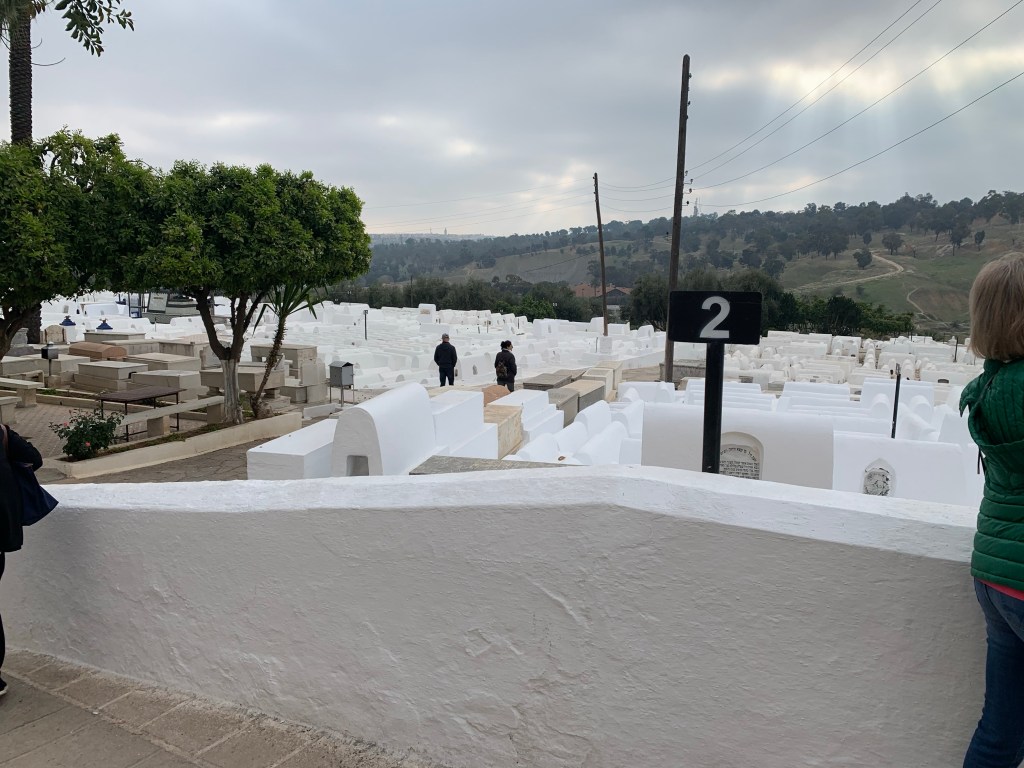
All of the white things are small headstones, which gave it a very different look. It is still an active Jewish cemetery.
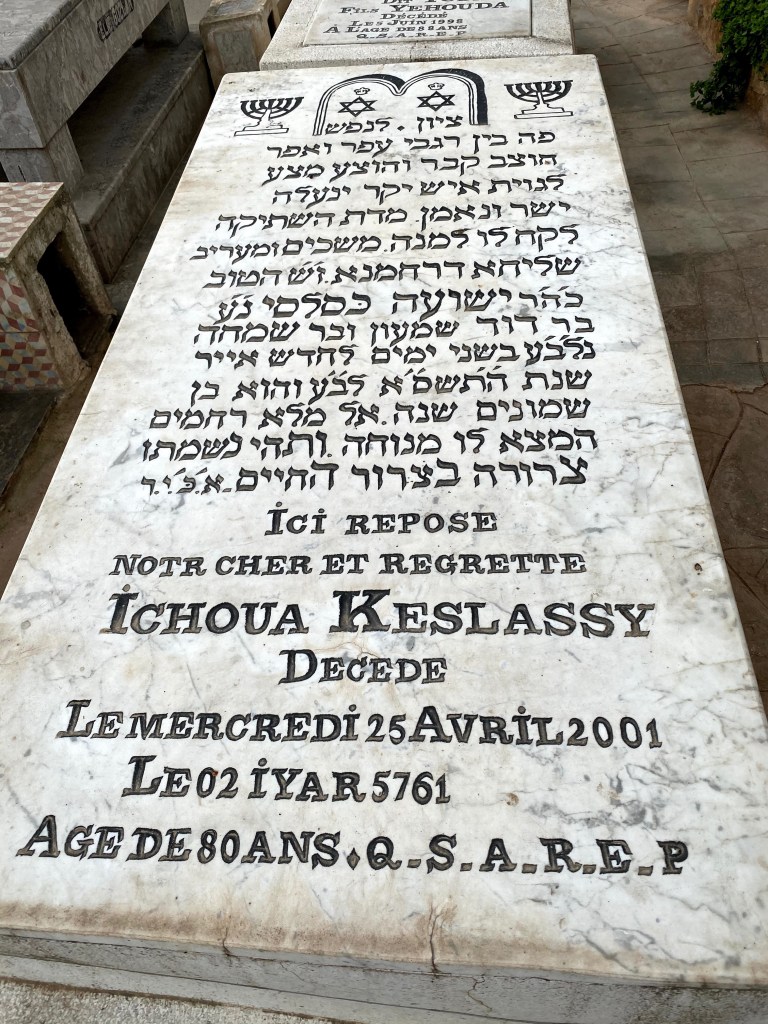
During our visit to the cemetery our guide discussed the history of Jews in Morocco. However, the guide was Muslim, and while he seemed knowledgeable he seemed to put a Muslim spin on things. We would have preferred a Jewish guide, but there are only 200 Jews left in Fez so there are none available. For example, he said that there has never been any discrimination against the Jews, and that Moroccan Jews love Morocco, but this doesn’t sound plausible. There used to be around 250,000 Jews in Morocco but most of them left after Israel was formed in 1948. There are now only around 3,000 Jews in the country. He didn’t adequately explain why so many Jews left if they loved their homeland and felt safe there. According to Wikipedia: Riots against Jews from the Arab population and fear that Morocco’s eventual independence from France would lead to the persecution of the country’s Jews, led to a large-scale emigration.
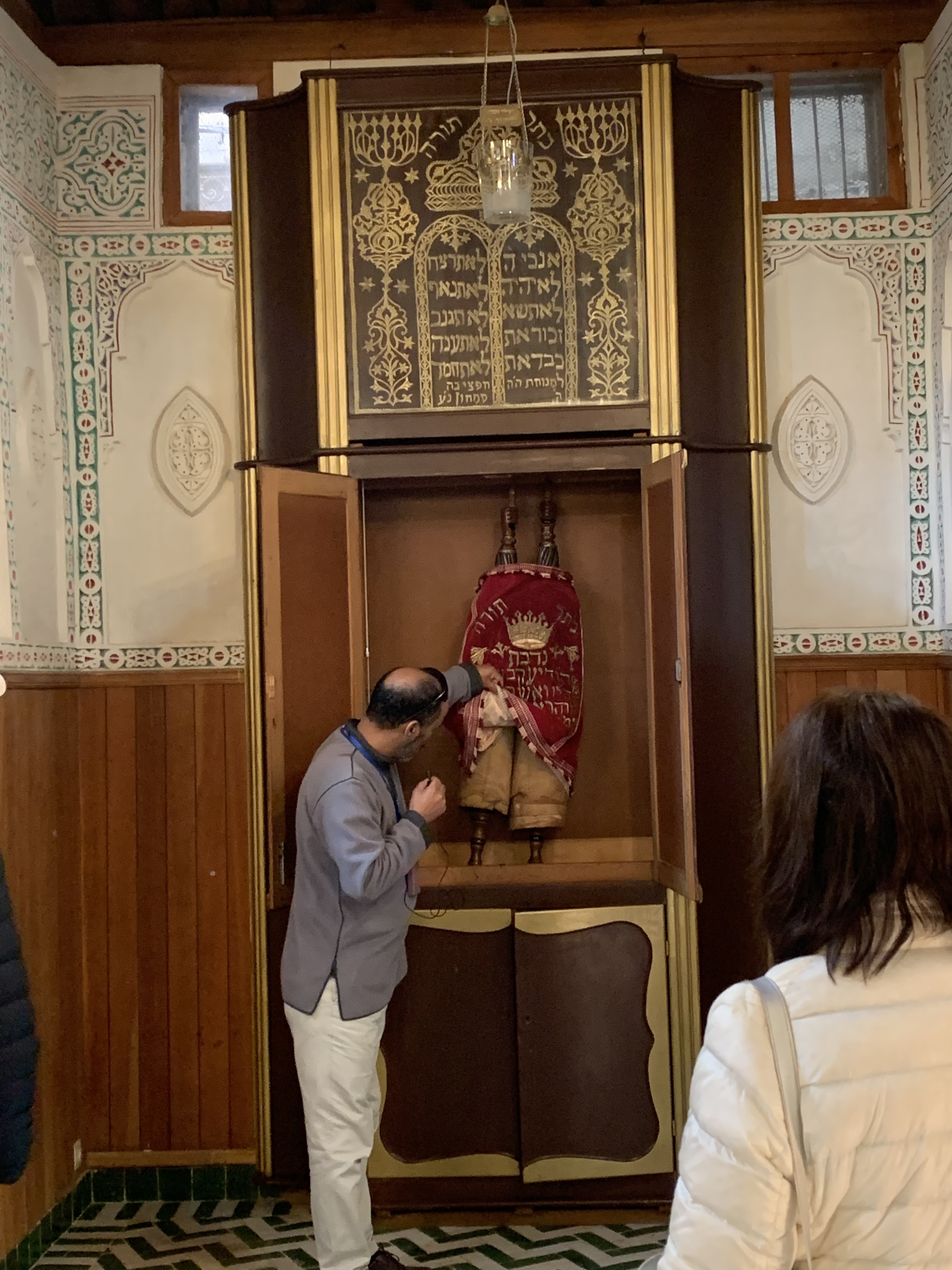
We visited two synagogues that have recently been restored after falling into disrepair. Some wealthy Moroccan Jews paid for much of the restoration.
We then walked back through the Medina to get to the bus, which drove us to a Jewish community center. They served us coffee, tea or soft drinks. They did not serve food, which made me wonder if it was really a Jewish organization. I thought that this part of the Jewish heritage tour was a waste of time especially since we had to take a bus to get there.
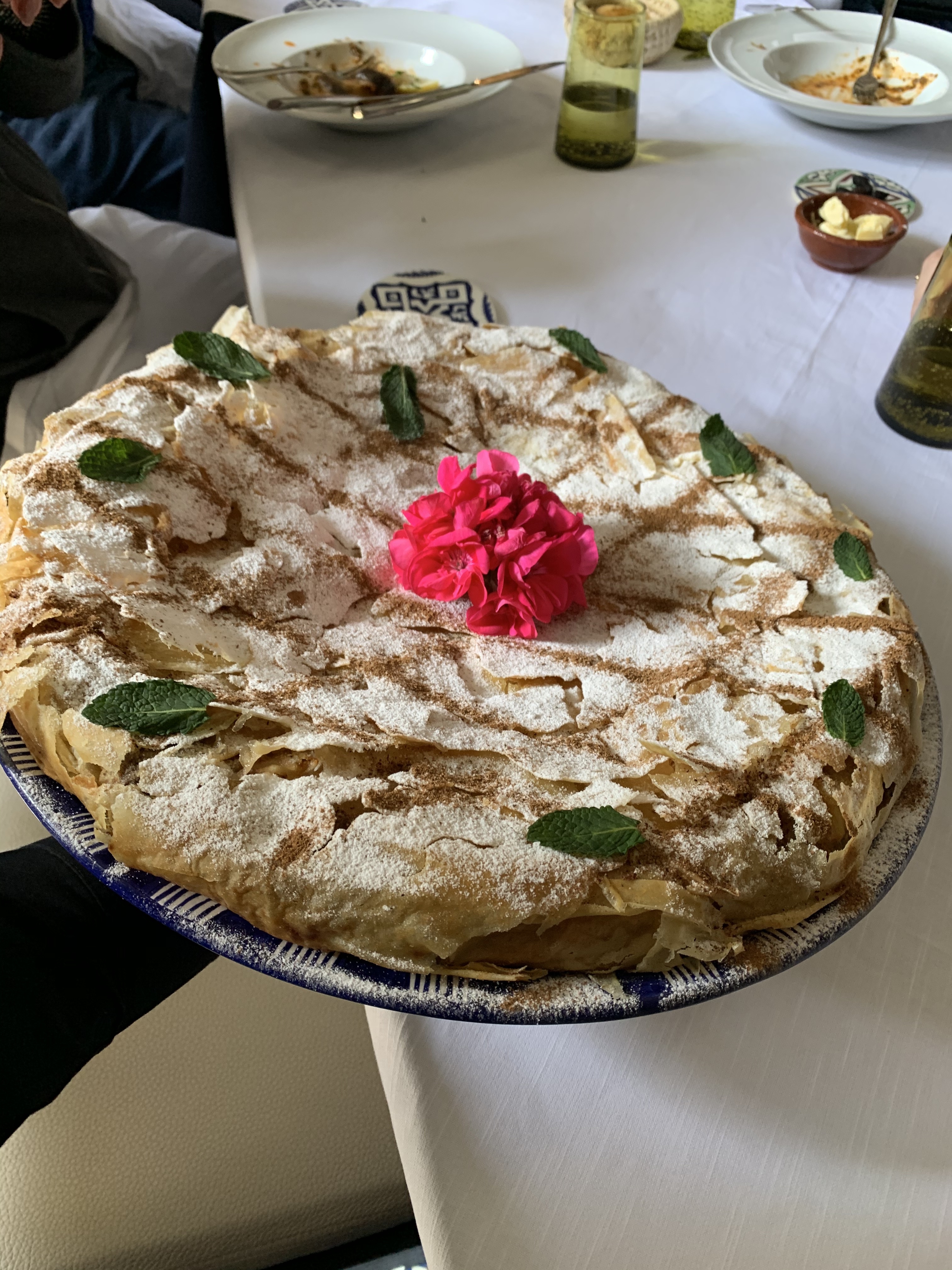
After visiting the Jewish community center for a while we took the bus back to the Medina and had lunch at a riad, which is a home built around a courtyard. There were popular because women were not allowed to be seen unless they were completely covered. We had savory pastilla, which is like a meat pie.
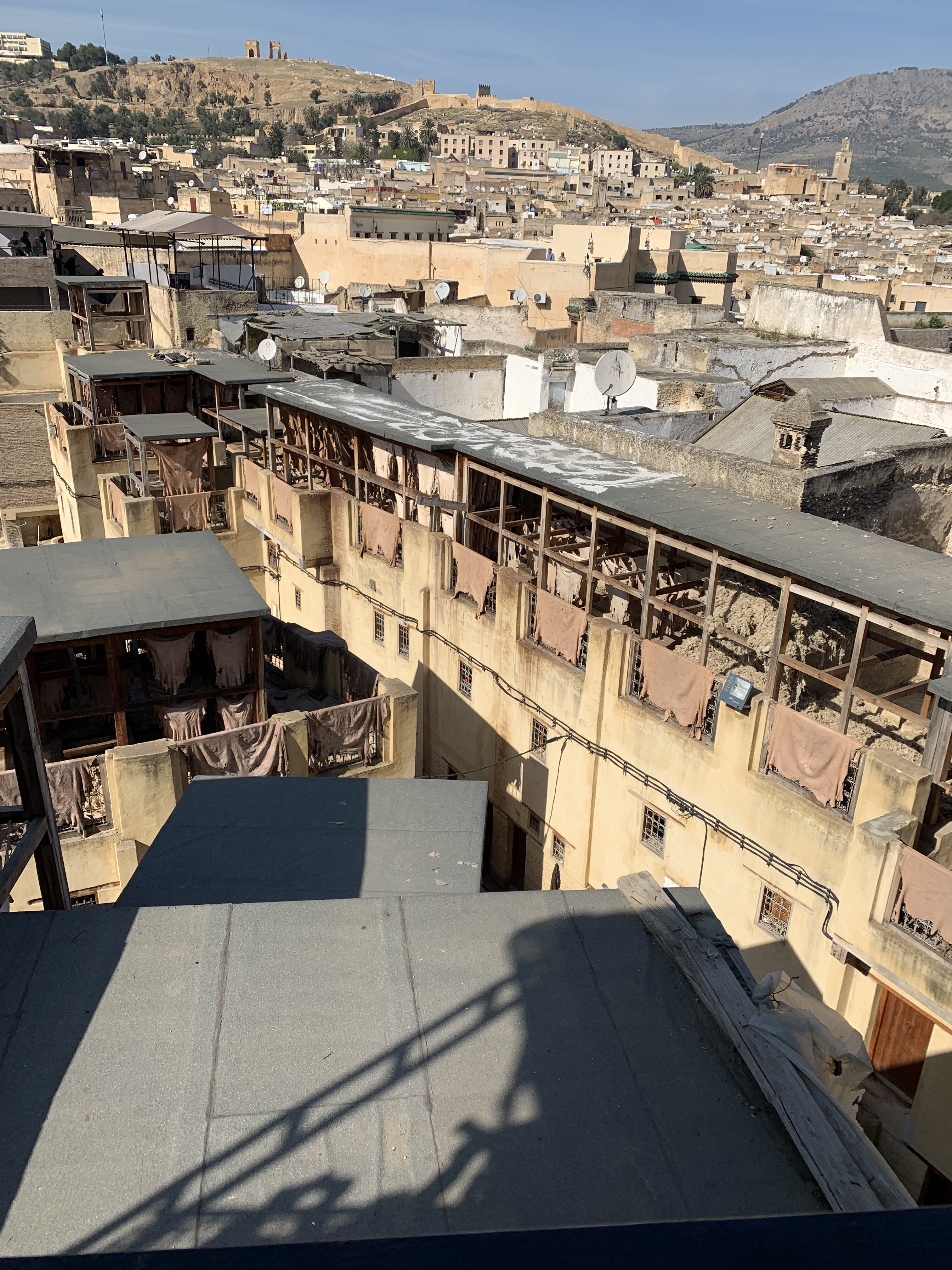
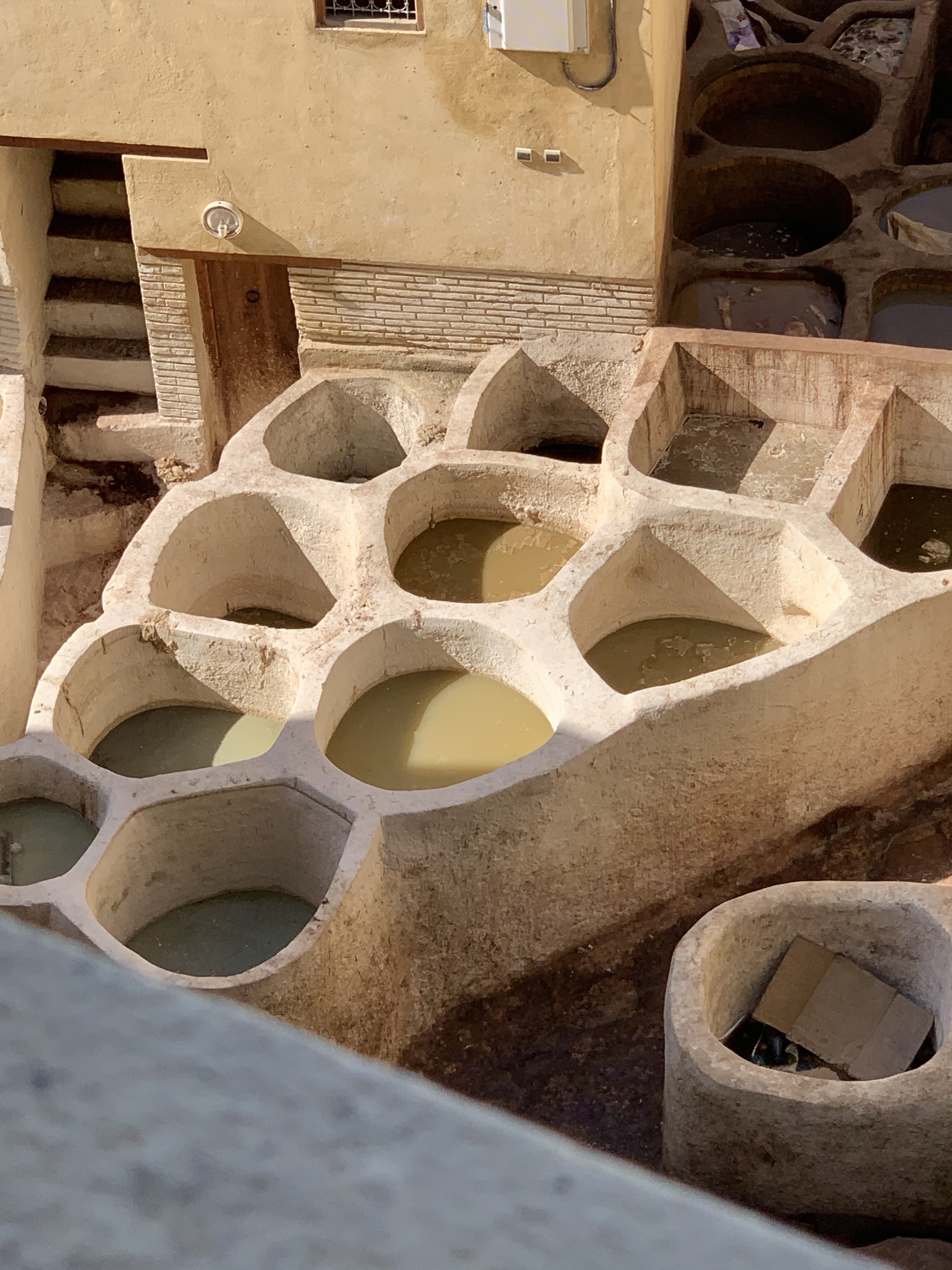
We then walked to a tannery. We went up to the roof and looked down to see how they make leather.
We then looked through their very large leather shop. Rebecca needed a red purse, which put Barbara on a mission. She didn’t want to buy anything without feedback from Rebecca, and messaging was not working so she could not see the picture Barbara was trying to send her.
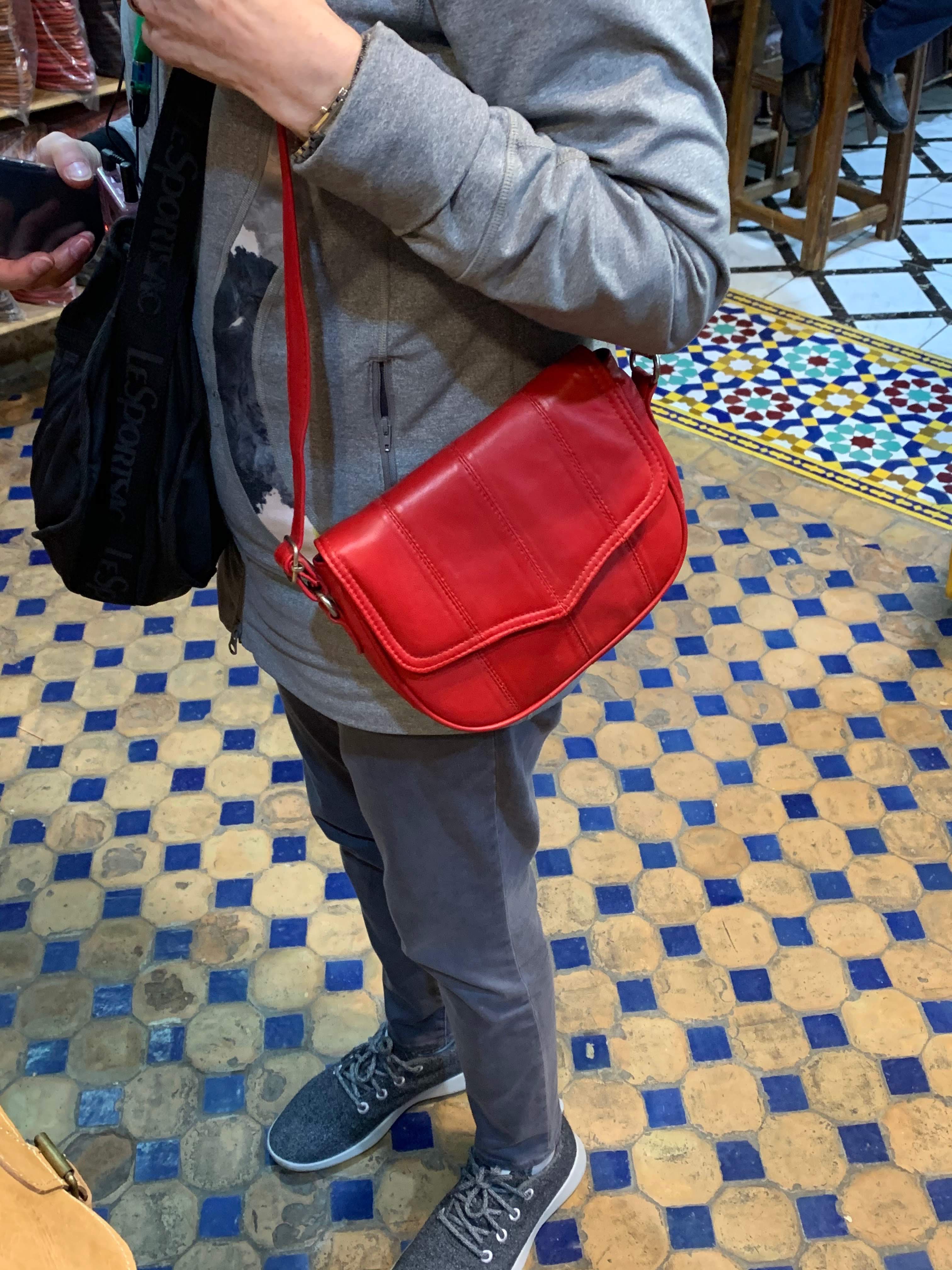
During the time we were trying to contact her, and it looked like we were not going to be successful, the sales guy was getting more panicky and kept dropping the price. Finally I got on wi-fi and just as we were leaving Rebecca texted “cute”. As we were literally walking out the door the guy said “Give me $60 American”, so we did. It was originally $110.
After a short rest back at the hotel we went to dinner. We ate at Palais Faraj, a nice restaurant that was part of a new hotel. We first went up to the roof for a great view.
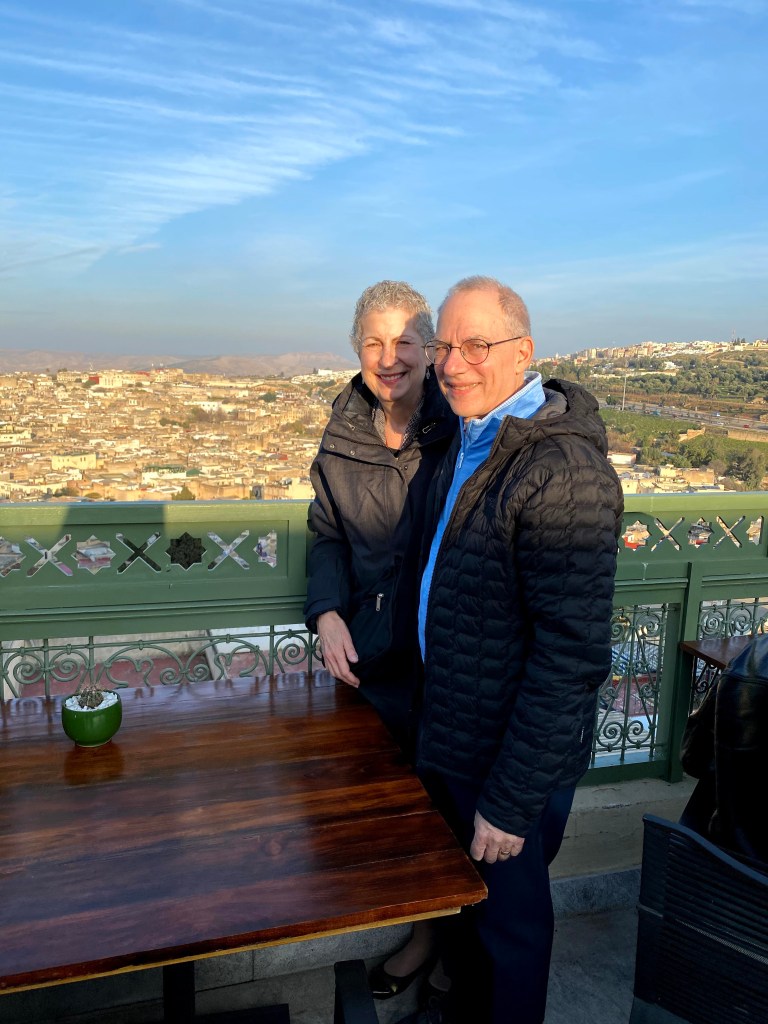
We then went to eat. The food was excellent. I had lamb and Barbara had fish. This was a good end to a nice day.
 Jim and Barbara's Travel Journal