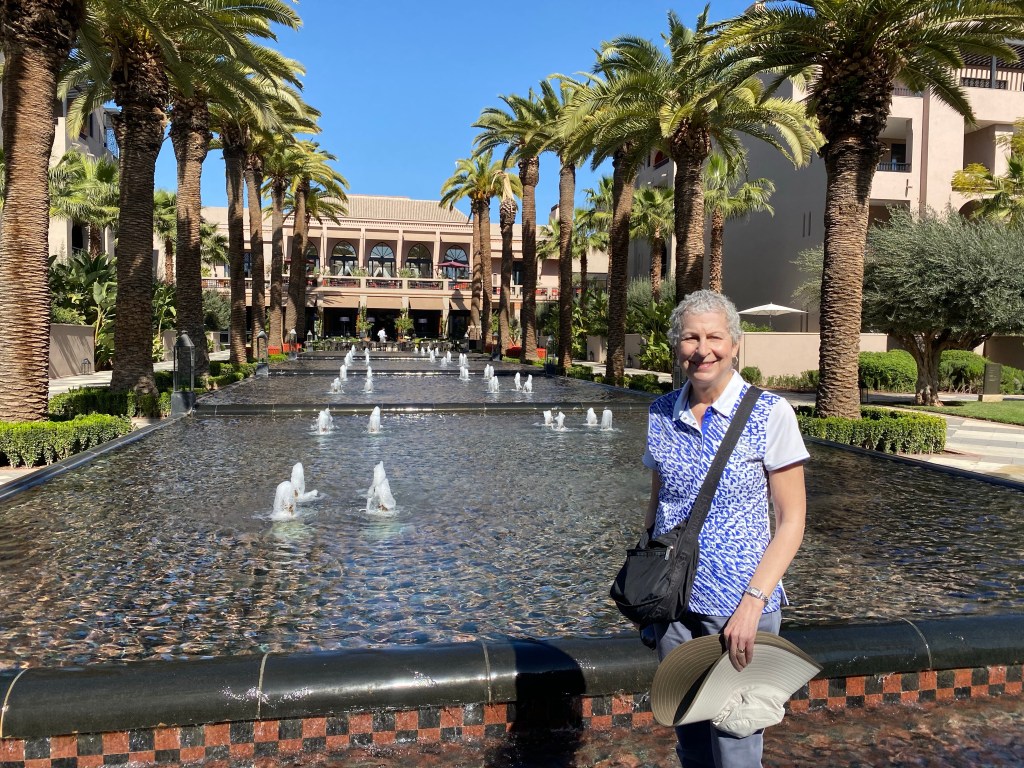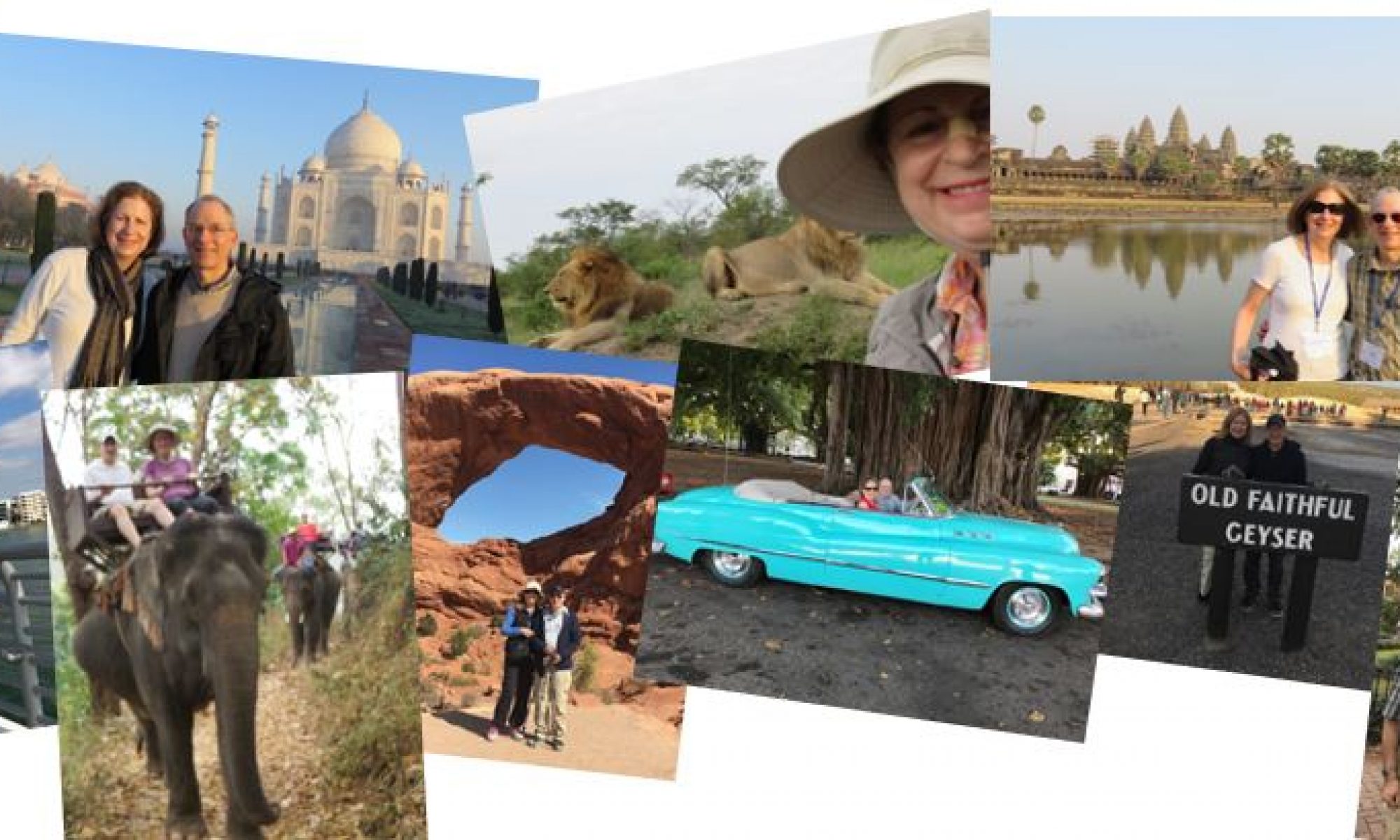
New Buffalo, Michigan July 10 to 17, 2020

Prelude

We are now in the middle of a horrible coronavirus pandemic.
That Picture Of the Coronavirus Isn't Quite Accurate | Elemental

Many restaurants, bars, stores, and other businesses have been shut down in an attempt to keep people safe. Everyone who can do so is working from home, and most people are feeling very isolated. During the infrequent times that we need to leave our house we keep at least six feet away from other people and wear face masks.

Back in May we decided that there was no way we would feel safe going on the two New Buffalo, Michigan full week trips we had planned for the summer – one in July and one in August. The house we had rented in August was cancellable, so we cancelled it. The house for July was not cancellable, and we unsuccessfully fought with the property manager to work out some kind of agreement so that we didn’t lose our whole deposit. When that didn’t work we filed a travel insurance claim. However, after a while things didn’t look quite as dire as at the beginning of the pandemic, and we all really needed to get away, so we decided to keep the house for July. We were nervous about it, but figured we could come home early if we found it too stressful being outside of our bubble.

A summer trip (or two) to New Buffalo, Michigan with all of our children and grandchildren has been a family tradition for many years. We usually also have my sister Marla’s family and some friends also join us, and we rent a large house that we can all fit into. New Buffalo, Michigan is a quaint small town just a two hour drive from our house. It has a lovely small downtown area and a large Lake Michigan beach. We always enjoy our stays there.

I have not written a journal about any of the previous trips there because the details of those trips are not very interesting, plus they are relaxing trips and I don’t want the pressure of finding time to write a daily journal. However, it is now a couple of weeks since we got home, and while relaxing on our screened-in porch and remembering our time there fondly I decided that it might be interesting to write about the trip due to the circumstances that our country is in now.

Early in the pandemic our family and Rebecca’s family formed a “pod”, in which both families severely limited visits with outside people and businesses so that we could see each other, including our grandchildren, with minimal risk. We therefore felt comfortable spending a week living together. Unfortunately, Joe lives in the city and was not able to isolate himself as much as the rest of us, so we didn’t feel safe being in very close quarters with him. Not having Joe participate in the trip was very disappointing.

Barbara and I are not going into any stores during the pandemic, even with masks and keeping our distance, so we have been doing our grocery shopping using curbside pickup. This is a new concept where you order your items and pay for them online, and the store brings it out to your car when you arrive. In order to minimize the need to buy food in New Buffalo we did a major grocery shopping at Jewel before we left. We were worried that it wouldn’t all fit in the car, but it did. Rebecca and Ryan will infrequently go into stores during the pandemic so they were able to buy some things once we got to New Buffalo.

The pandemic started in earnest in March, just a couple of weeks after we returned from our trip to Morocco. We had several other trips planned for this year and we cancelled all of them except the one described here. We cancelled trips to Florida, Washington DC, Minneapolis, one of our New Buffalo trips, and a trip to the northeast United States (and part of Canada) to see the fall colors. We also have a trip booked to Egypt in February, 2021 that we haven’t yet cancelled but it is very unlikely that we will go on it.

New Buffalo

We stopped at Joe’s condo on the way to New Buffalo, and had lunch while sitting six feet apart on his garage-roof deck so that we got to see him before the trip.

The drive to New Buffalo was uneventful. The house we rented there was in a relatively new neighborhood called “The Merchant Street Cottages”.
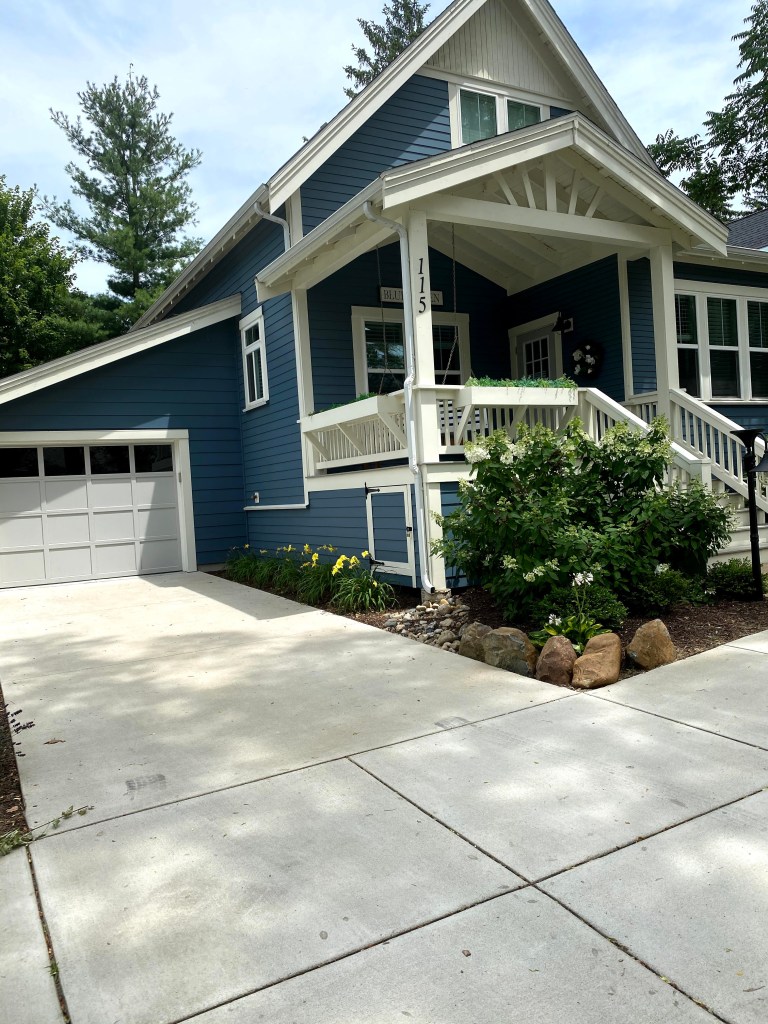
The location is great and the houses are very comfortable. We have stayed in various houses in that neighborhood over the years. There is a very nice community pool there, which is always a highlight of our stays.

The house we stayed at this year, 115 N. Taylor Street, is right next to the pool, which was a big advantage this year.

We were worried that we wouldn’t be able to use the pool because it would mean getting too close to other swimmers who could potentially be carrying the virus. The front porch of our house overlooked the pool (see the picture at the beginning of this journal) so we could tell when the pool was too crowded. It turned out that we were able to use the pool at least two hours each day.

There were usually other people in the pool but everyone was pretty good at picking a corner of the pool and staying away from each other. It was strange and a little stressful at times but it worked (and spoiler alert – nobody got the coronavirus while we were there). One downside of the isolation was that, unlike previous years, our grandchildren did not meet any other children at the pool.

A huge difference between this year and previous years was that we ate every meal in the house. We ordered in some meals and also did a lot of cooking, including barbecuing. The house had a very nice screened-in porch where we ate every meal. It was actually very pleasant doing so, especially since going to restaurants can get tense with three young children.

There were a couple of restaurants that we would walk over to. Our favorite breakfast place there is Dave’s Deli, which is on the main drag (Whitaker Street) and a five minute walk from our house. The inside seating area was closed due to the virus but they had a walk-up window where you could order and pick up your food. This worked out well. We would walk over there, pick up the food, and bring it back to the house to eat.

Another one of our favorite New Buffalo restaurants is Oinks, an ice cream store. As in previous years we went there almost every day. The inside area was open but we didn’t go inside because they also had a walk-up window (similar to Dave’s Deli). They have some picnic tables in the parking lot that we were usually able to sit at while keeping our distance from others. We usually went to Oinks around 4:00, which is a quiet time for them.

Since we weren’t sure if we would be able to keep the kids occupied all day, before we left Barbara bought each child a small gift of an activity or craft for each day. We wrapped them and each day they would pick a gift and open it. It worked out great. The kids were excited each day about getting a present and the gifts kept them occupied for part of each day.

Annie turned seven while were in New Buffalo. Her parents decorated the house with balloons and she got some gifts. We tried to make the day seem special for her even though we were so limited in what we could do. I think she enjoyed her birthday.

We were actually able to do a couple of fun activities while in New Buffalo. We spent a very nice day at the New Buffalo beach. It was not very crowded (unlike during the weekend, when it was ridiculously crowded) and we were able to stake out a spot on the beach close to the water that was far enough from everyone else. We spent a lot of time playing in the water and the sand. In the water we occasionally got within six feet of other people, but survived.

We went blueberry picking one morning at Stateline Blueberries, which was fun. When we got back to the house Barbara made a blueberry pie.

The weather was great and we took a long walk every day. Occasionally, such as when walking over the crowded bridge to the beach, we needed to put on masks to protect ourselves.

Summary

We were hesitant about spending a week away from home during a pandemic. There were definite limitations to what we could do, and the fear of exposing ourselves to the virus was constantly in the back of our minds and was crucial in almost every decision we made that involved leaving the house. However, we made it work and the trip ended up being great. It was wonderful spending time with our family, especially the grandchildren, although we missed Joe.

Here is a link to more photographs from the trip.
Back home

We have been back home from Morocco now for a little over a week. The flight home was long but uneventful. We are now back to our normal routine.

I copied the Morocco blog into Word and then printed it as a PDF. It is much easier to follow the PDF version (which I call a journal) since it is in chronological order. Also, I edited it to make it more readable and added some pictures and text. There should be no need to read the actual blog posts below. You can get to the journal here. You can also get to it, and all of the journals from our other trips, by going to the “Previous Trips” page.

General observations

We are currently on our way home and have had a lot of time to reflect on our wonderful vacation and to write about it. And we still had time to watch a few movies. Also, I wrote down thoughts as I had them during the trip so I ended up accumulating a lot of them. On the airplane I expanded the few words I had written down into more cohesive thoughts.

Barbara’s observations are listed first, followed by mine in bullet format.

Barbara’s observations

This has been a wonderful trip, one of my favorites. The country is exotic, interesting, and exciting while still being safe. It is the first majority Muslim country we have visited. It is so interesting to hear how they work to keep the extreme elements of Islam out. Birkahs can no longer be sold in Morocco and Imams cannot preach terrorism.

The evidence of a formerly thriving Jewish presence is in every Médina. This large prominent area is the Mellah – the old Jewish quarter. There are refurbished old Jewish synagogues in the Medinas but most are never used and are watched over and taken care of by Muslims. There were restrictions on Jews as to how they could earn a living and they were taxed, unlike the Muslim population. There were Jews who were trusted advisors to the kings. Depending on the ruler, life could be easier or harder for the Jews. Most Jews left when the state of Israel was formed. There was a fear at the time that there could be violence against Jews. During World War II, the king refused to provide the names of Jews to the Germans and also refused to make them wear the Star of David on their clothes. The star of David was on the Moroccan flag until the French had it changed to a 5 point star in the early 1900s.

The weather on this trip has been wonderful. Sweatshirt weather which I love, occasionally warm enough for just a short sleeved shirt. We have had beautiful blue skies and no rain. Our tour group is definitely on the younger side. Most are in their 50s and 60s with a few in their early 70s. This was a very active trip – up early and ending late. We did lots of fast walking on uneven cobblestones in very crowded areas, and climbing lots of high uneven stairs with no railings. Definitely a trip to do while you are in good physical condition.

Each city we visited had a different vibe while also having similarities. The mosques and palaces are beautiful with intricate details but overall appearing simple and symmetrical. Muslims like Jews cannot draw images of people or animals and the designs they use in decoration are just beautiful.

The food is both Moroccan such as tajines and pastilla, and French since the French ruled over Morocco for so many years. Everything is fresh and local. Americans cannot drink the water and have to be very careful about what water uncooked fruit and vegetables are washed with.

We have felt very safe on this trip even when venturing out alone at night in the Medinas. The people have been friendly and honest. The hotels have been great, especially our 5 nights at the Four Seasons. The tour bus is owned by Tauck with plenty of leg room and always clean. Tauck does a first class job. We never had to wait in a line. They have people do that so we get right in when we get to a destination. Lots of surprises and extras. Our tour guide Todd & local guide Adnan were fabulous. Everything was smooth, on time, and first class.

Jim and I both love to travel and are lucky in that way. Jim is more adventurous but we always compromise in a good way. We are already booked on a tour of Egypt for next February. Our fellow travelers have traveled extensively & we have some new ideas for future trips. It’s fun for us to hear about everyone’s travels, adventures, and lives.

Jim’s observations

• Morocco is a surprisingly green country. We saw a lot of green areas and a lot of agriculture. There were crops growing even in the desert.

• There is a large police presence in the cities, supposedly there to make the people feel safe and not because there is a big crime problem. In Rabat they always walked around in groups of three – two soldiers with machine guns and one policeman.

• Even without the police presence we would feel safe in Morocco. There is very little crime and the people seem very nice. We saw none of the desperation or hatred we have seen in people’s eyes in other countries (including our own). The people seem very calm and happy.

• The current king, Mohammed VI, has tried to improve the country, and the people seem to love him and have high regard for the government in general. That’s not a concept easily understood by Americans.

• The two main languages spoken in Morocco are an Arabic dialect and French. Many people also speak English, or at least the ones who interact with tourists do.

• There are women attendants in almost every public washroom, even those in fairly remote areas such as highway rest stops. You need to (or should) give them a 1 dirham coin, which is ten cents, when you use the washroom. Tauck gave everyone a bag of coins at the beginning of the trip.
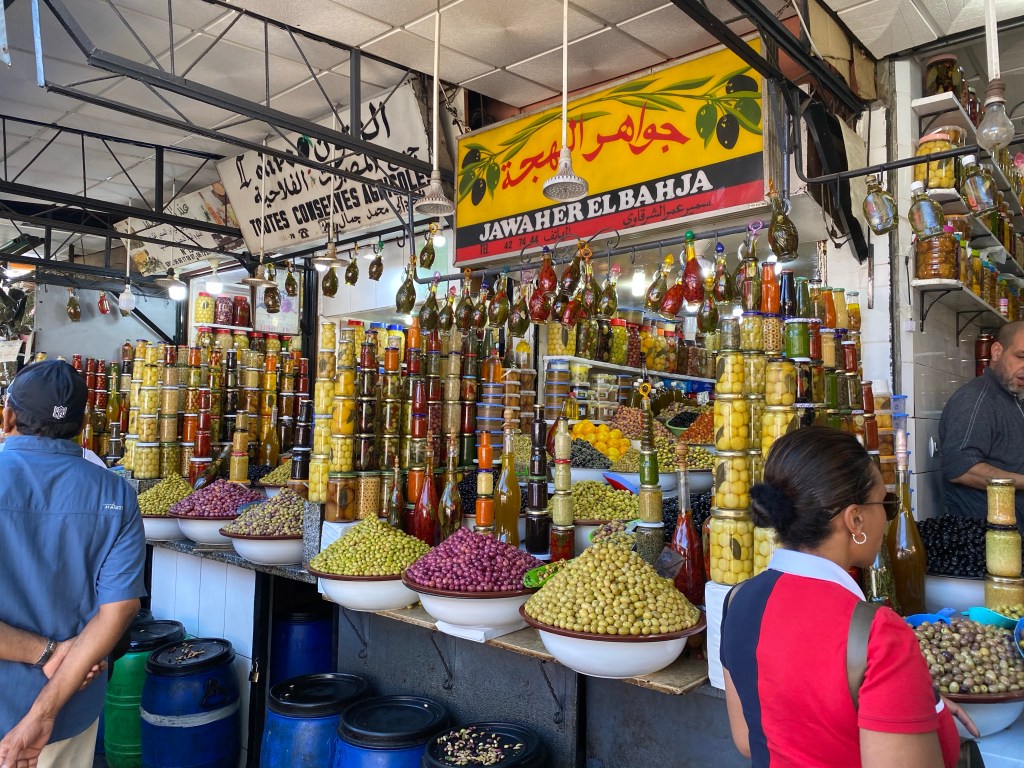
• The production and sale of olives, including olive oil, is an important industry in Morocco.

• There are orange trees everywhere. Many of the trees lining the streets are chock full of beautiful oranges. Most of those oranges had wrinkled skin.

• We had beautiful weather during the entire trip.

• We had Internet access via WiFi on the bus, which was something new for us. While this seems unusual for a relatively poor country, the service probably came from low earth orbit satellites so is available anywhere in the world. The wifi was usually slower than the cellular network, but it was a nice touch.

• There are way more roundabouts than stop lights. In fact stop lights are rare even for busy intersections, and there are roundabouts even in the intersections that use stop lights. There appears to be some unwritten rule about who goes first, but I couldn’t figure it out. Sometimes the bus stopped for a long time when it appeared it could go, and other times the driver just seemed to close his eyes and enter the intersection (actually our driver was very skillful so I know that wasn’t the case).

• Many women wear head scarves. It appears that the young women don’t and the older women do. Burkas are actually illegal, or at least highly discouraged, in Morocco.

• There were many cafes where the only customers were men. I don’t know if women were forbidden or if they just didn’t want to be there.

• On the roads between cities, and on the edges of cities, there are many herds of sheep along the side of the road. Sometimes a shepherd is with them and sometimes not.

• There are a lot of McDonalds in Morocco.

• There are many strategically placed minarets, which are towers used for the call to prayer, in the cities. They all have been upgraded with loudspeakers so the calls to prayer are impossible to miss.

• Polygamy used to be very common but is now highly discouraged, partly by tax laws and partly by requiring the first wife to approve taking on a second wife.

• Morocco is a very old country, and the concept of “modern” is very different than that in the United States. For example, I consider the beautiful palace built in the 1890s to be modern.

• There was an earthquake centered around Lisbon in 1755 (creatively referred to in Morocco as “the Lisbon earthquake of 1755” ) that caused a lot of damage to Morocco. This earthquake played a part in the history of many of the sites that we saw.

• Most major streets seem to be called Mohammed something or other. They are named after Moroccan kings, not the prophet.

• There are many small steps in Moroccan buildings that seem to have no purpose other than to trip you up. Staircases tend to have many uneven steps that seem to be designed for the same purpose.

• There were no Chinese tourists there. This is unusual and is due to the coronavirus. However it was “ski week” in France, which is when kids get off from school and families (at least wealthy families) tend to go on vacation, so there were a lot of French people there.

• We spent a lot of time in Medinas, which are the very old walled section of the cities. The Medinas all have their own personalities but are similar in many respects.

• There were thirty people on our tour. They were all very nice and we got to know all of them, some more than others.

• It is a real pain needing to brush your teeth with bottled water. We also feel guilty throwing away a few plastic water bottles each day, but there is no recycling in Morocco.

• We always overpack even though we know that we always overpack. We somehow need to learn to pack lighter and leave room and weight for new purchases.

Essaouira, Morocco. February 24,2020

Today is the last day of the trip. Boo hoo. It has been a wonderful trip.
Today we had a choice of three events – a steam bath at the hotel spa, cooking school, or a trip to the photogenic seaside resort of Essaouira with a professional photographer. We chose Essaouira even though it was a three hour drive in each direction, and were very happy with our choice.

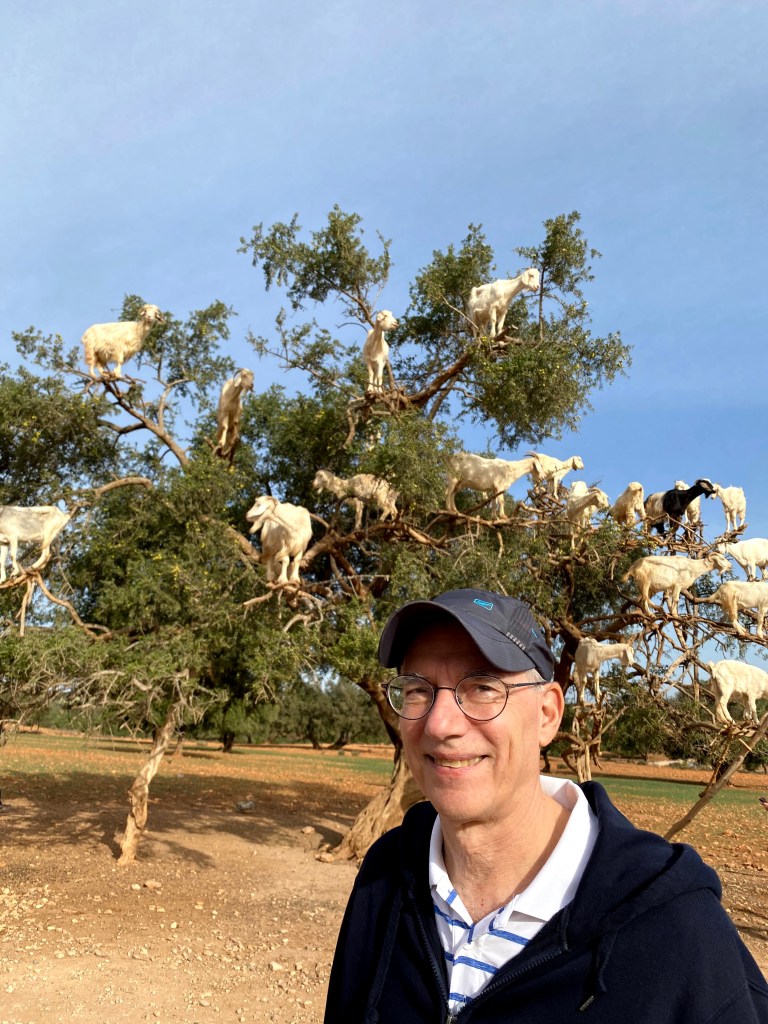
On the way to Essaouira we passed by goats on an argon tree, which for me was one of the highlights of the day. This is a very bizarre phenomenon in which goat herders coax their goats to walk up into a tree and stay there all day so that tourists will pay money to take their pictures. Goats do climb trees to get to the nuts on their own in the wild but they do not arrange themselves so artistically. This is a case where a picture is worth a thousand words. Those are real goats.

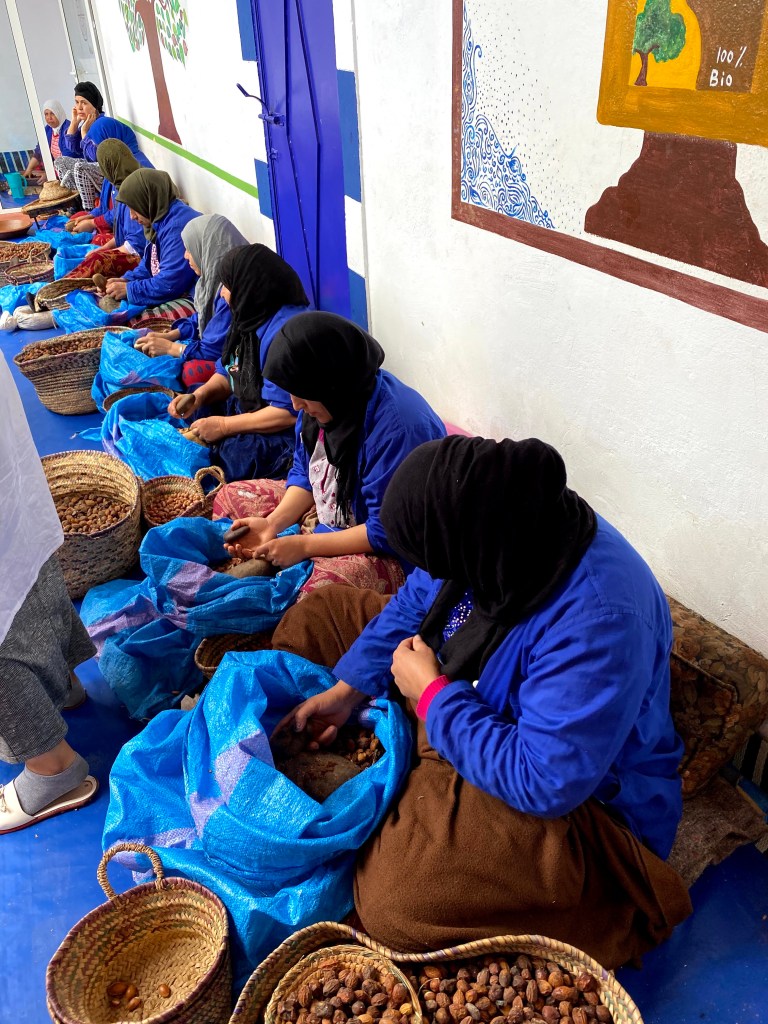
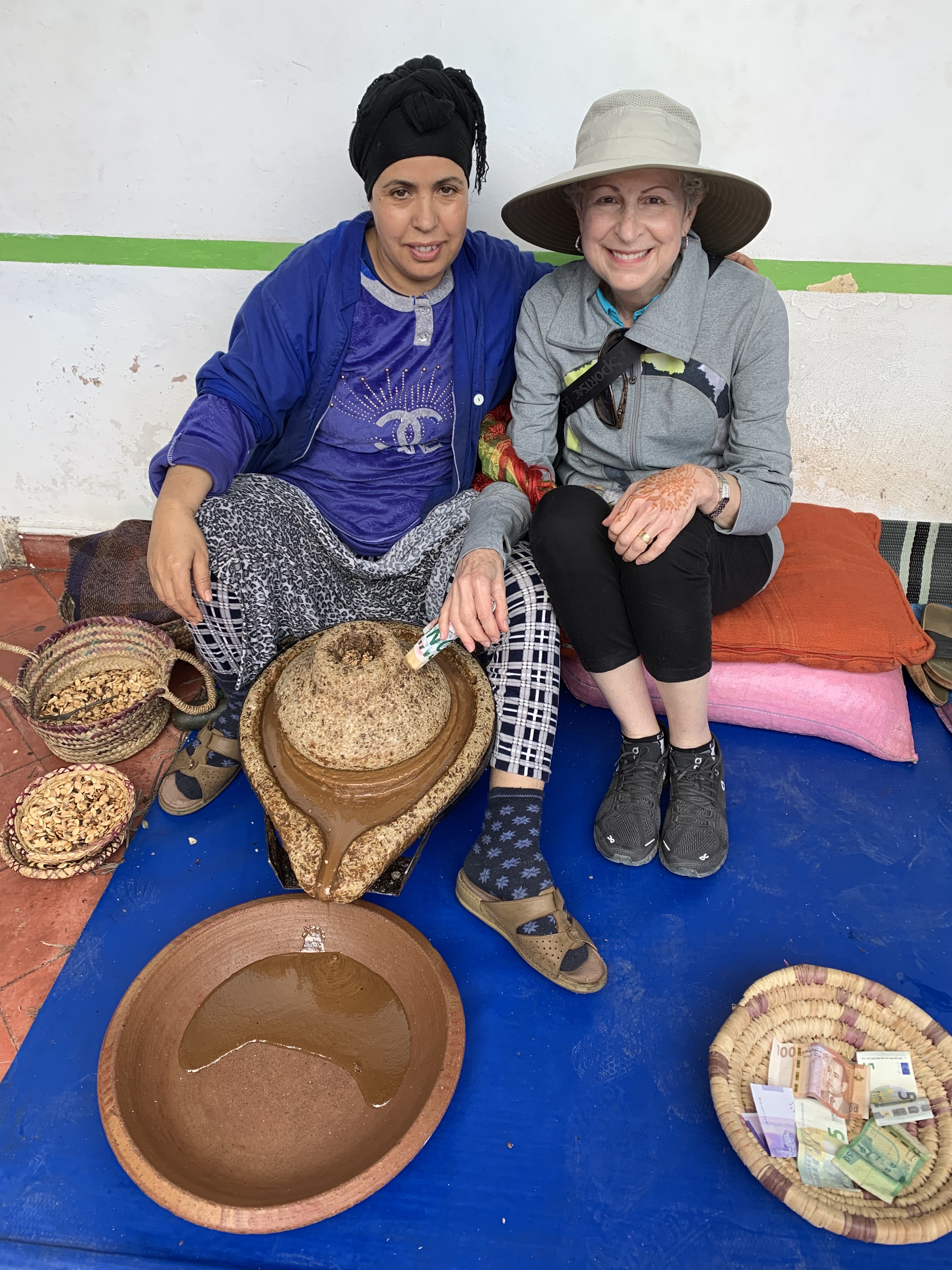
We then stopped at a women’s coop that makes and sells food and cosmetics made from the argon fruit. The women demonstrated how they start by shelling the nut (this is the part the goats eat), then take off the inner shell and use the nut to produce either argon oil or roast the nut to make argon butter (similar to peanut butter). The entire process is done manually. Argon-based products are very popular in Morocco. Argon oil is used on the skin to keep it moist and young looking. They also make an edible oil that you can use similar to olive oil. We tasted all the edible products and tried some of the cosmetic oil on our skin. We purchased some products to bring home with us.

Making argon butter

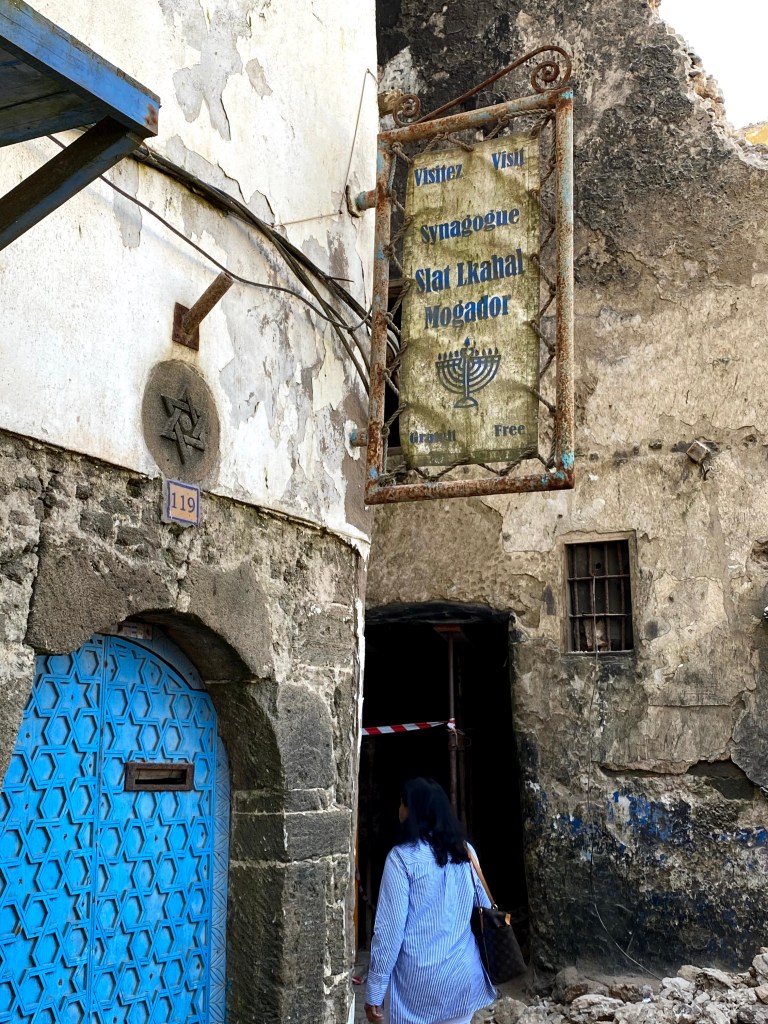
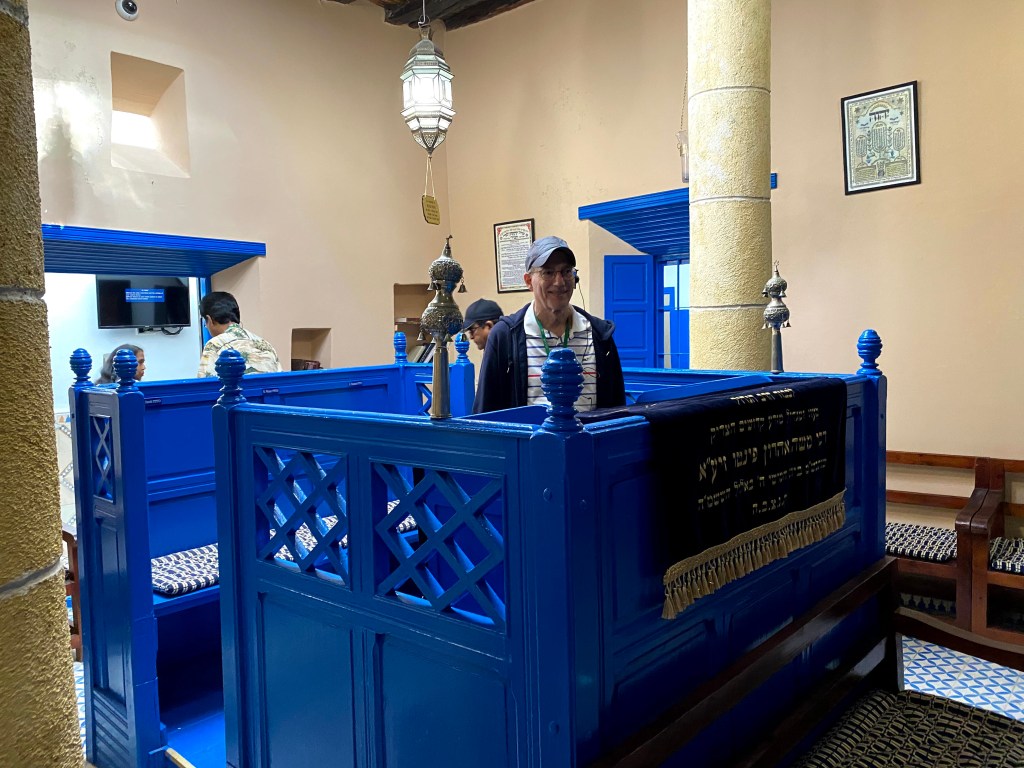
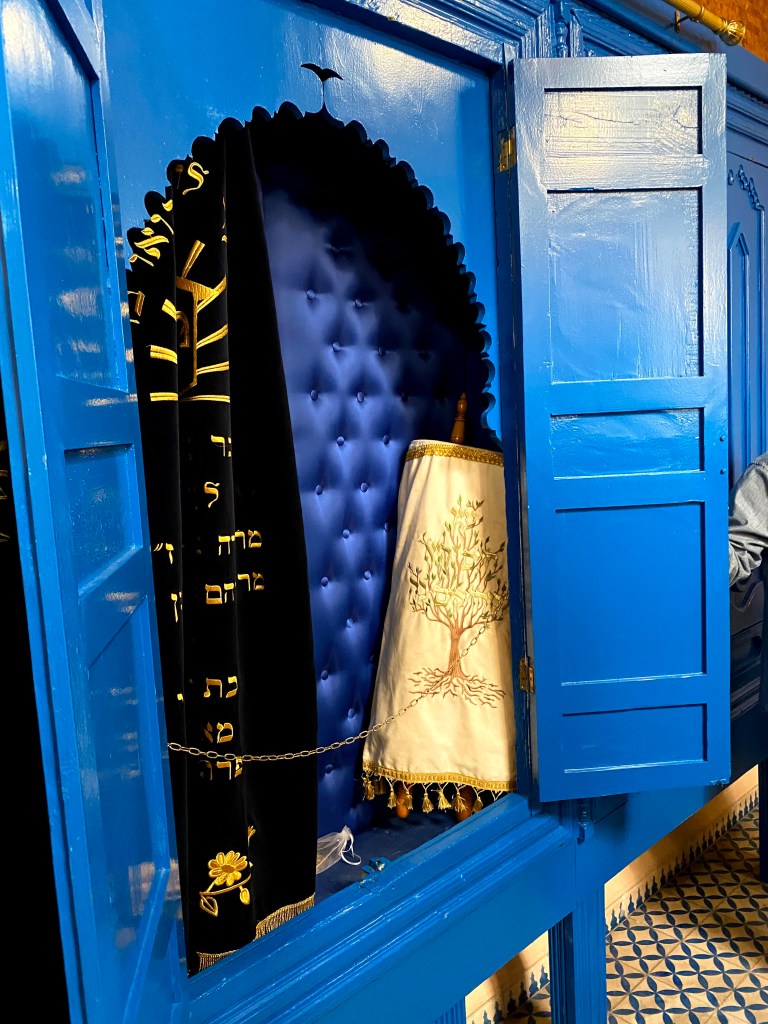
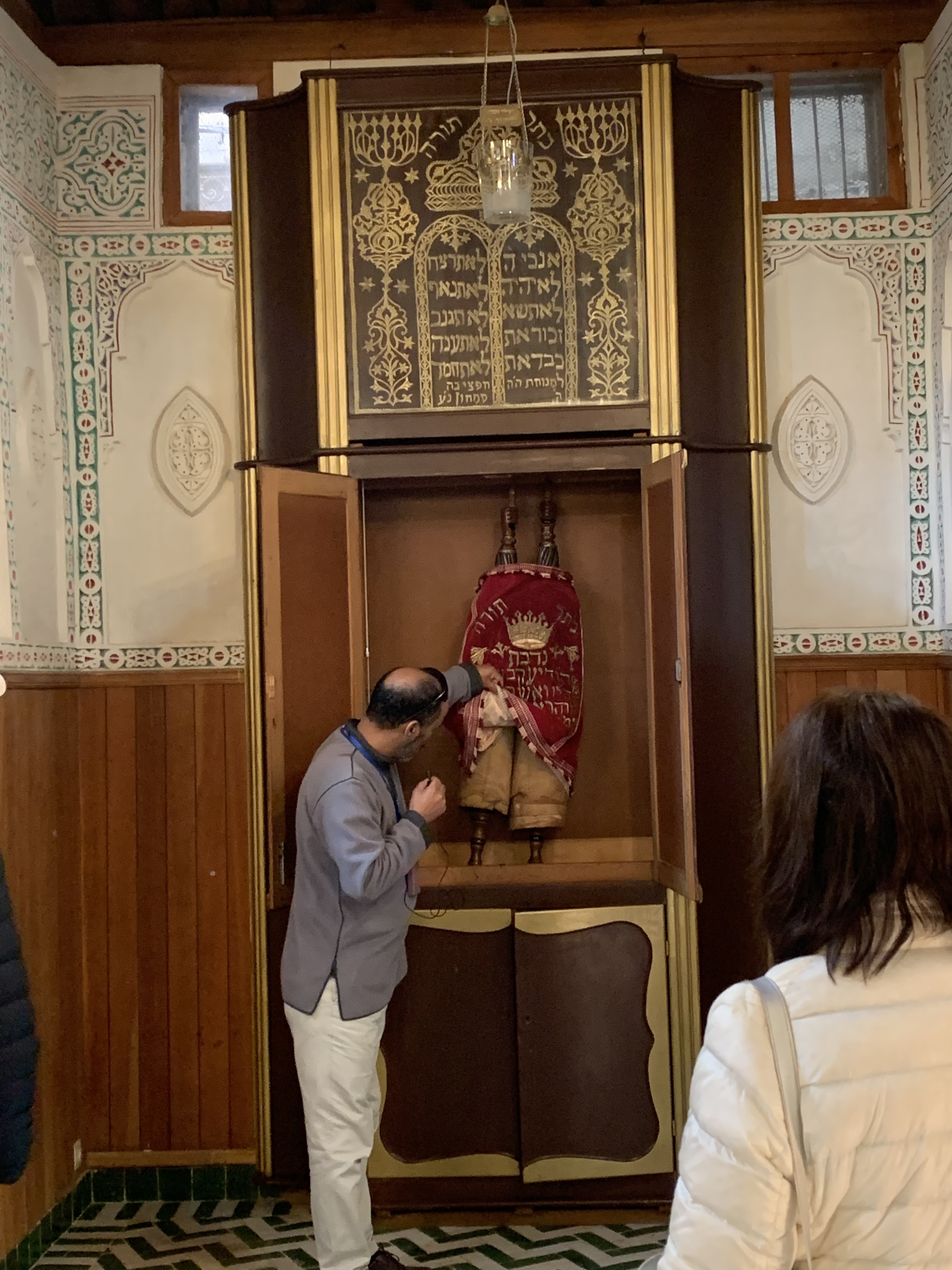
We then continued on our journey to Essaouira. We first entered the Medina and went immediately to the Mellah, the Jewish quarter. The Mellah is being completely refurbished by the king. One of his ministers is Jewish and was very instrumental in making this happen. Our guide told us that some people are not happy about this since the government is paying for it and other areas of the Medina also are in disrepair. We toured a synagogue and Jim was asked to open the ark so that everyone could see the Torah. See pictures below. The synagogue is not in use and is cared for by a Muslim woman. We saw Jewish symbols throughout the Mellah. It must have been a thriving community.

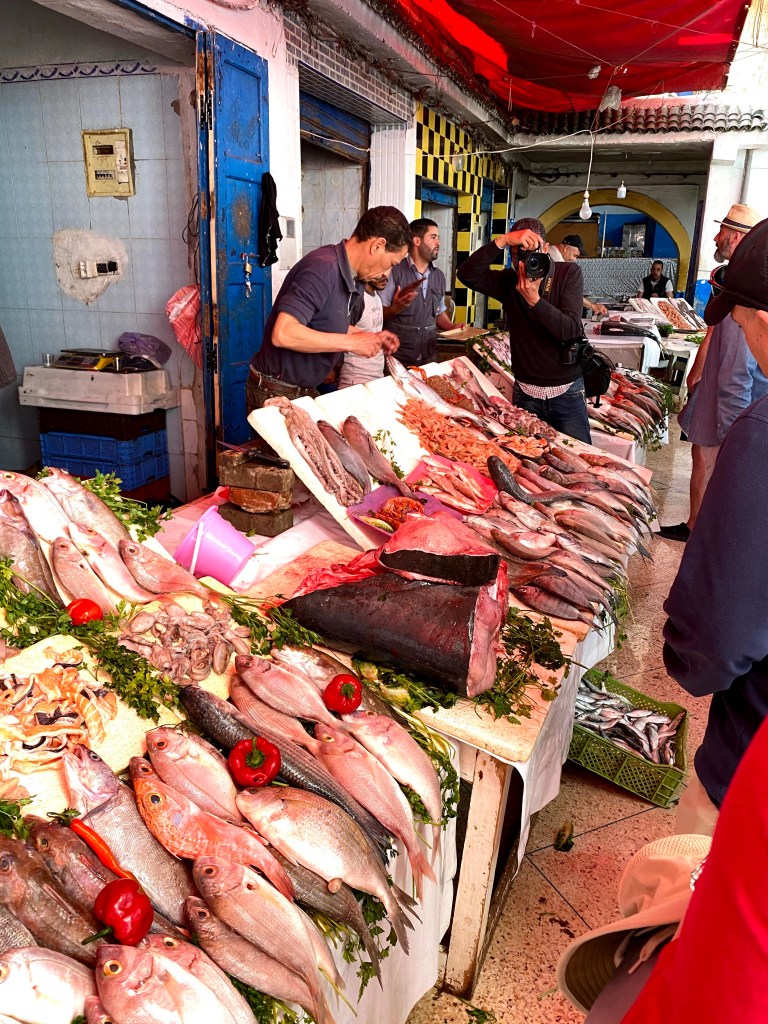
We continued our walk through the Medina and stopped briefly at the fish market.

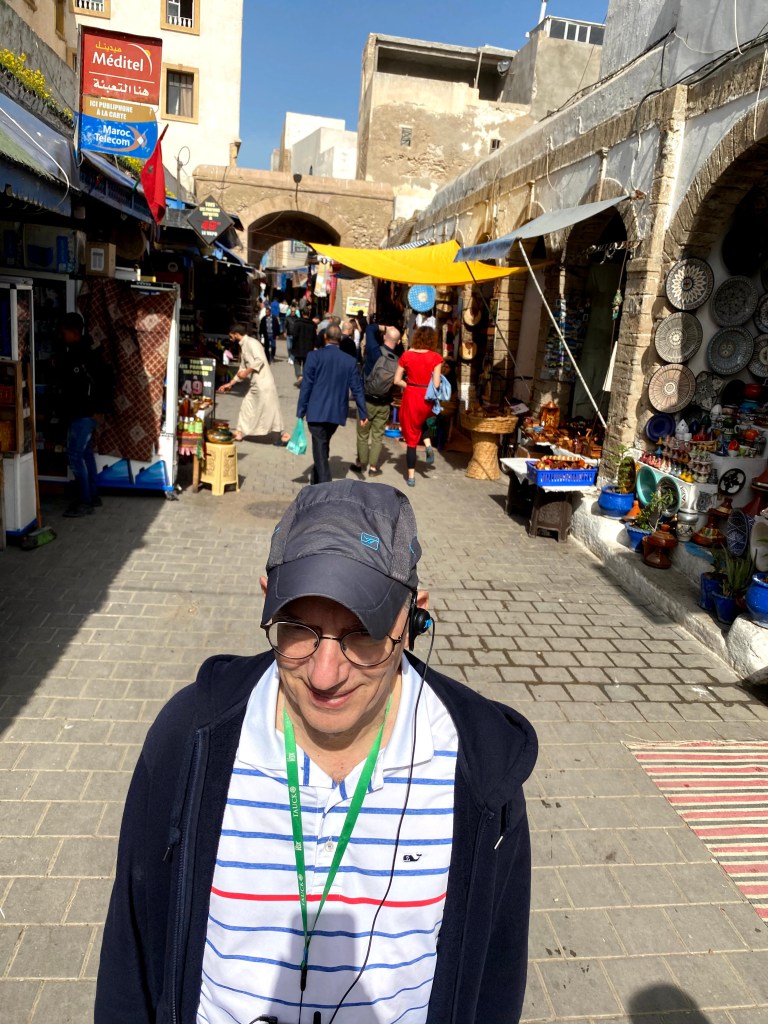
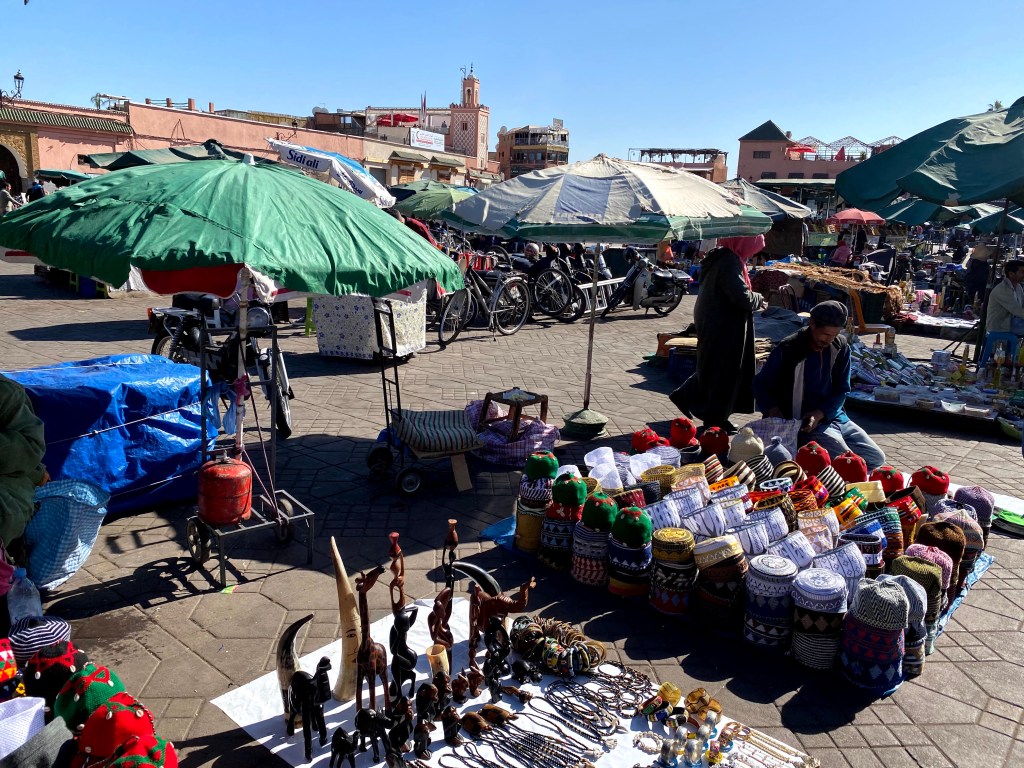
We passed all kinds of souks selling spices, foods, clothes, wood products etc.. It was similar to the other Medinas we have been in, but a little nicer and calmer.

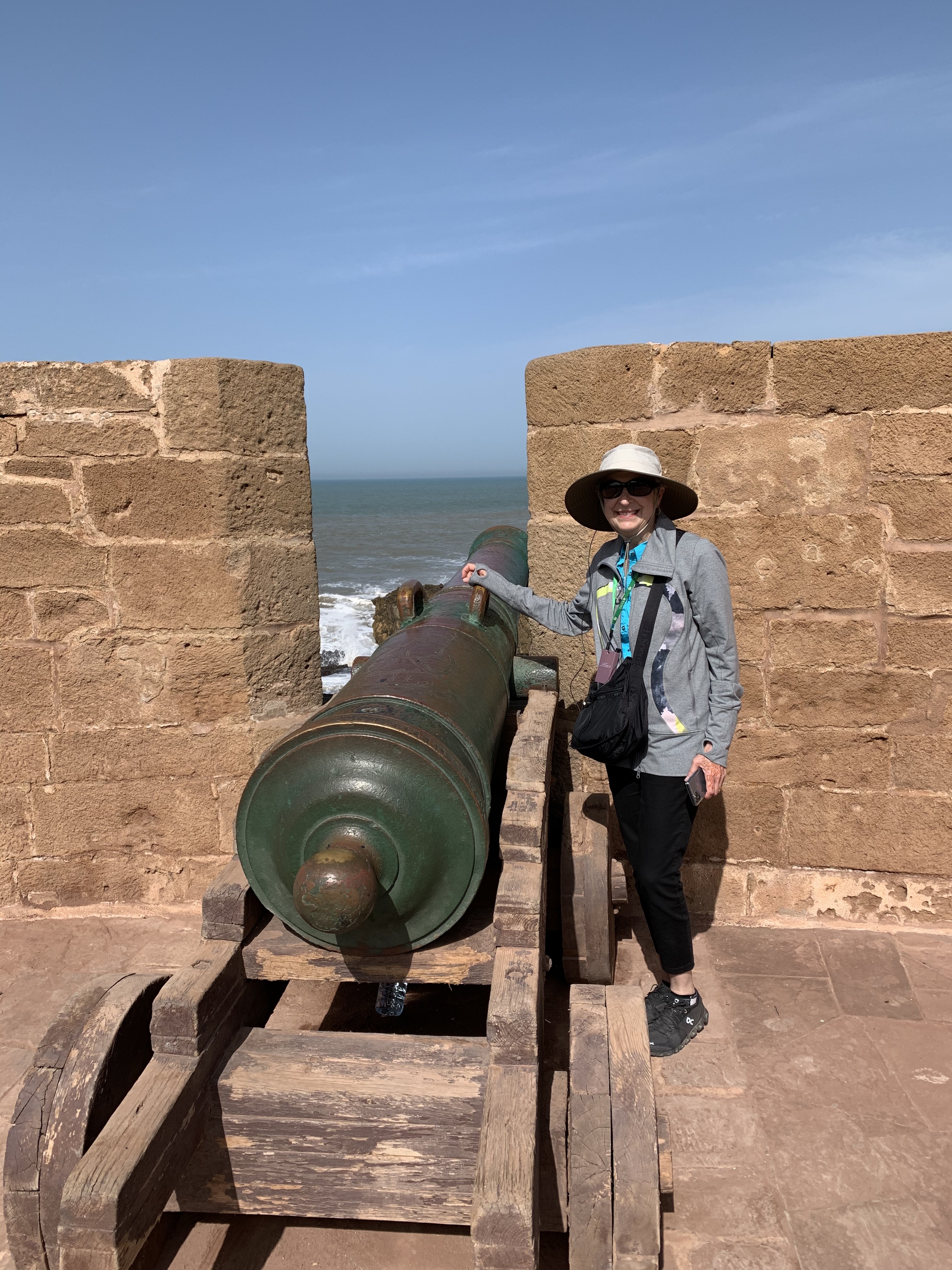
We went up to the top of the fort and saw the cannons that were aimed at the sea.

We had 10 minutes before going to lunch to shop and we bought something even though we had said we were done shopping. It’s hard to resist with so many beautiful inexpensive choices. I saw the same wooden cobra that I was proud of myself for bargaining down to $15 in Fez being sold for $4. This will haunt me for a long time.

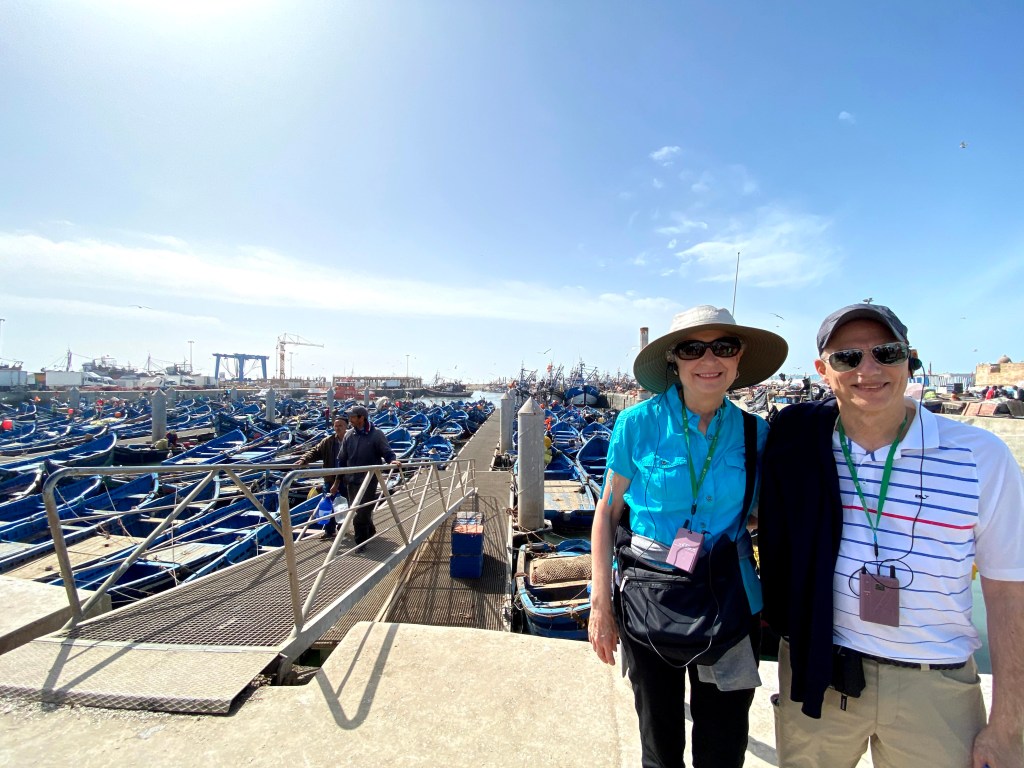
We left the Medina and walked to the port, which was incredibly picturesque. The color blue is very prevalent throughout Morocco and per our guide is a very popular color on the Mediterranean. The boats were painted blue, seagulls were flying everywhere and it looked like a painting or a scene from a movie – spectacular.

Lunch was at a restaurant on the gorgeous sand beach and appropriately we had sea bass. We could see surfers in the distance. See the video below.

It was the most wonderful day with fabulous weather too.

We got back to the hotel with one hour before our farewell dinner. We did some packing and quickly changed into nicer (and cleaner) clothes. The dinner was on the rooftop of the hotel spa with an open bar, appetizers, and a Moroccan dinner. As in most of the meals we had in Morocco, we had tajine, which we are not crazy about. This time it included monk fish, which was good. It was lovely eating outside as the sun set. We didn’t linger at dinner since our shuttle to the Casablanca airport was leaving at 3:00 AM, so we said our farewells and went to finish packing. We maybe slept three hours at night and then another two hours on the shuttle. We are anticipating major jet lag. We are now on a plane to Paris to catch a plane to Atlanta then on to Chicago. Update: we are now on the plane from Paris to Atlanta. There is a snow storm predicted in Chicago so we don’t know what the future holds for our trip home.

Marrakech, Morocco. February 23, 2020

Let me start this post by talking about the weather, which is something I haven’t mentioned in a while. It has been gorgeous. It has been mostly sunny (as opposed to partly cloudy) and perfect temperature for touring. It is cool in the mornings and evenings, and for most of the trip it got into the sixties or seventies during the day. In Marrakech it has been totally sunny and gets up to around eighty during the day.

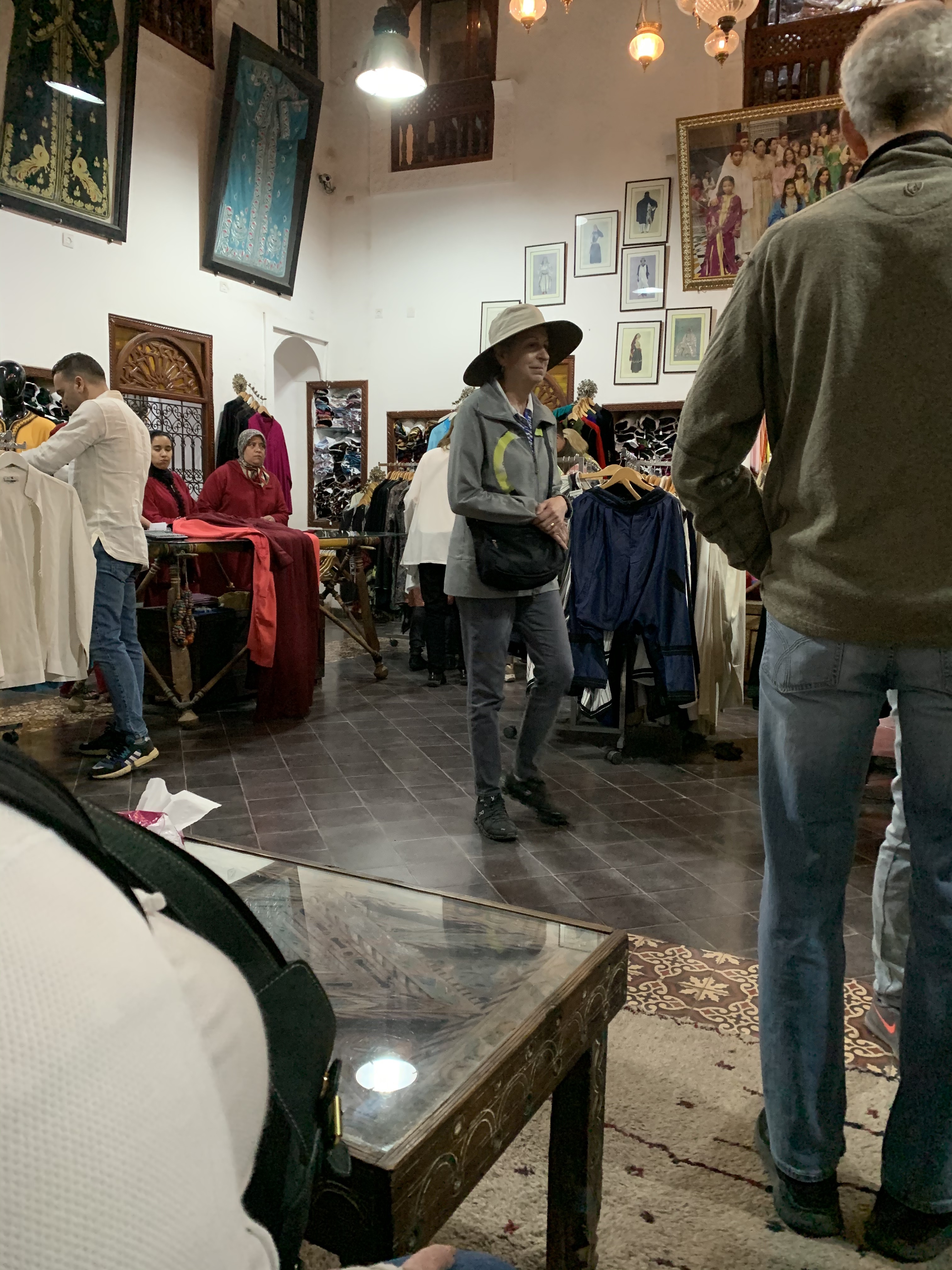
Today was the first and only day of the trip where we had some downtime. There was no official activity until 4:15, but they offered to have our local guide Adnan take us on a shopping spree through the Medina. We wanted to by some gifts so we tagged along. The first stop was a clothing store, which was a painful experience for me.

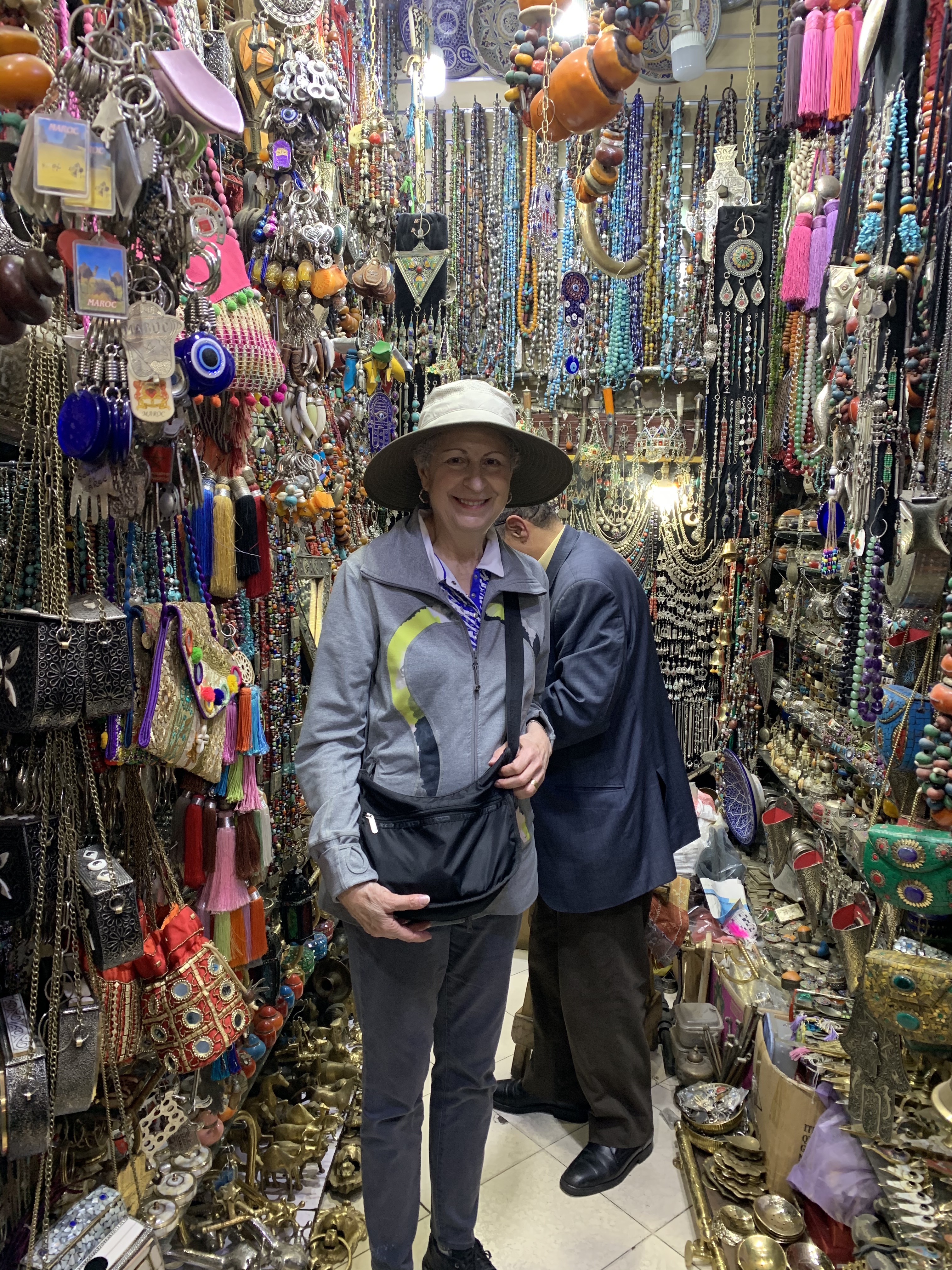
Fortunately they had schmuck chairs there. We decided to leave the tour group so we could shop faster and get back to the hotel for a little R&R. We stopped in a little shop and got everything we wanted.

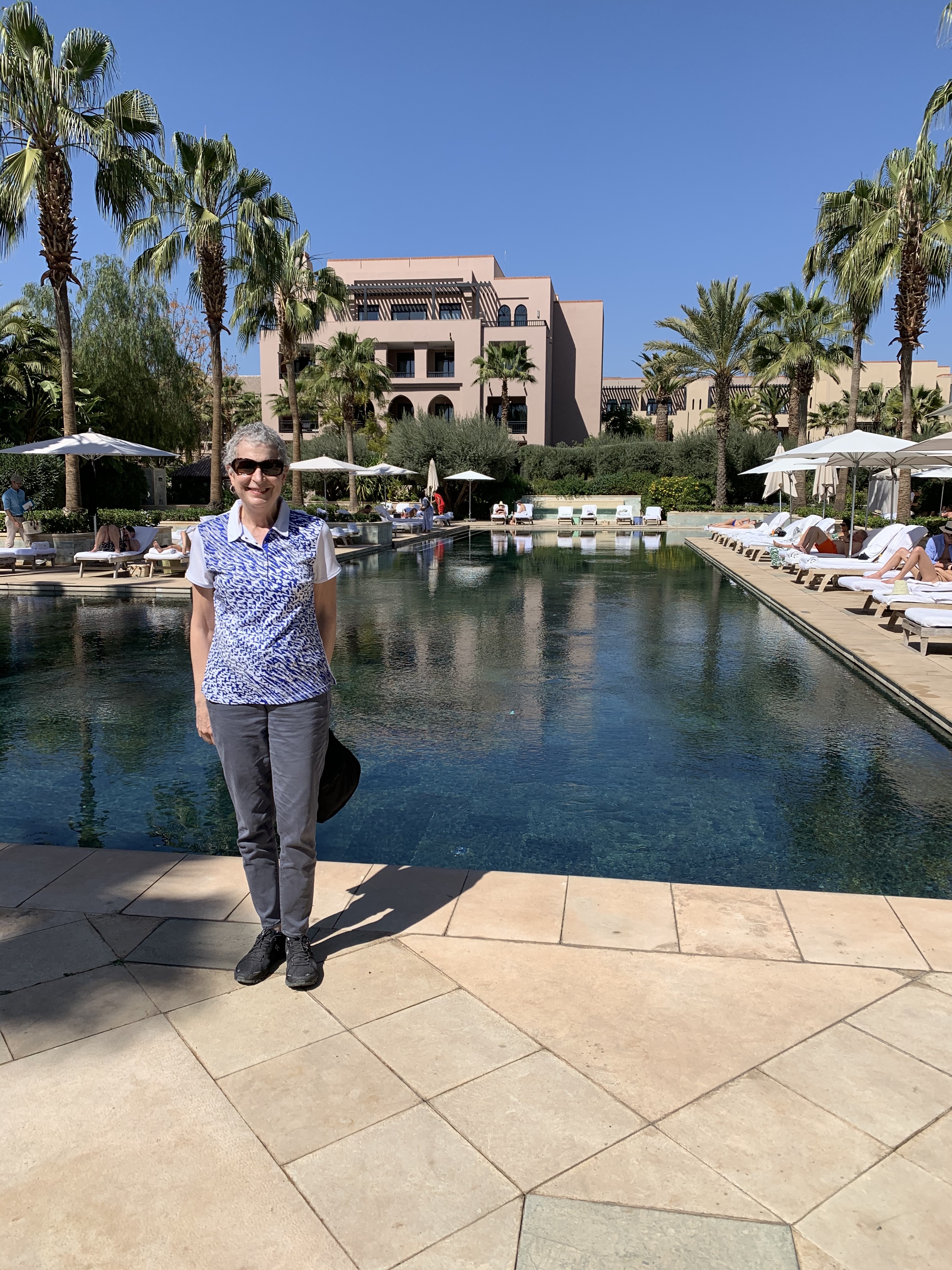
We then took a cab back to the hotel and spent the next few hours sitting around the beautiful pool.

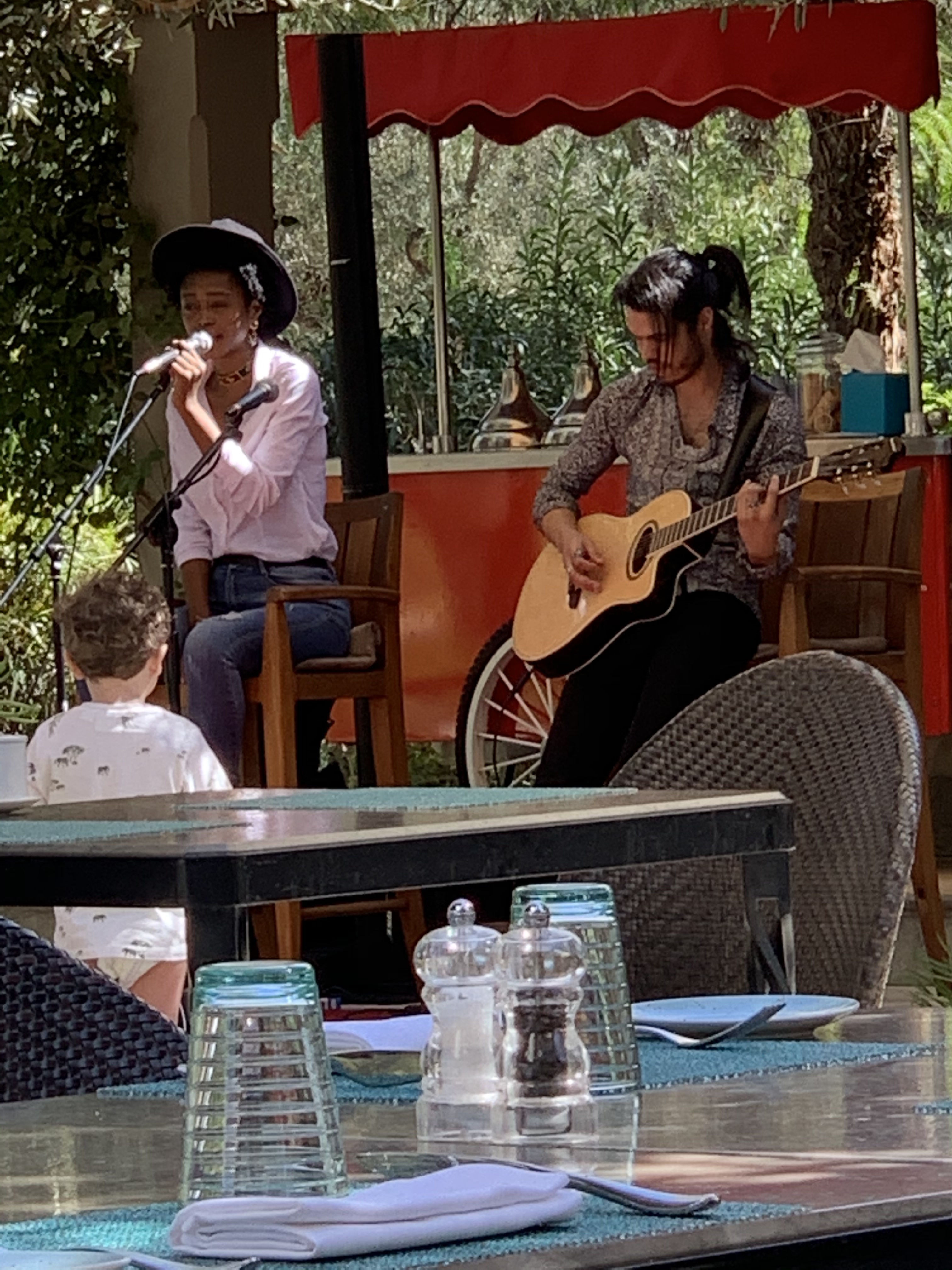
We had lunch at the pool-side restaurant. Barbara had lobster roll and I had sea bass. There were a couple of mellow musicians who we enjoyed while we ate.

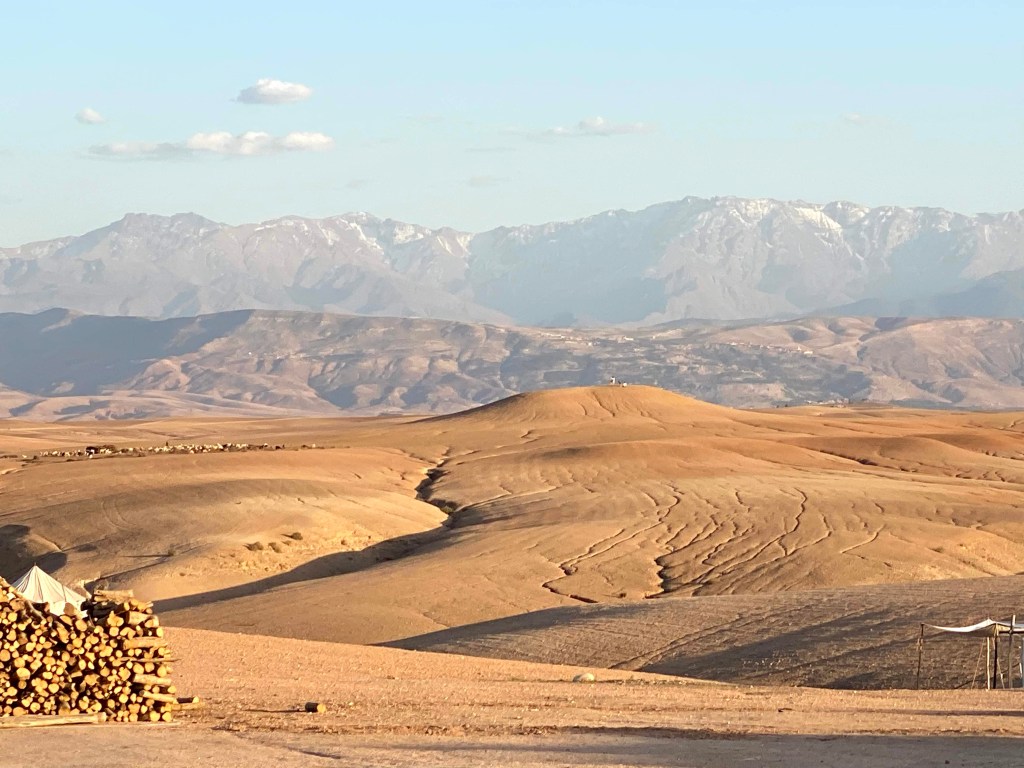
We then went on one of the highlights of the tour – a trip to the desert. We passed through huge areas of rolling sand dunes on our way to a Berber village. We could also see the beautiful snow capped High Atlas Mountains in the background.

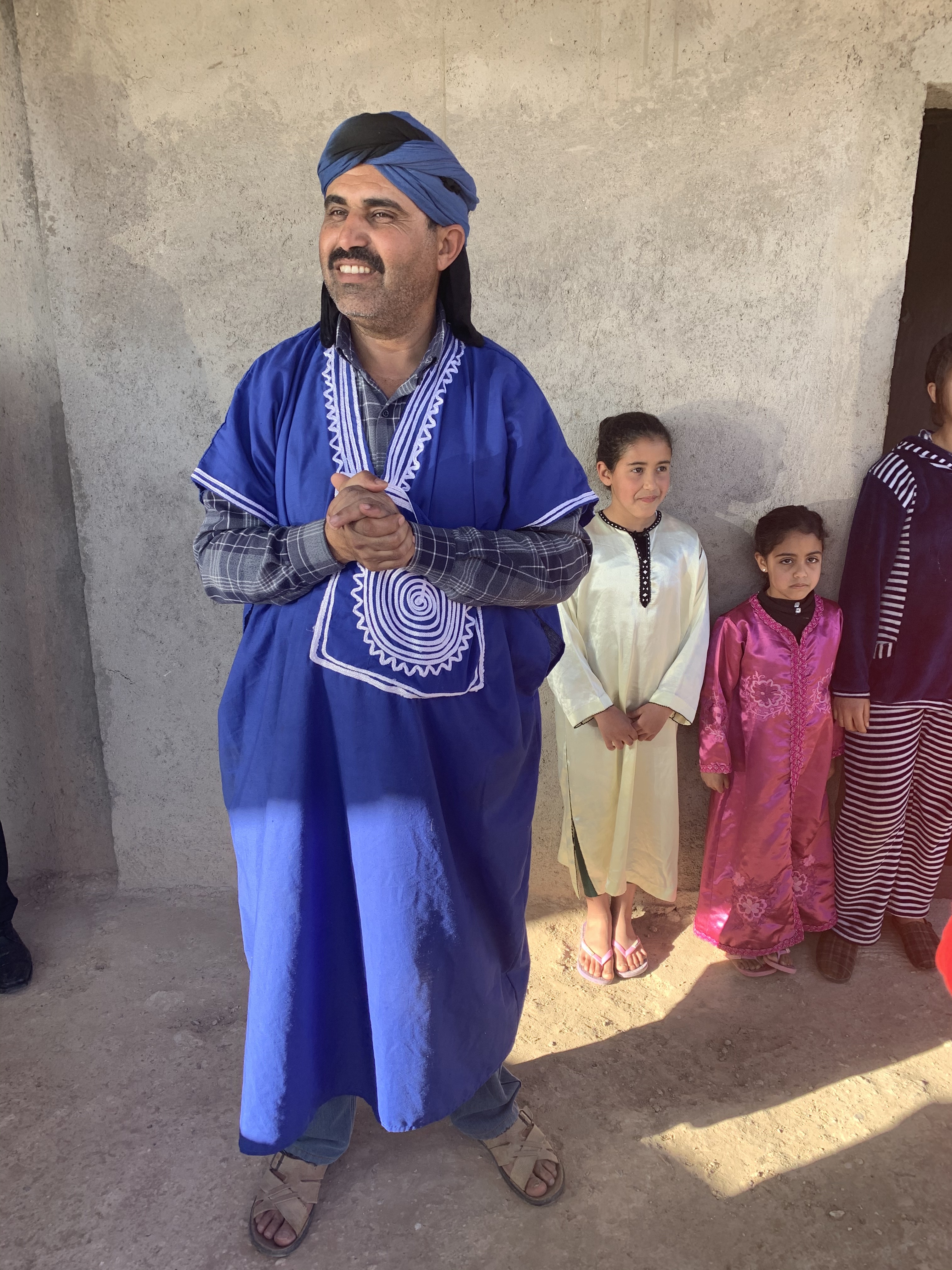
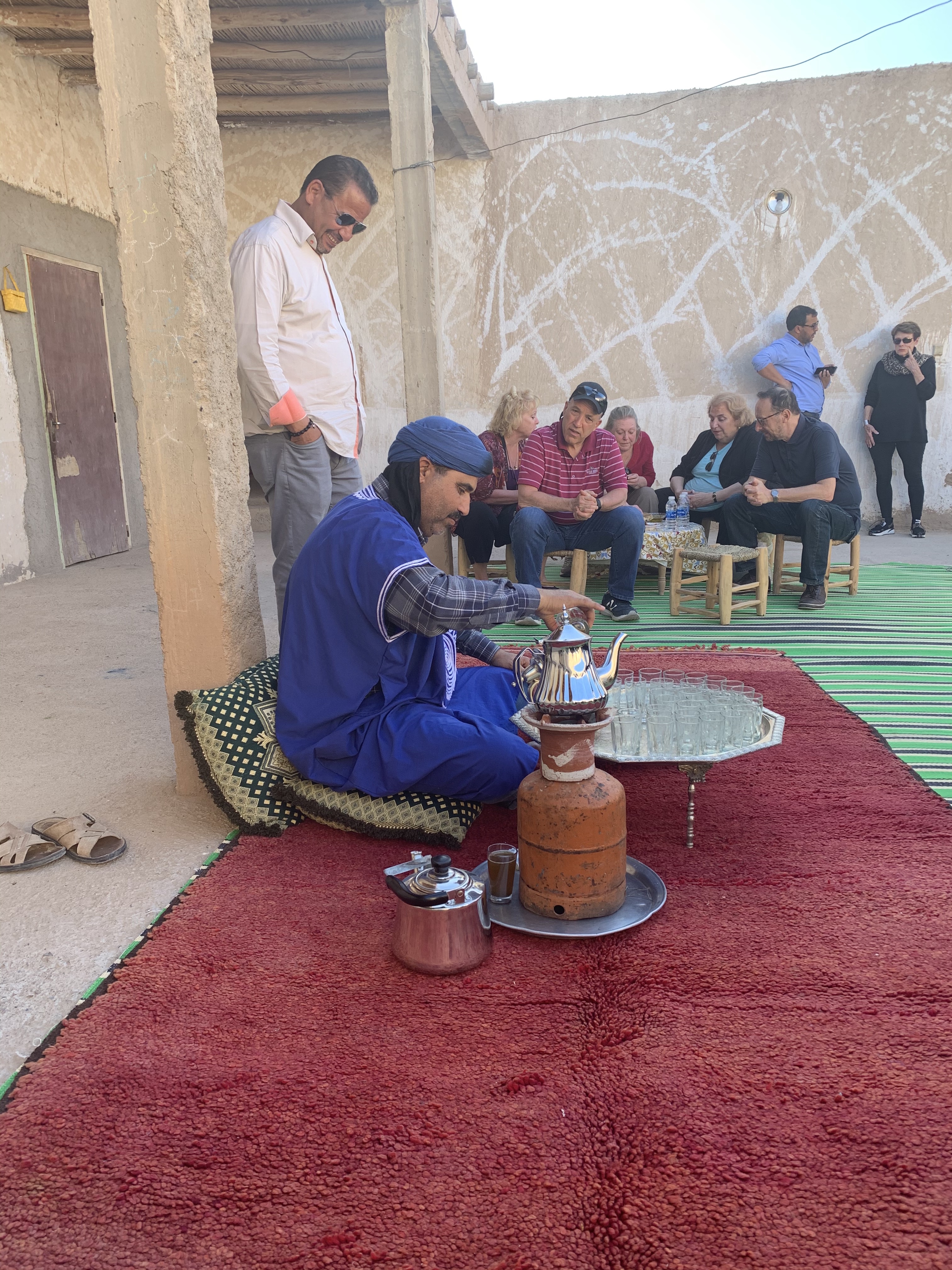
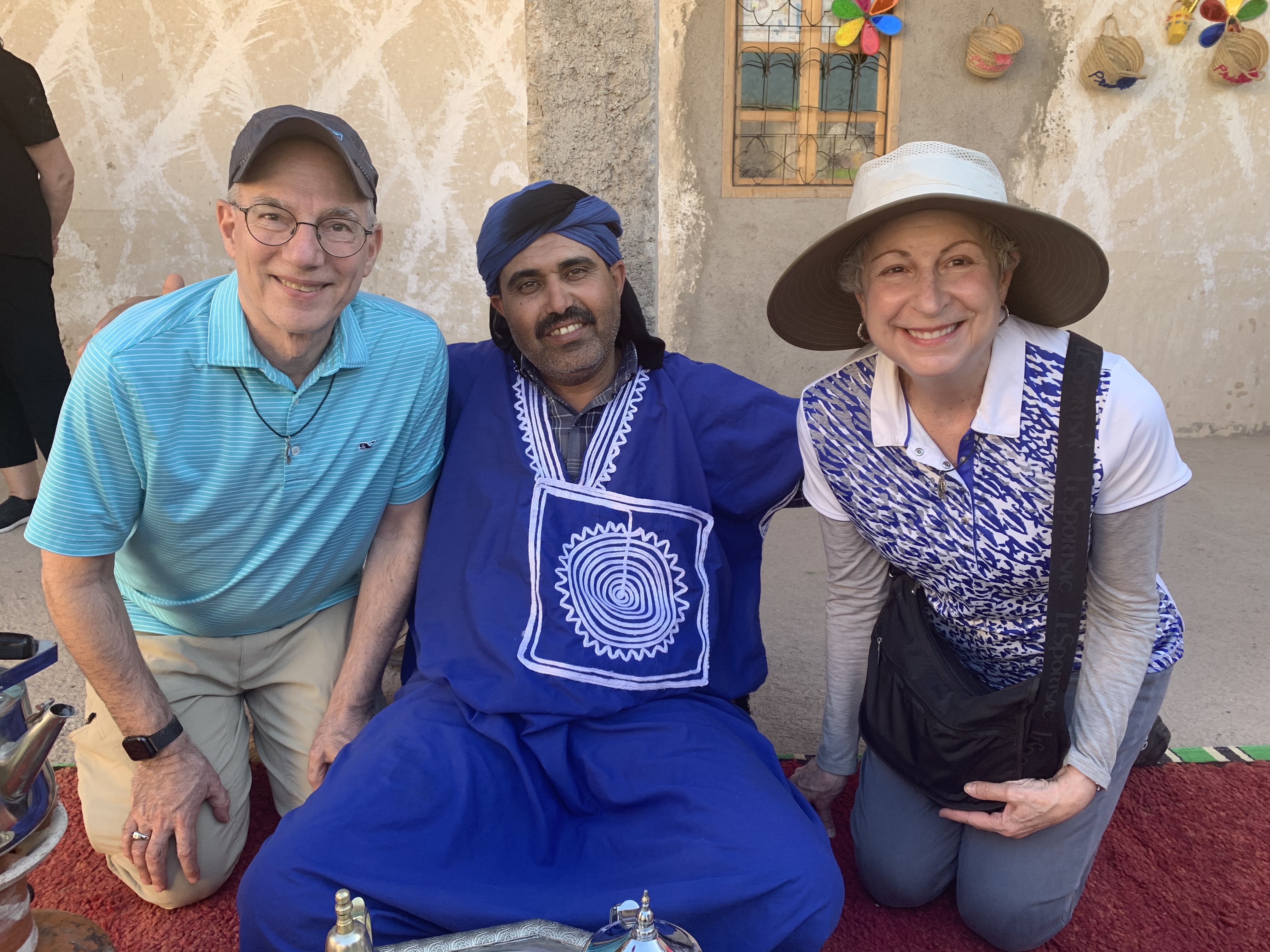
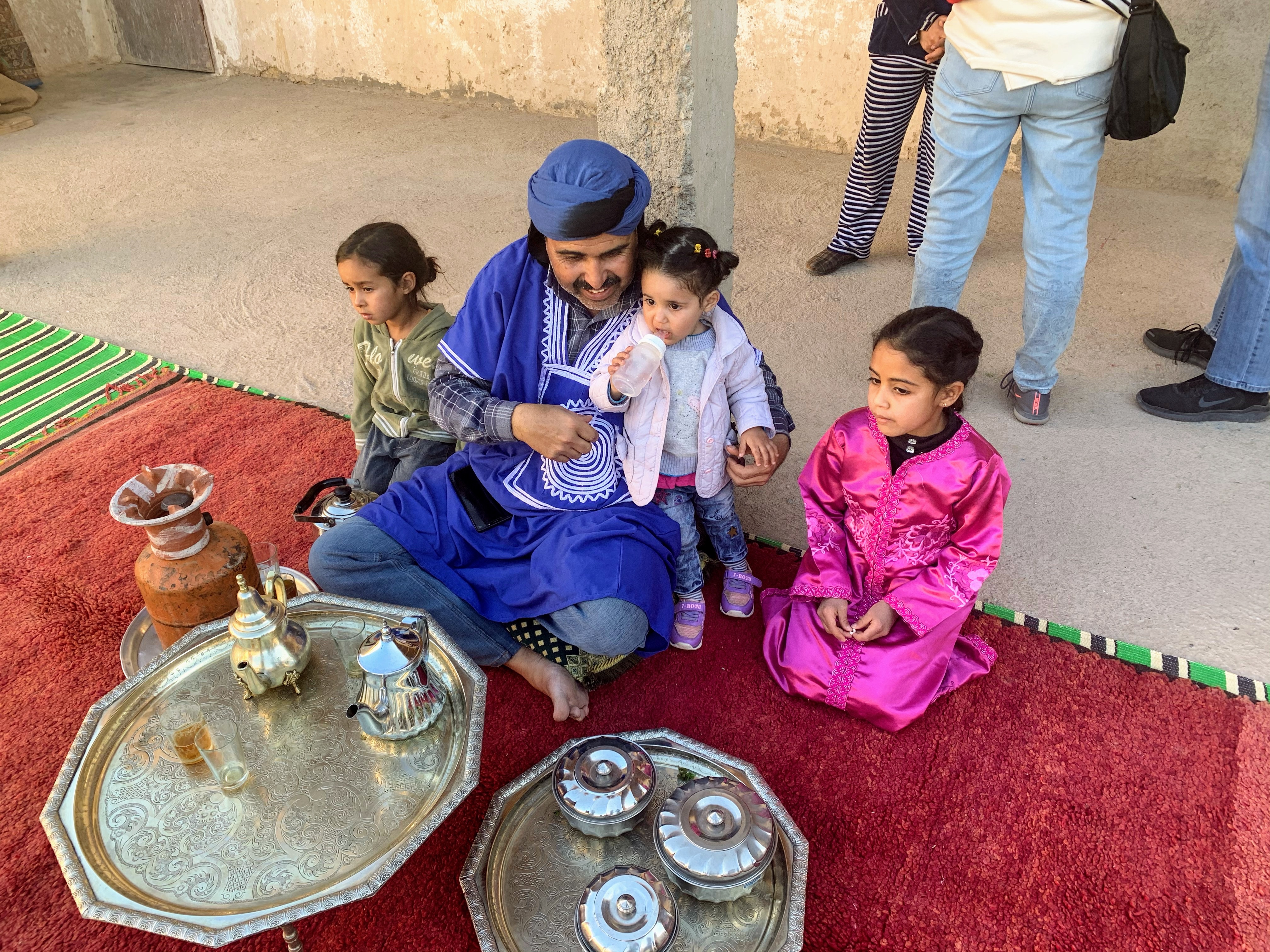
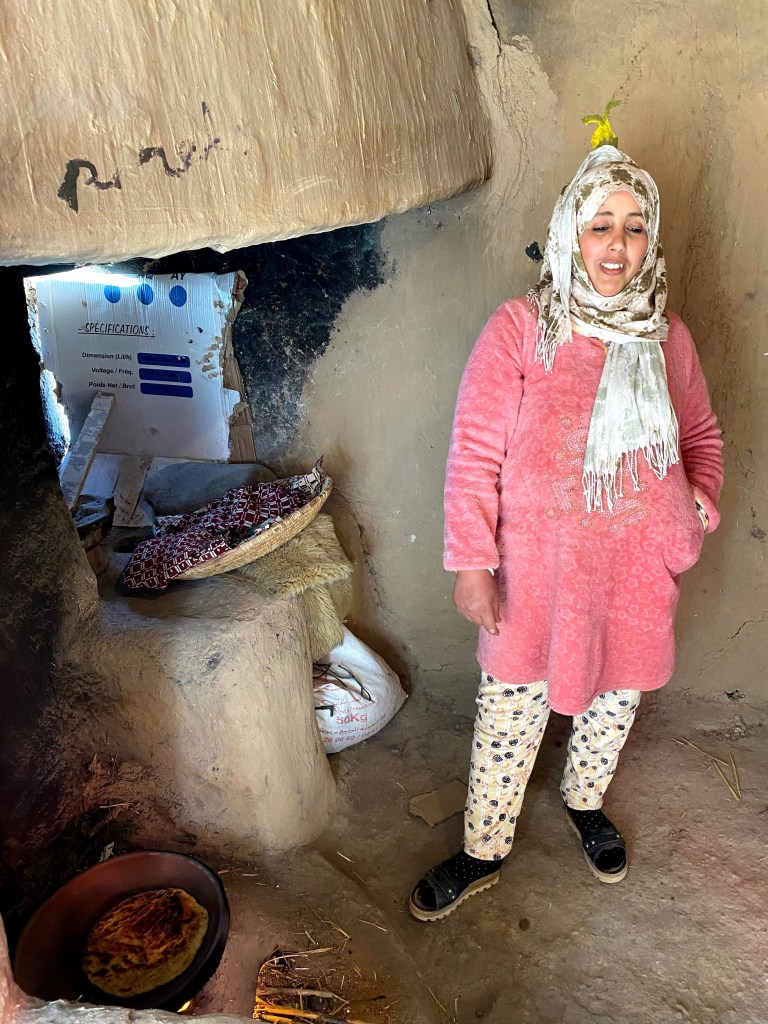
When we got to the Berber village we went to the home of the village chieftain. He and his wife served us tea and bread and we heard a little about village life. The chieftain was very gracious and pleasant. He and his wife have three small daughters. He didn’t speak English but Adnan translated for him.

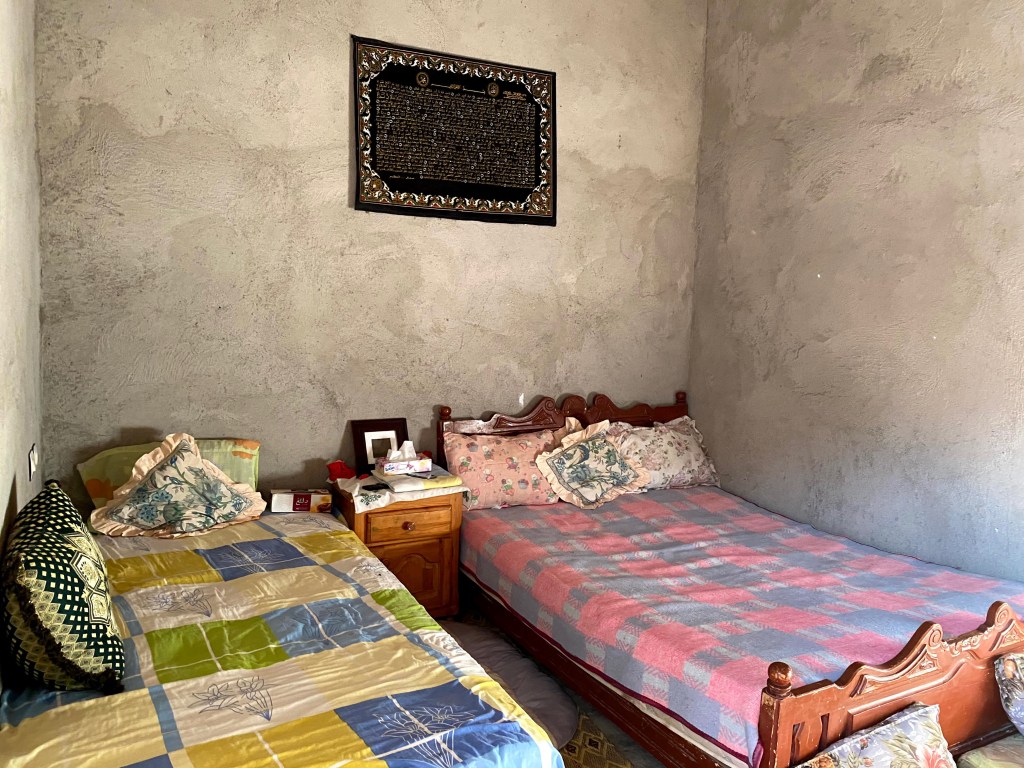
We got to look around his home.

There are seventeen families in the village. The chieftain handles issues such as if a family takes more than their allotted time at the village well. The government brought electricity to the village not that long ago.

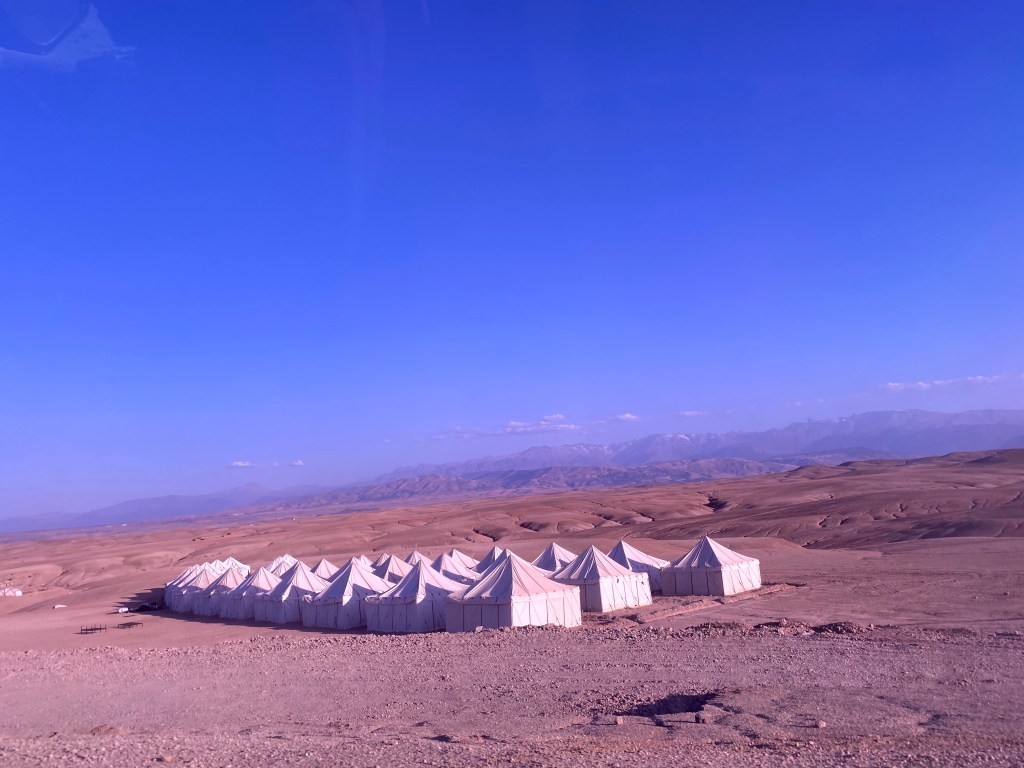
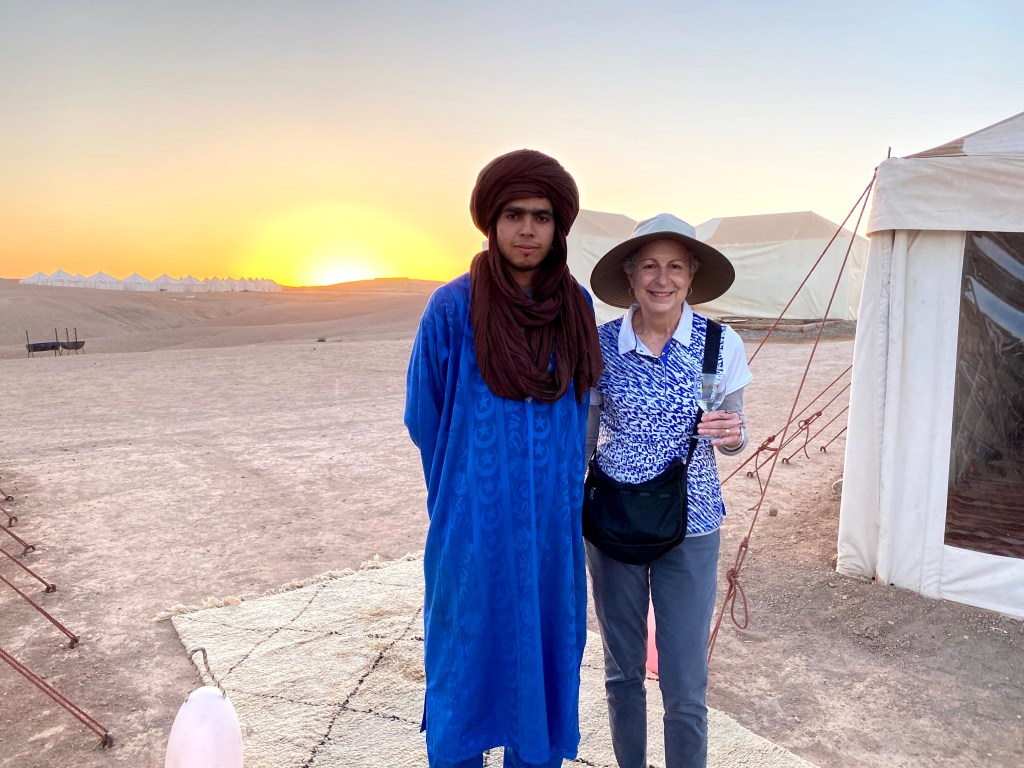
We then went to a nearby desert camp where we spent the rest of the evening.

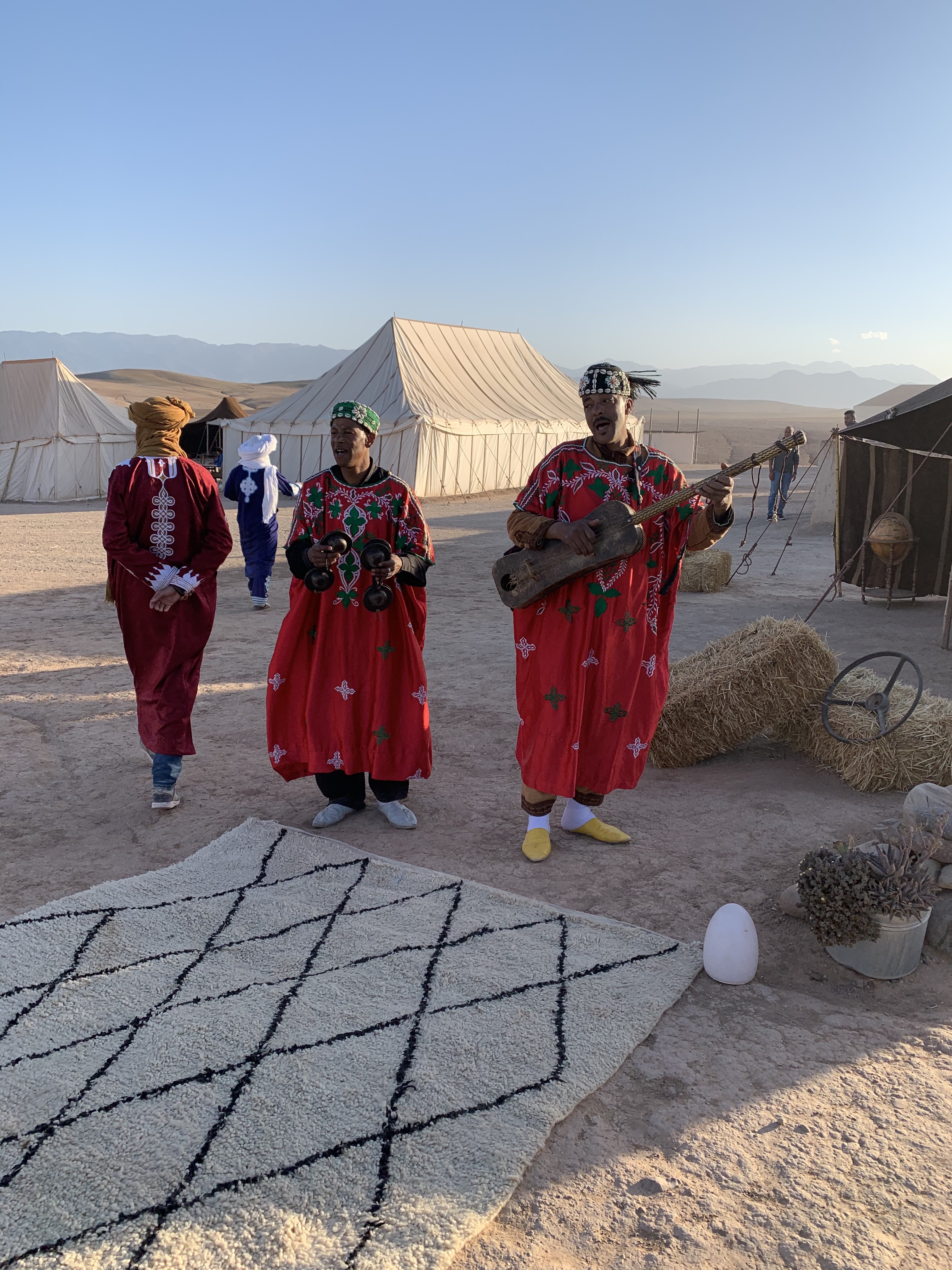
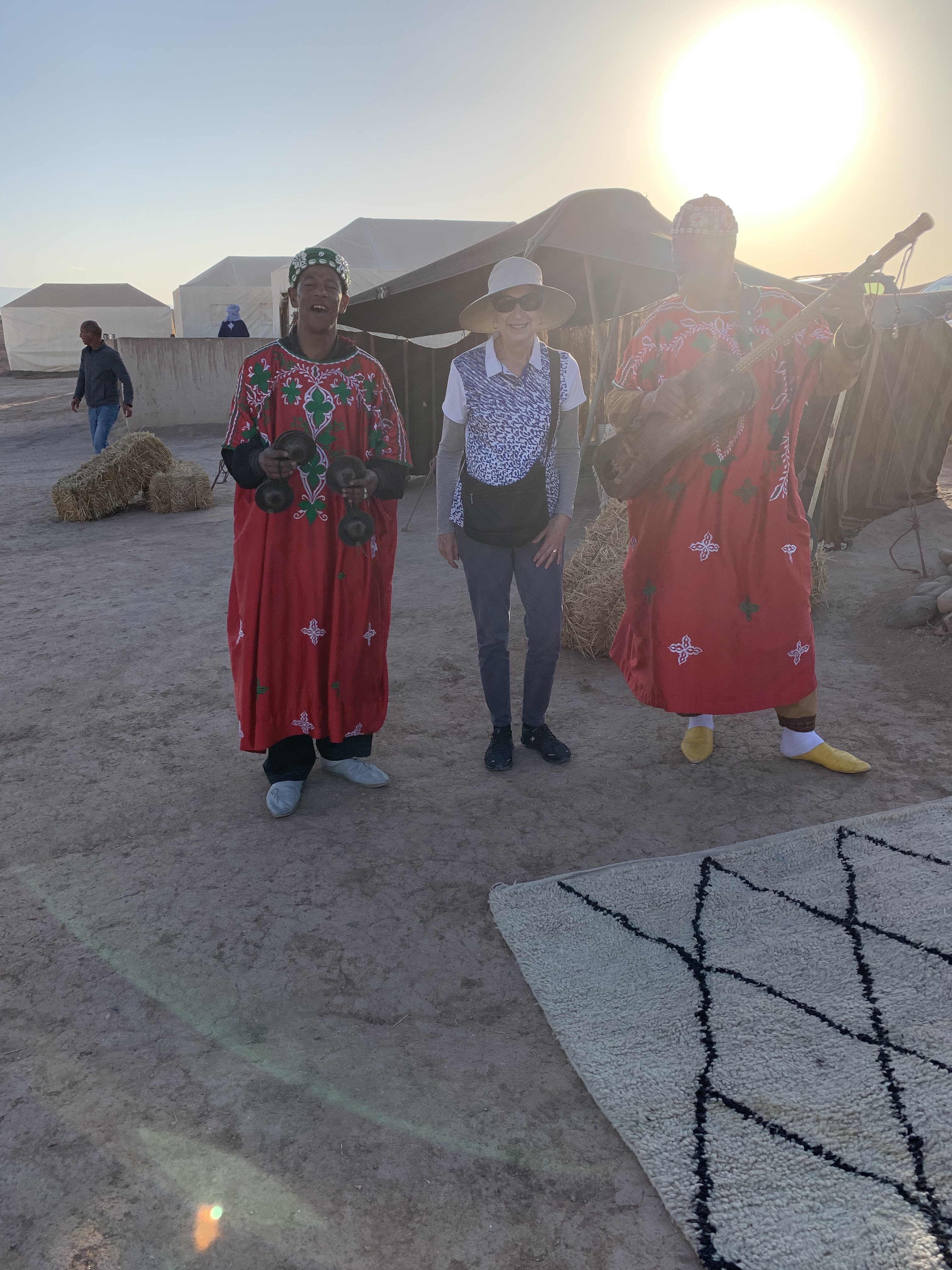
They greeting us in their traditional Berber outfits and played traditional Berber music and we had some fun desert experiences before dinner.

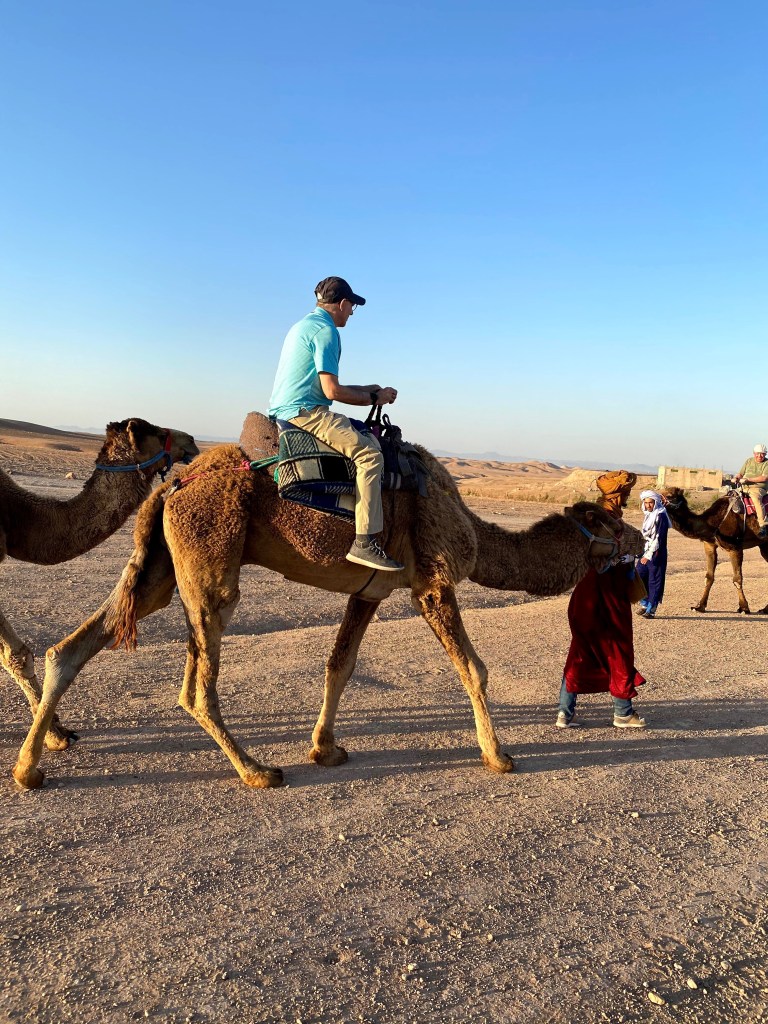
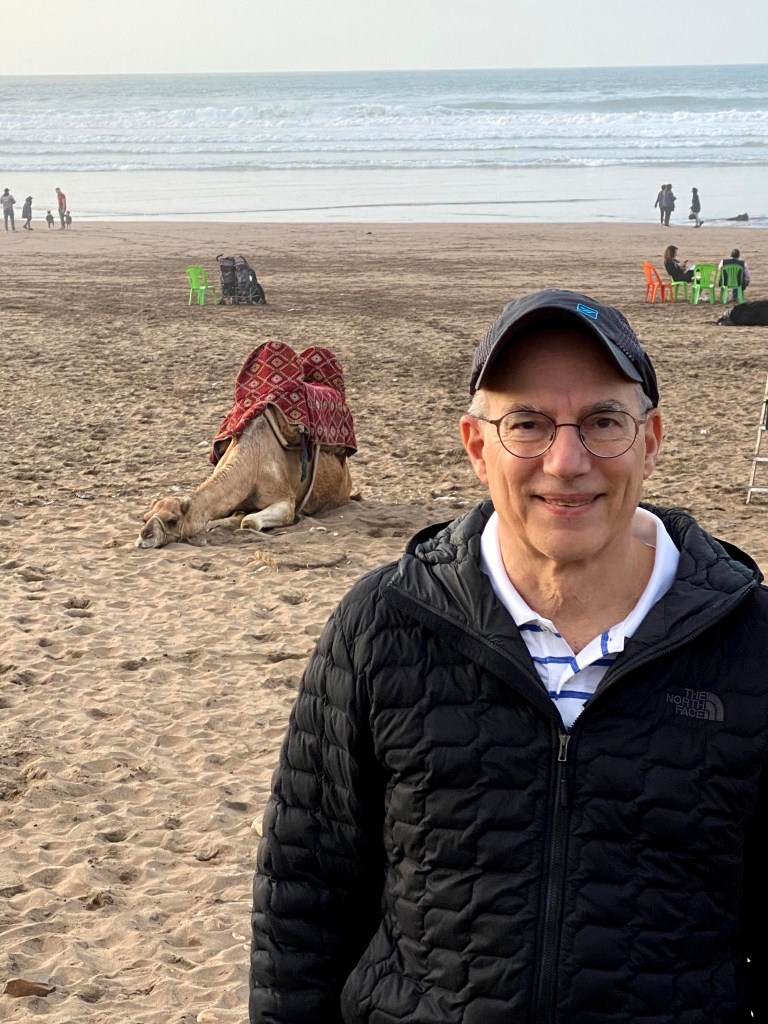
I rode on a camel but Barbara decided not to, which was probably a good decision since it was a little dicey getting on and off.

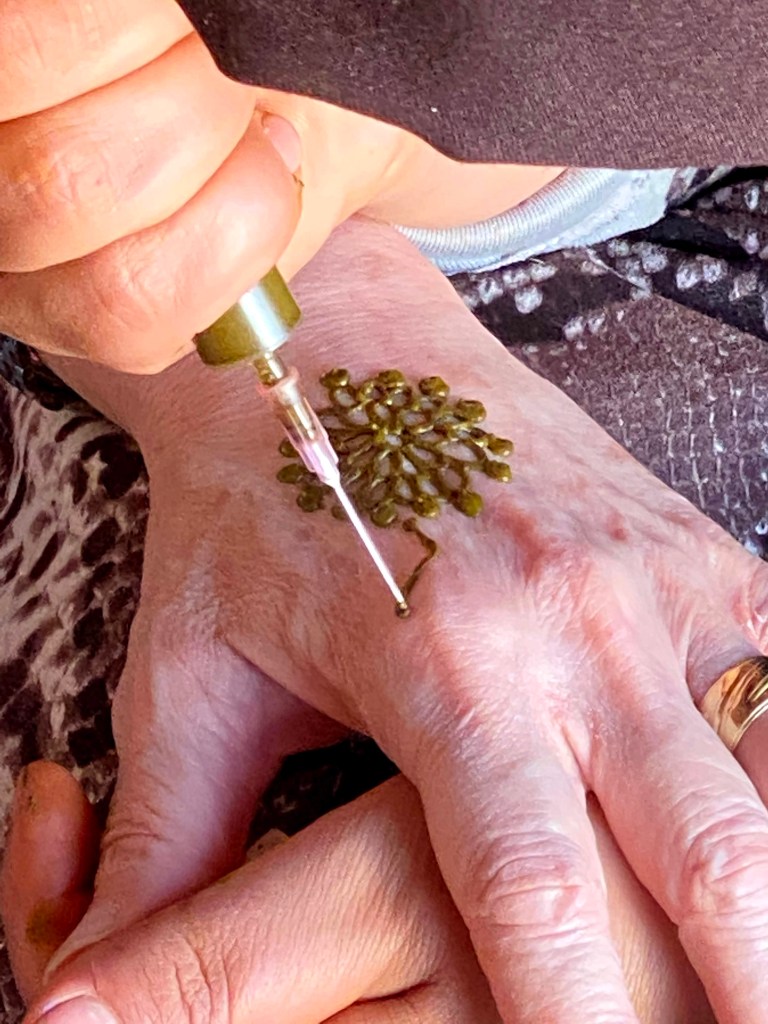
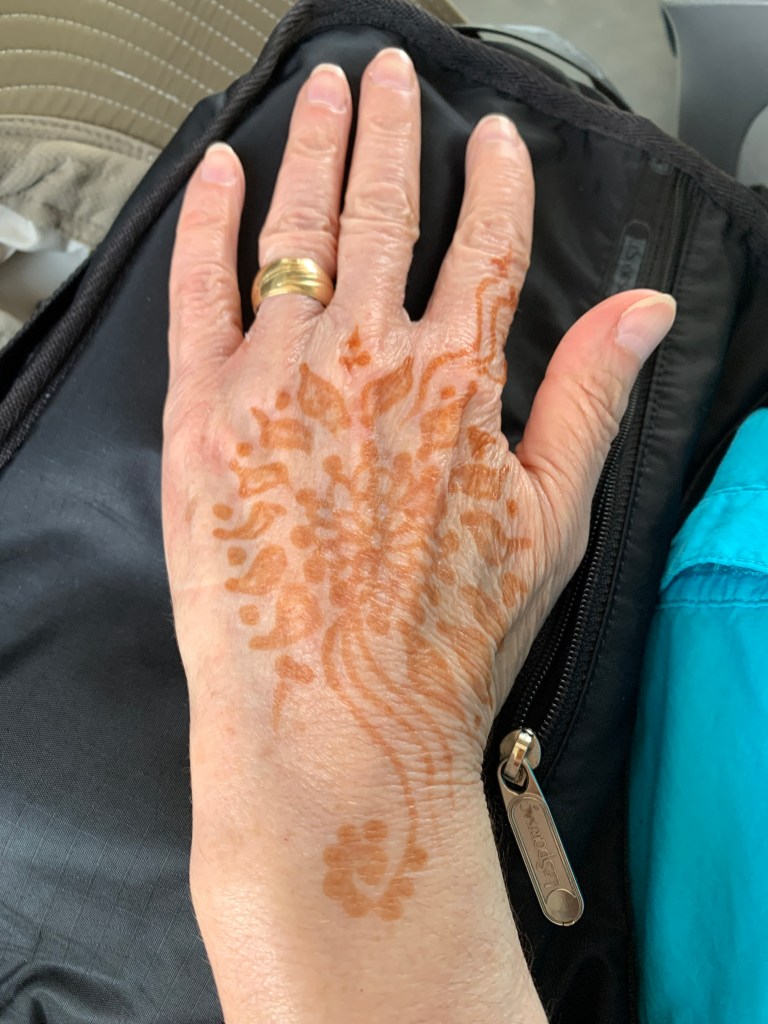
Barbara got a henna tattoo on her hand. Here are pictures of immediately after it was applied and a couple of hours later when the thick stuff wore off. Barbara now thinks that it looks like she has skin disease.

We had dinner in a big tent that had heaters to keep us warm since it cools off quickly in the desert. The food was good but I was still being careful about what I was eating so I took small portions of everything. We forgot to take pictures at dinner.

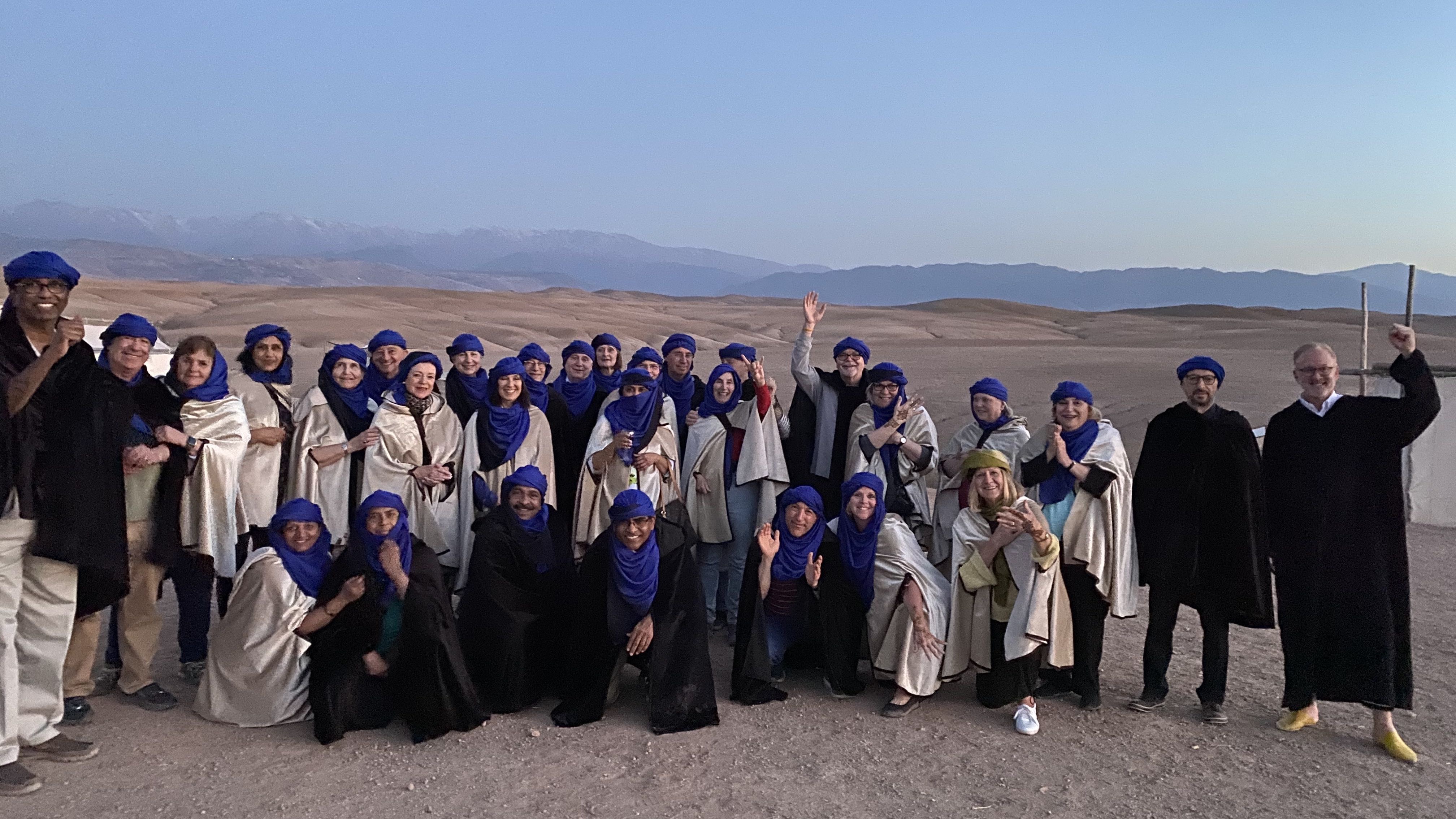
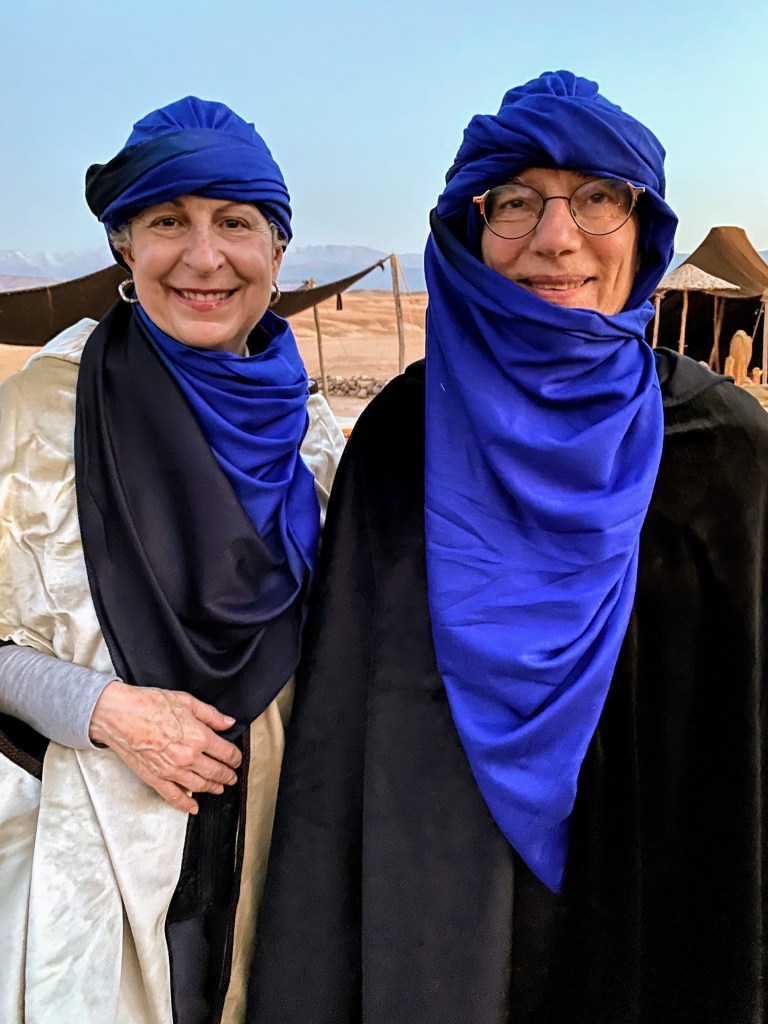
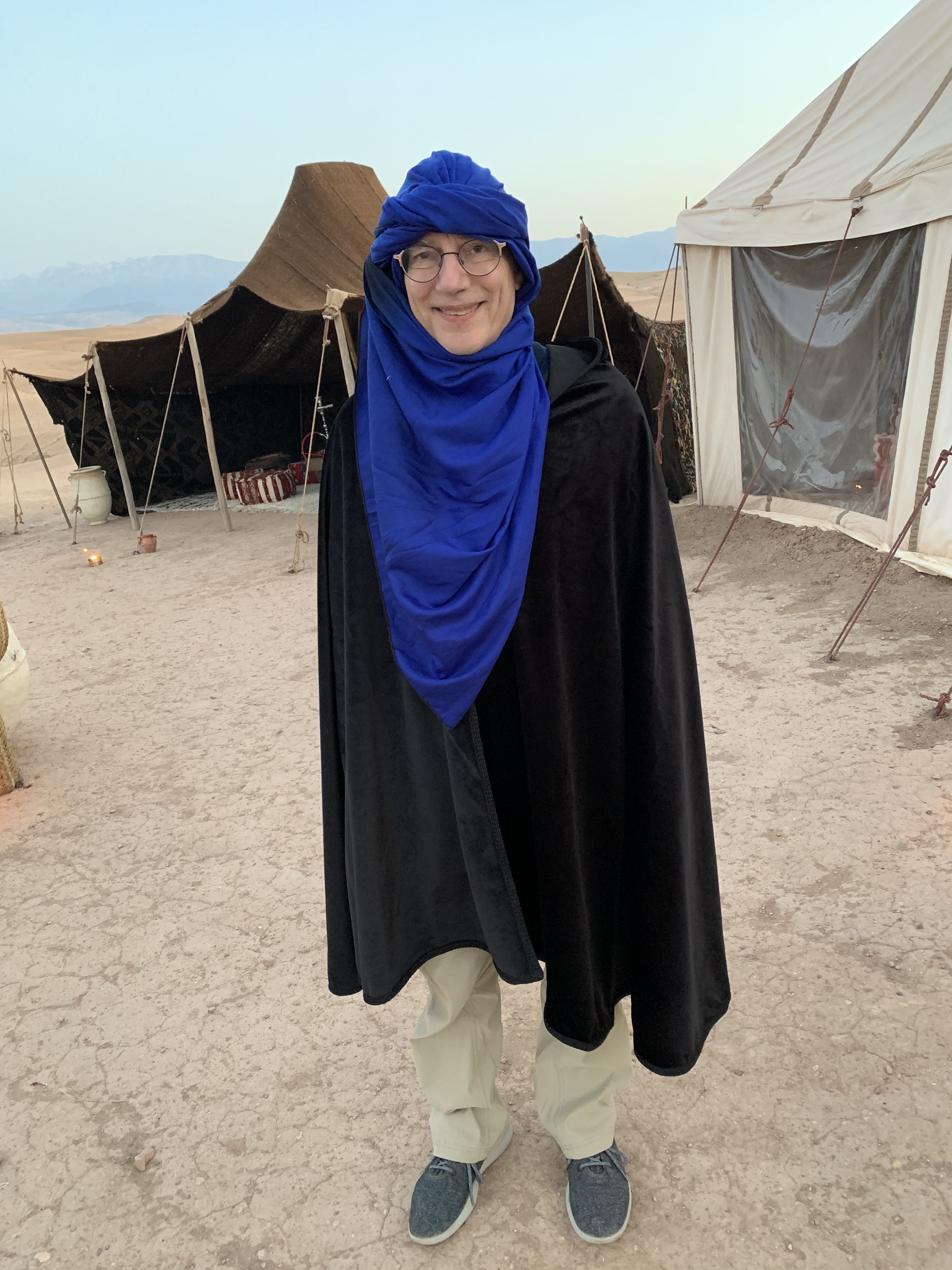
Tauck had bought us burnouses (traditional capes) to wear when it got cold so we all put them on for a group photo. The men’s burnouses didn’t have sleeves so it was kind of a pain using my hands.

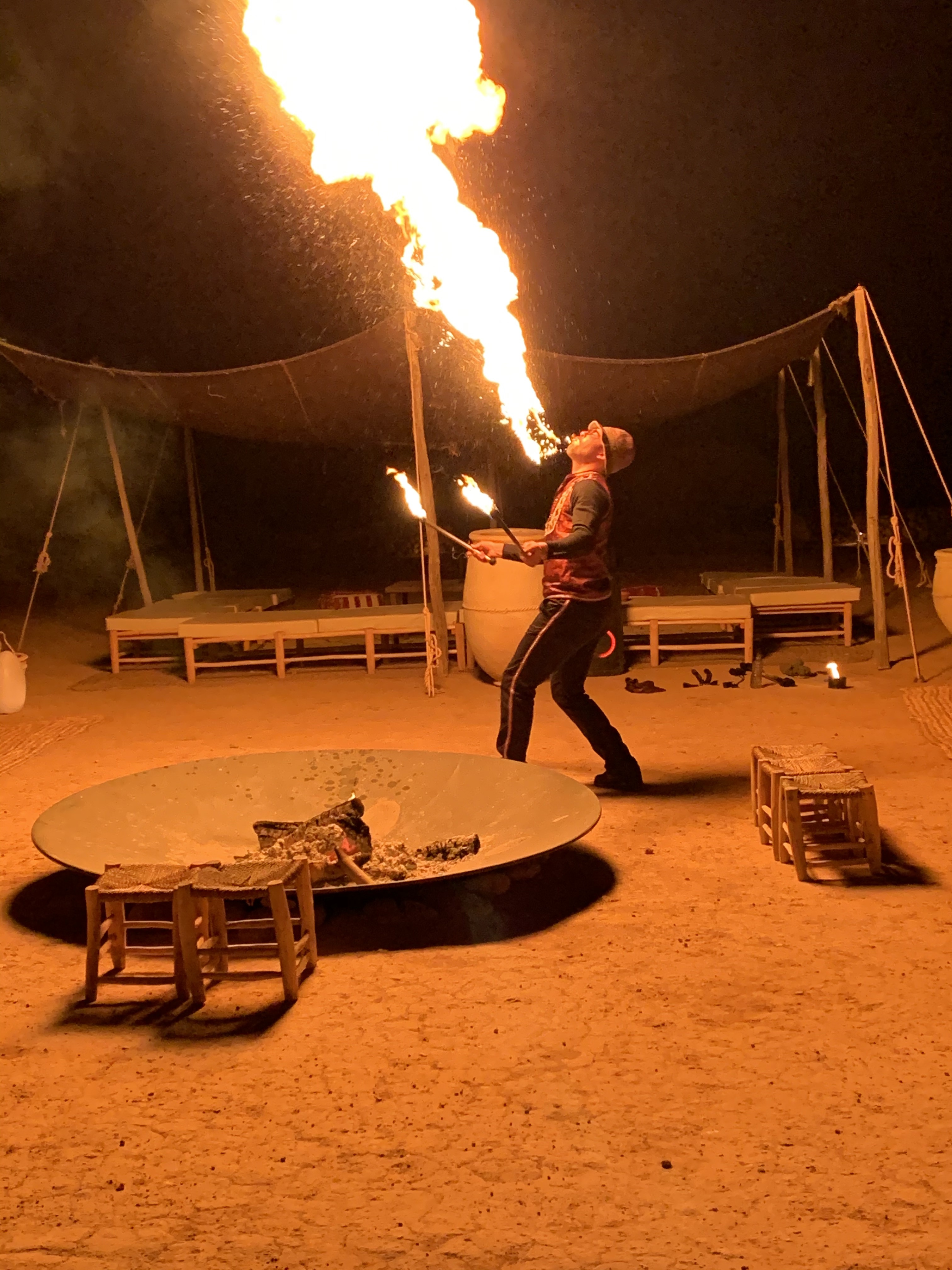
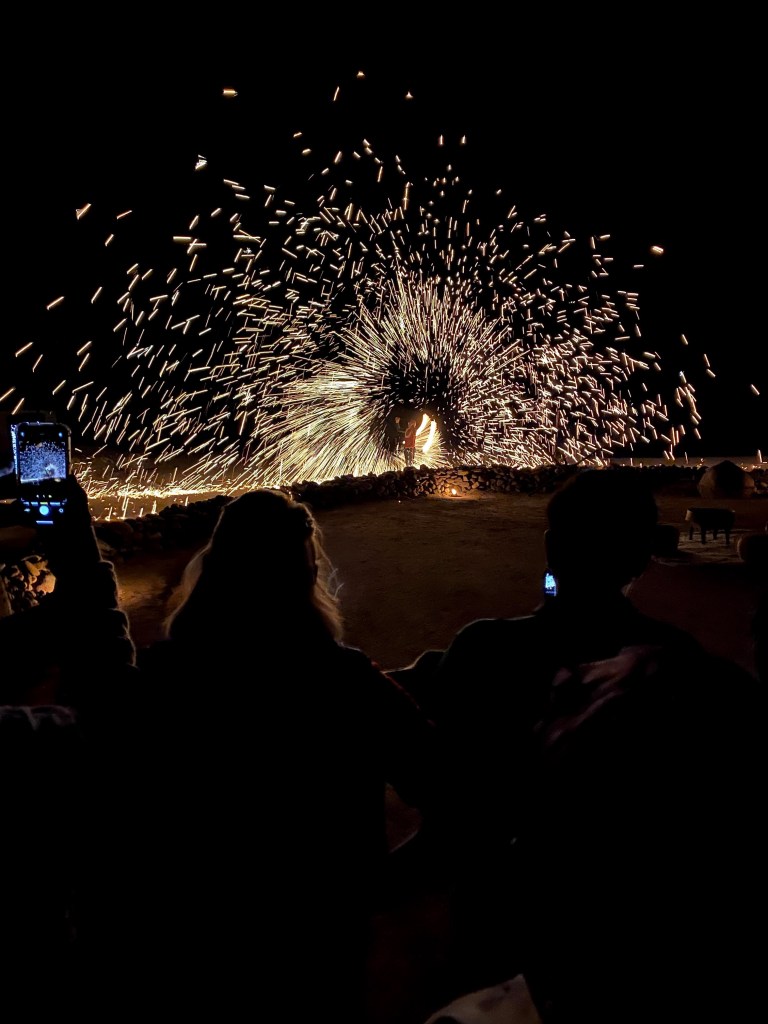
We then went outside for a “surprise” – a fire dancer and breather. He was fun to watch.

We spent a little time looking up at the stars, which were amazing but our eyes were still dilated from the fire dancer and there were some lanterns burning so it wasn’t as spectacular as we were hoping for.

We got back to the hotel around 10:30. This was another great day.

Marrakech. February 22, 2020

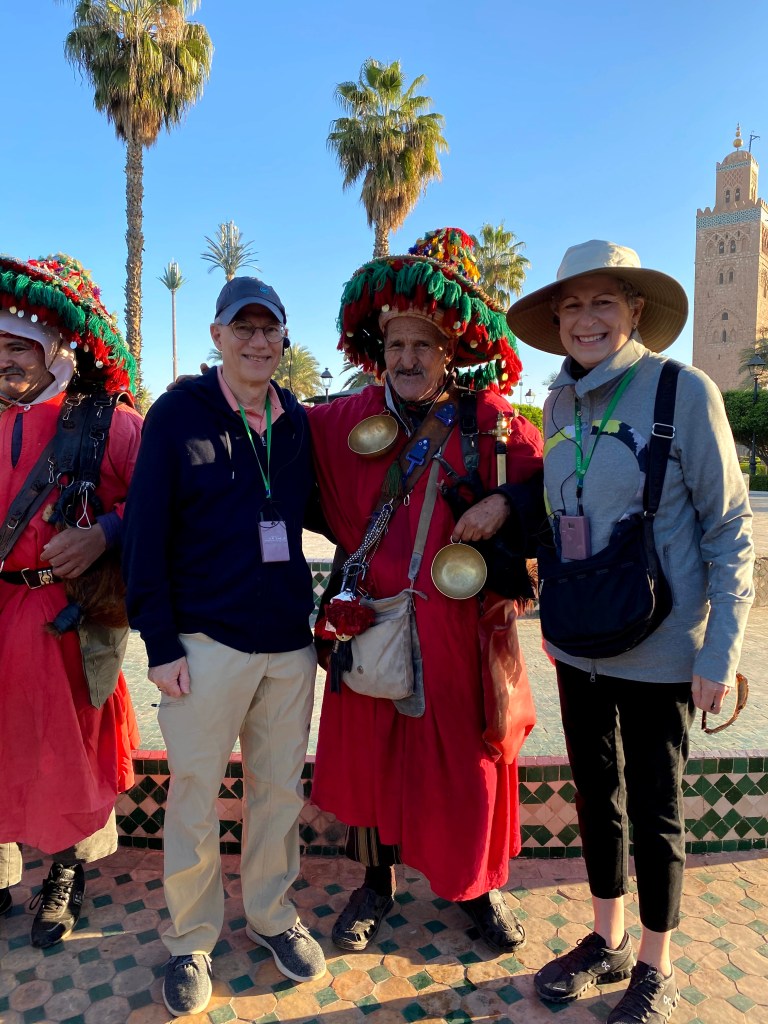
Today was a full day in Marrakech. On the the way to our first stop we passed by the water men. Historically these men provided the important role of providing water to desert communities. They wear funny clothes and now they make a living letting tourists take pictures of them.

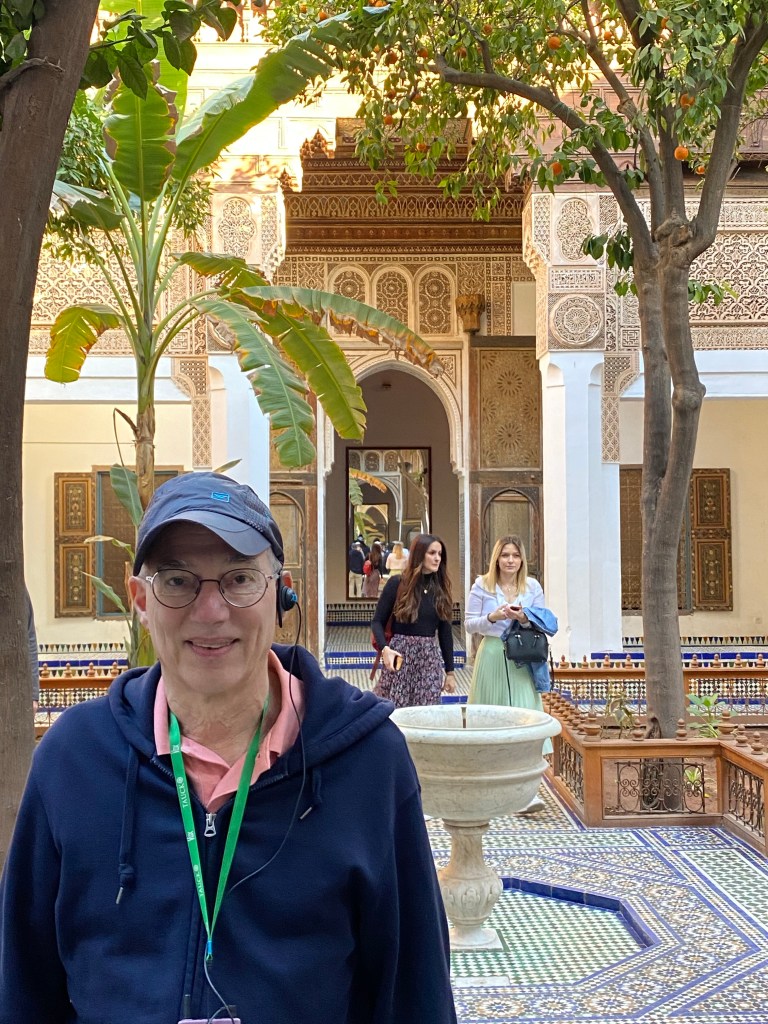
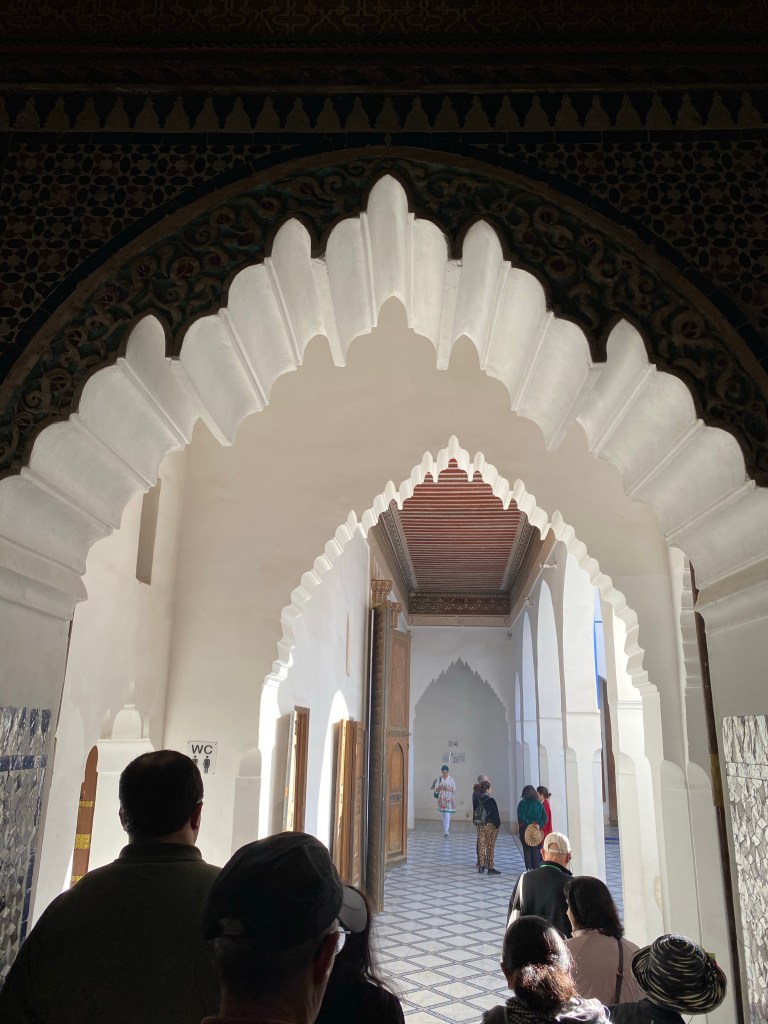
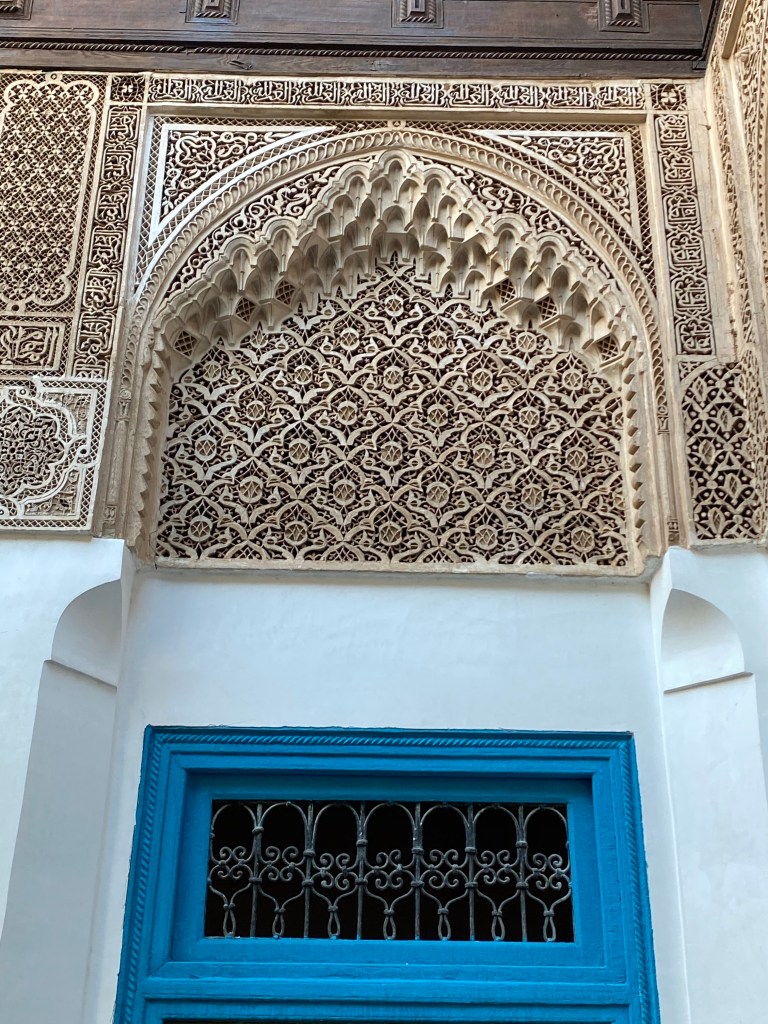
We first went to The Bahia Palace, which was built in the 1890s by a powerful prime minister of Morocco. The palace was huge and ornate. It was designed to house his four wives and 24 concubines. Each wife had her own large room opening onto a courtyard. One thing we found interesting is that to be a concubine (part of a harem) was considered an honor and they became wealthy and powerful. The concubines were given some potions as a contraceptive. If they had a child the child was taken care of but could not inherit any of their father’s wealth.

Courtyard of Bahia Palace
Detail inside a palace passageway
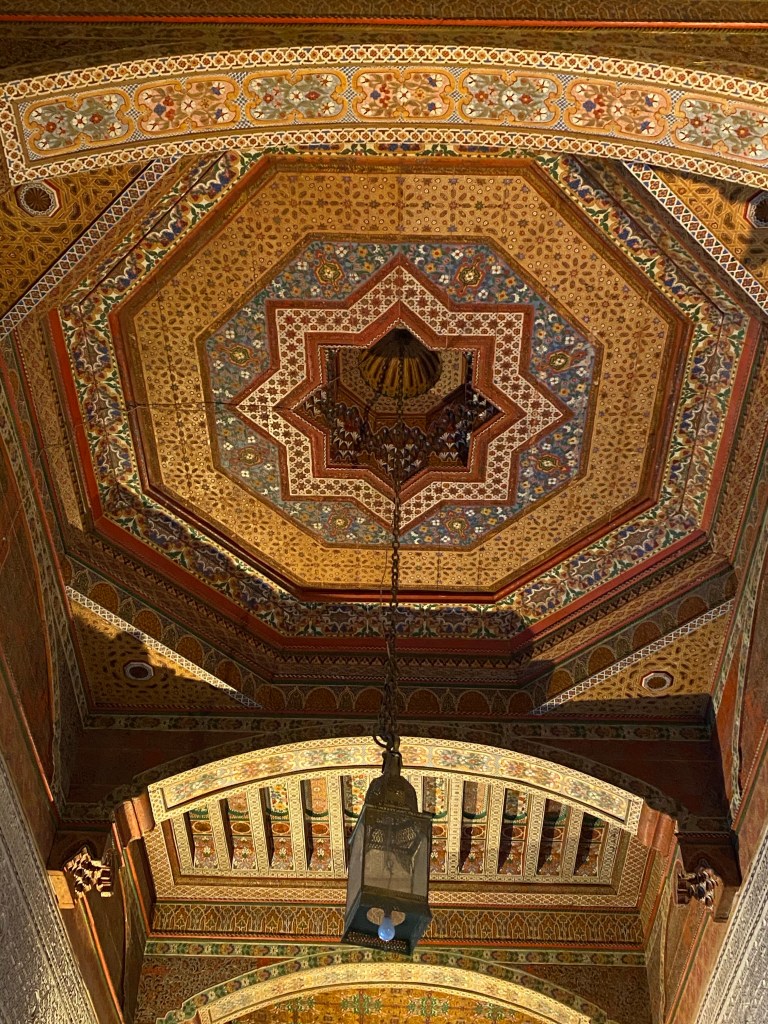
Ceiling inside palace
Gorgeous detail work in palace

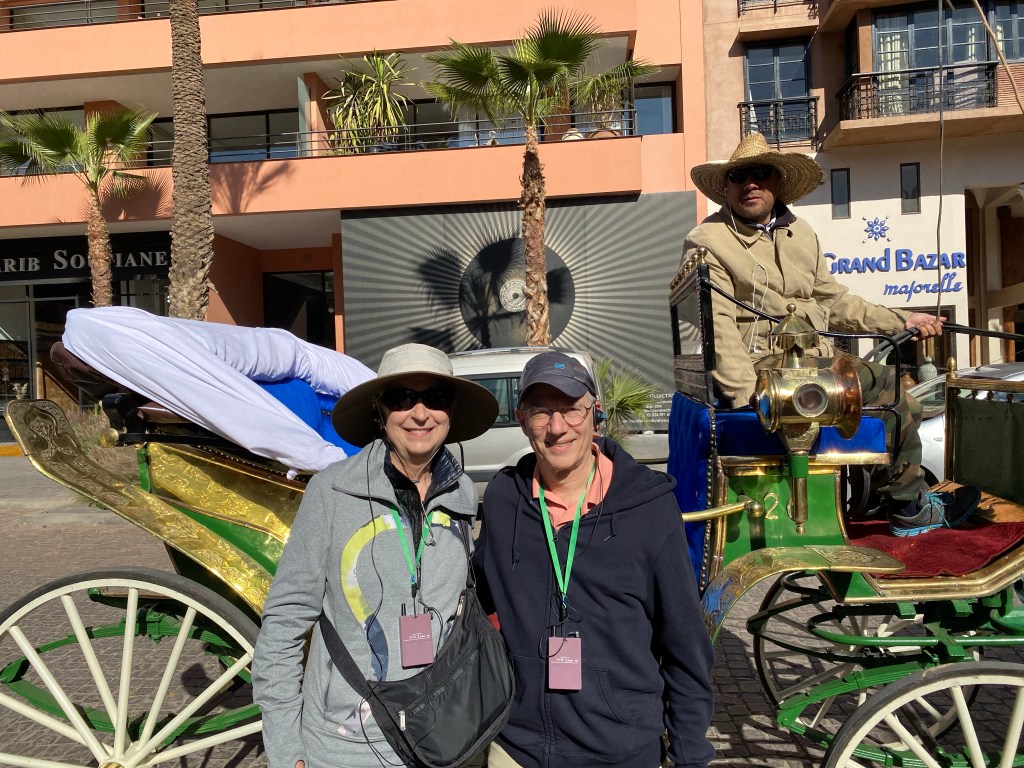
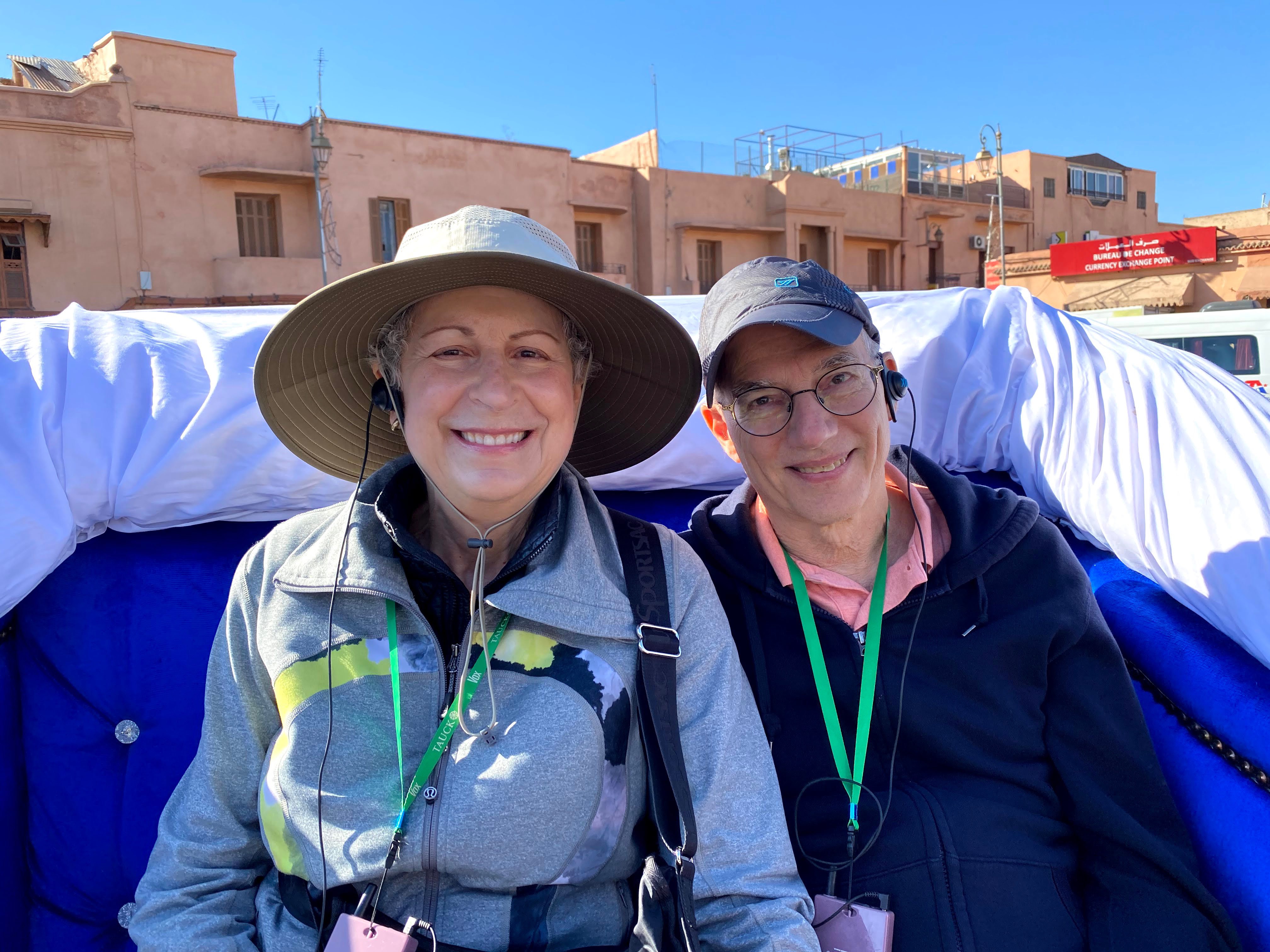
After the palace we took horse drawn carriages, which was kind of fun, to the Yves St. Laurent Museum. Unfortunately I don’t have a picture that includes the horses.

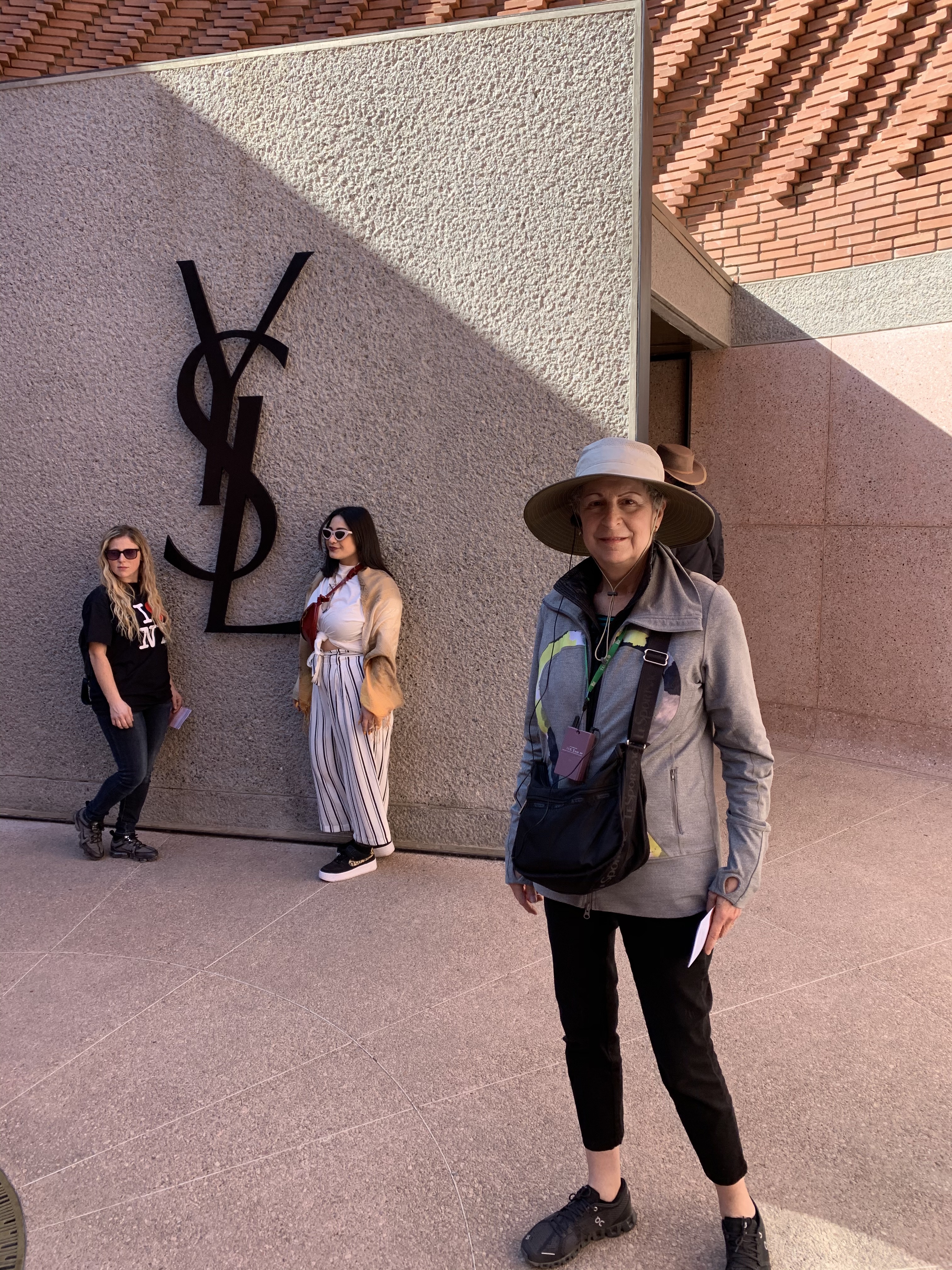
Yves St. Laurent lived in Morocco for a long time, and was a fashion god. He designed a lot of very creative clothing. The museum was very modern, and kind of small. Yves-Saint-Laurent was able to live openly as a gay man in Morocco. He was inspired by the local colors and native Berber jewelry and clothes.

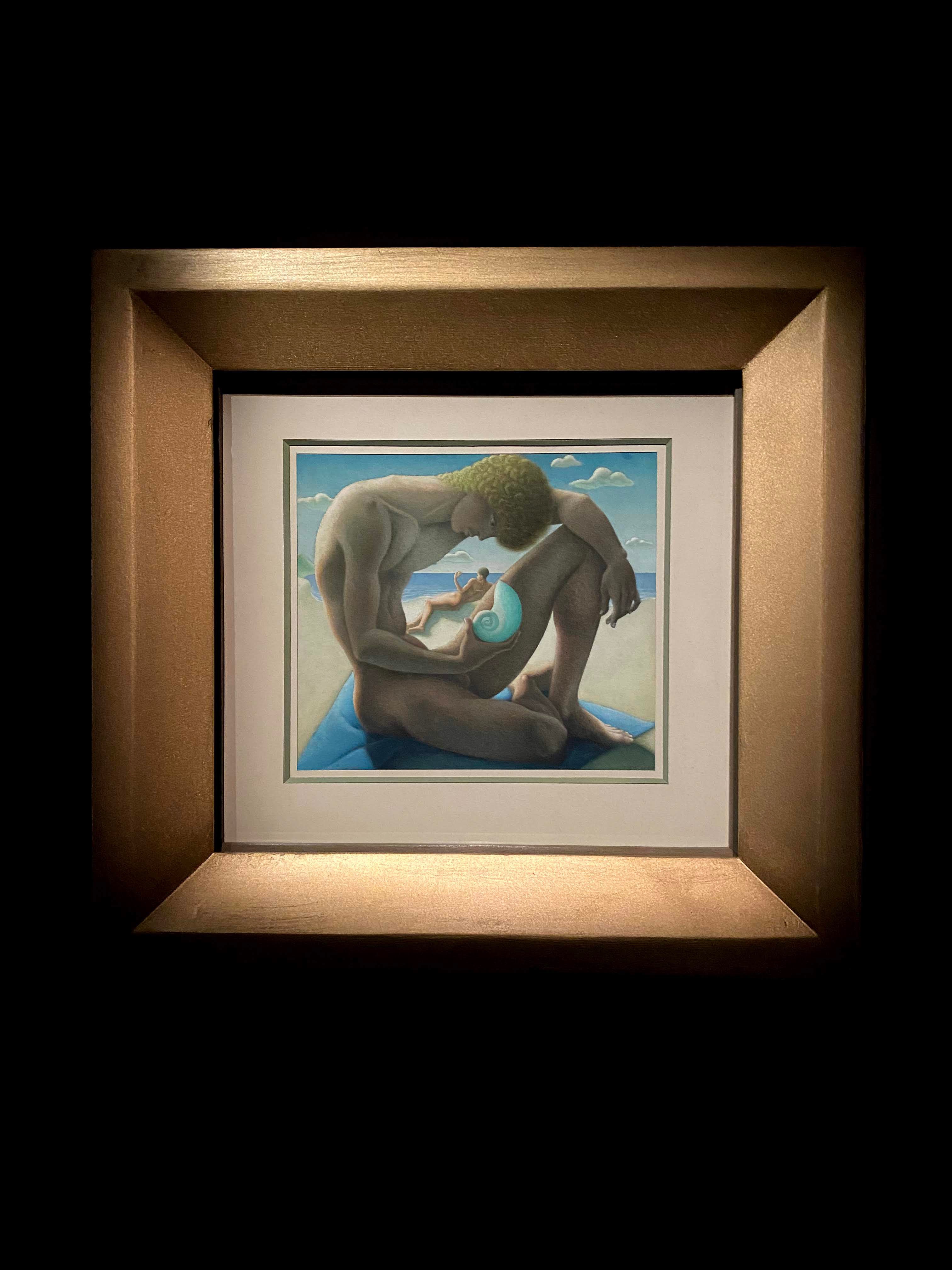
There was a temporary exhibit of artwork by Jacques Azema, which we enjoyed. Here is one of his paintings.

We then went to the Jardin Majorolle (Majorelle Gardens). There is a museum of Berber artifacts including clothing and jewelry in the garden that we walked through. The Berbers are the people who have lived in North Africa for thousands of years. Most native Moroccans probably have some Berber blood. I did not find the museum very interesting, but Barbara enjoyed it. We were not allowed to take pictures there.

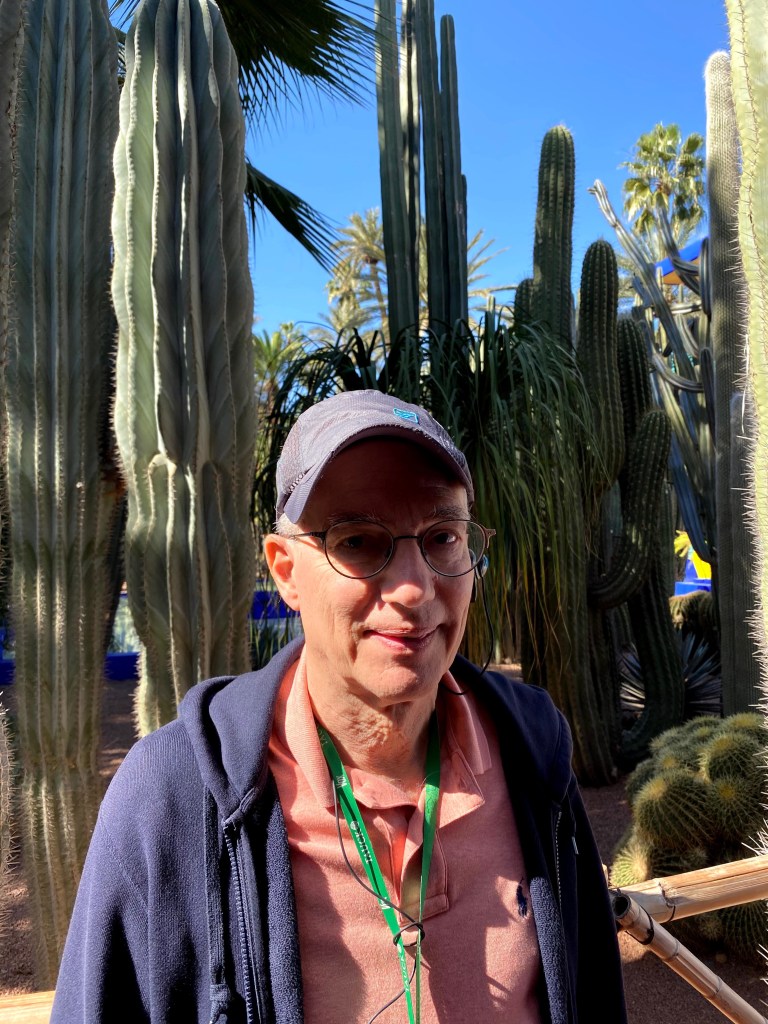
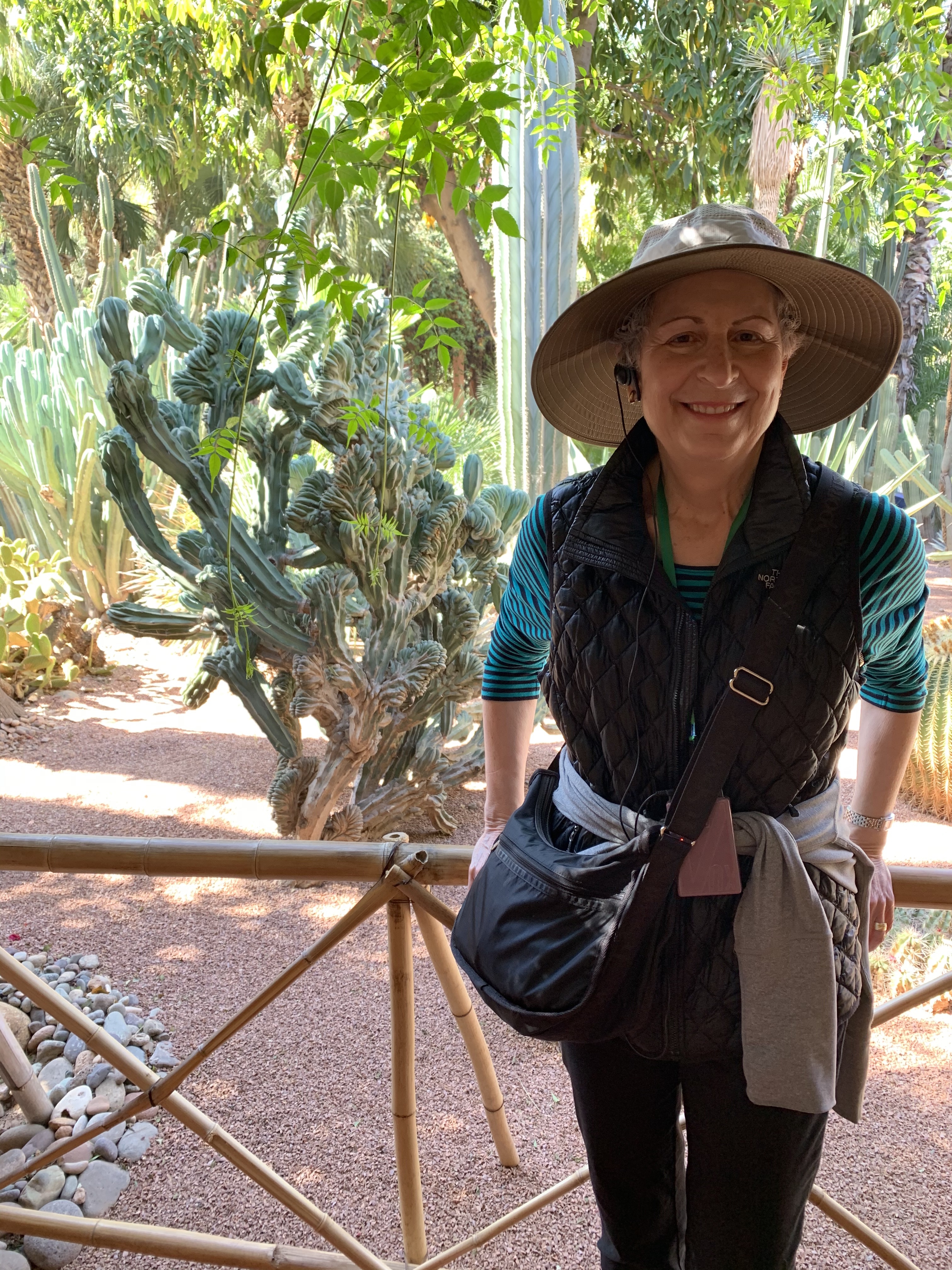
After the museum we walked through the gardens, which is just down the street from the museum. There was a lot of different kinds of vegetation, including many cactuses that looked like they belonged in Arizona.

We enjoyed the gardens, then had lunch at Kechmara, which was nothing special.

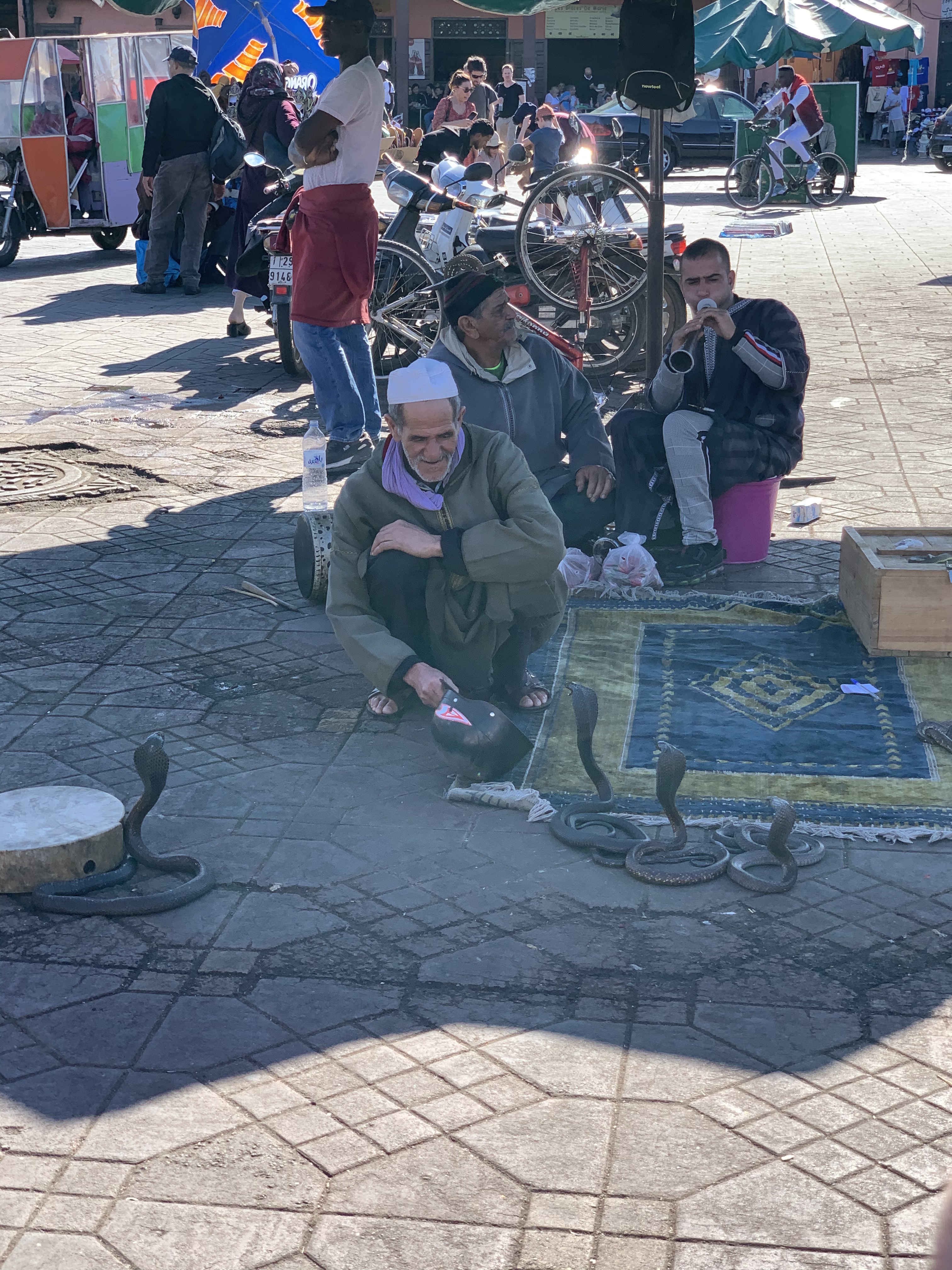
After lunch we walked through the Medina, which was very active, to get to the bus. We saw snake charmers, which were not as polished as those in our childhood cartoons, but it was still cool seeing them. The snake charmers make their money by charging people to take their picture.

Snake charmer
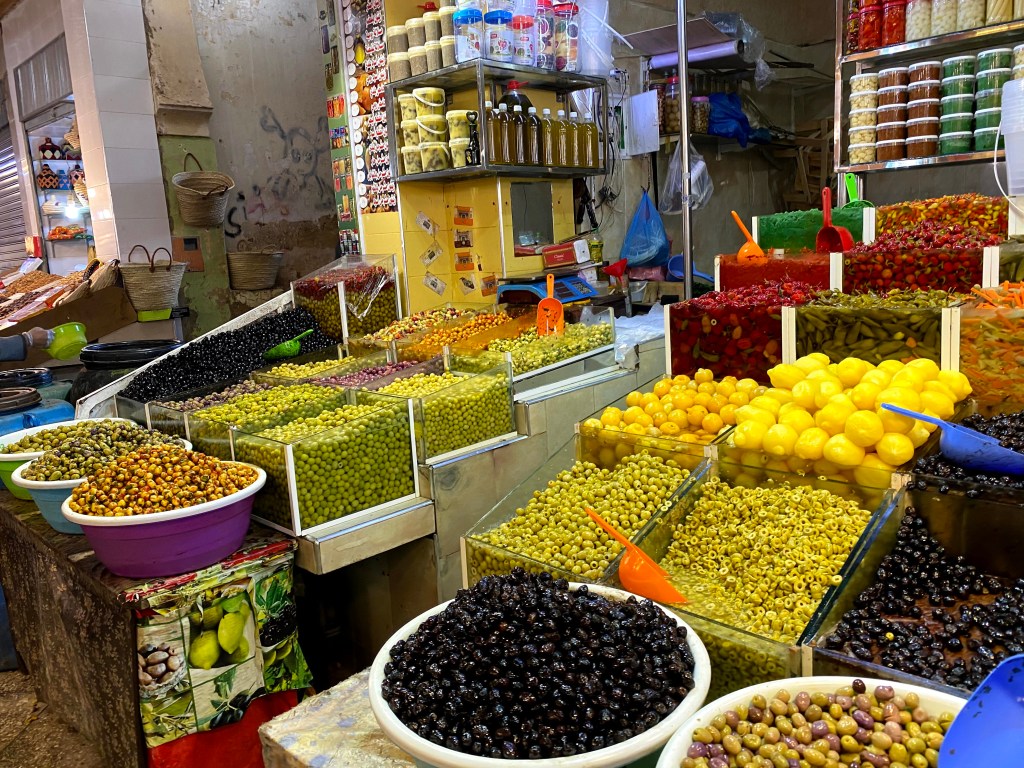
One of the many souks selling olives grown in Morocco

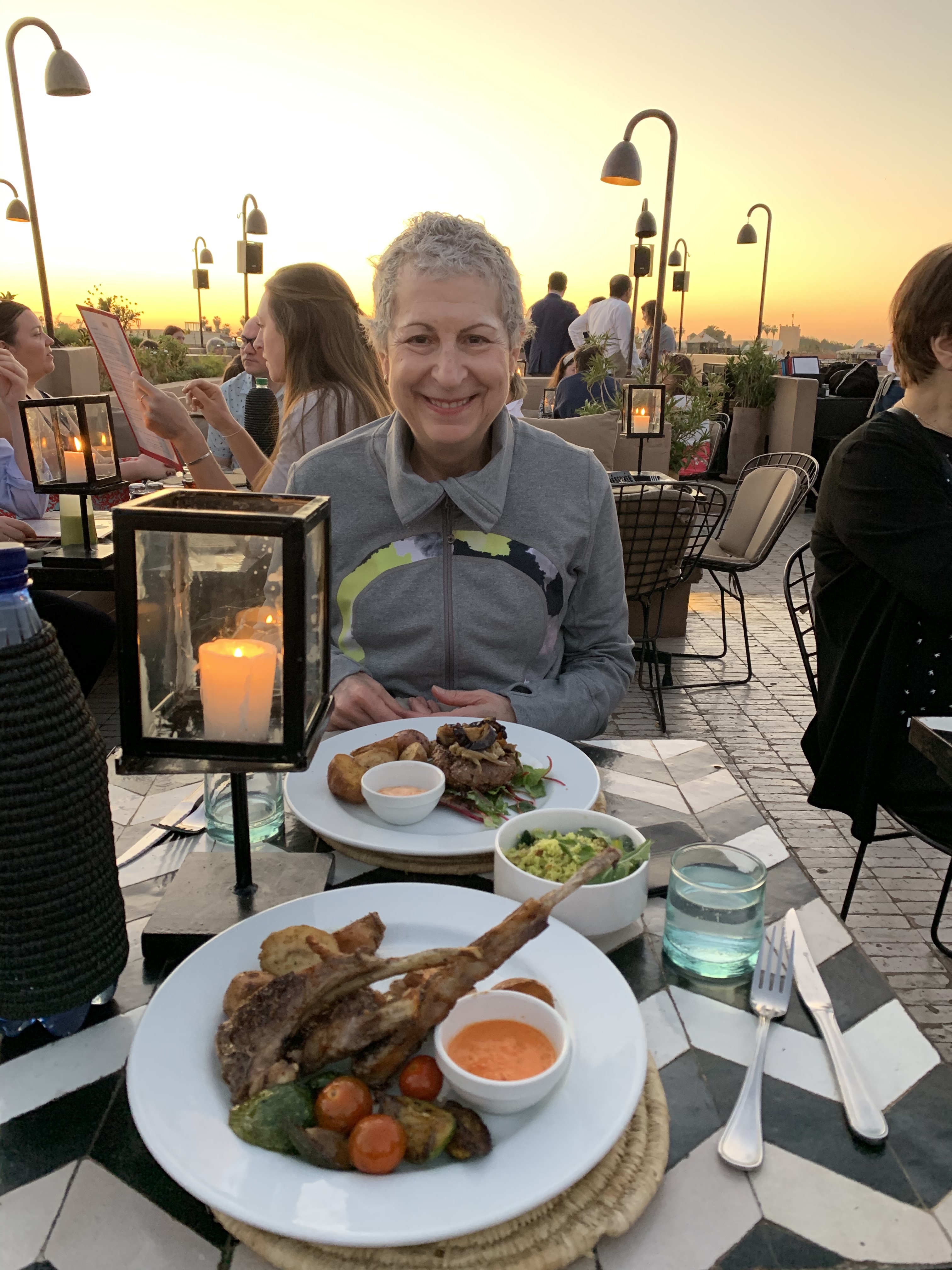
We had a little downtime at the hotel before taking a cab back to the Medina for dinner. Barbara and I had a romantic dinner on the terrace of a nice restaurant (meaning most of the people eating there were tourists & that you could trust that the food would not make you sick), Cafe Nomad. It was hard to find since the Medina is a big labyrinth, but Google Maps helped a lot. Walking through the Médina is a surreal experience, a throwback to another time. It was an enjoyable dinner. We had a vegetarian pastilla appetizer that was outstanding.

We heard the call to prayer while dining on the rooftop terrace. It was beautiful to hear and we could hear it coming from Mosques in many different directions. Here is a video of the call to prayer. I apologize if it takes too long to download.

We bought a small wooden camel and cobra on the way out. The guy started at $75 for the cobra and we ended up at $15. The owner of the souk where we made the purchase asked us if we were American. When we said yes he said to us “I like Obama, I like Clinton, I like Kennedy” and he said he didn’t like Trump. We told him he is a Democrat.
We then found our way out of the Medina and took a cab back to the hotel. This was a very full and enjoyable day.

Casablanca. February 21, 2020

Today (Friday – I’m a little behind) was a bad day. I woke up feeling like I hadn’t digested my dinner the night before, and I found out a little later that I definitely hadn’t. Things got worse as the day went on. I threw up twice – once outside a mosque (not my finest hour, although it was into a bag) and once in the bathroom at Rick’s Cafe. The good news is that I am writing this on the following day and I feel great. A lot of people on the tour with us also got sick.

The following is mostly written by Barbara since I was in no shape to do much other than throw up and sleep.

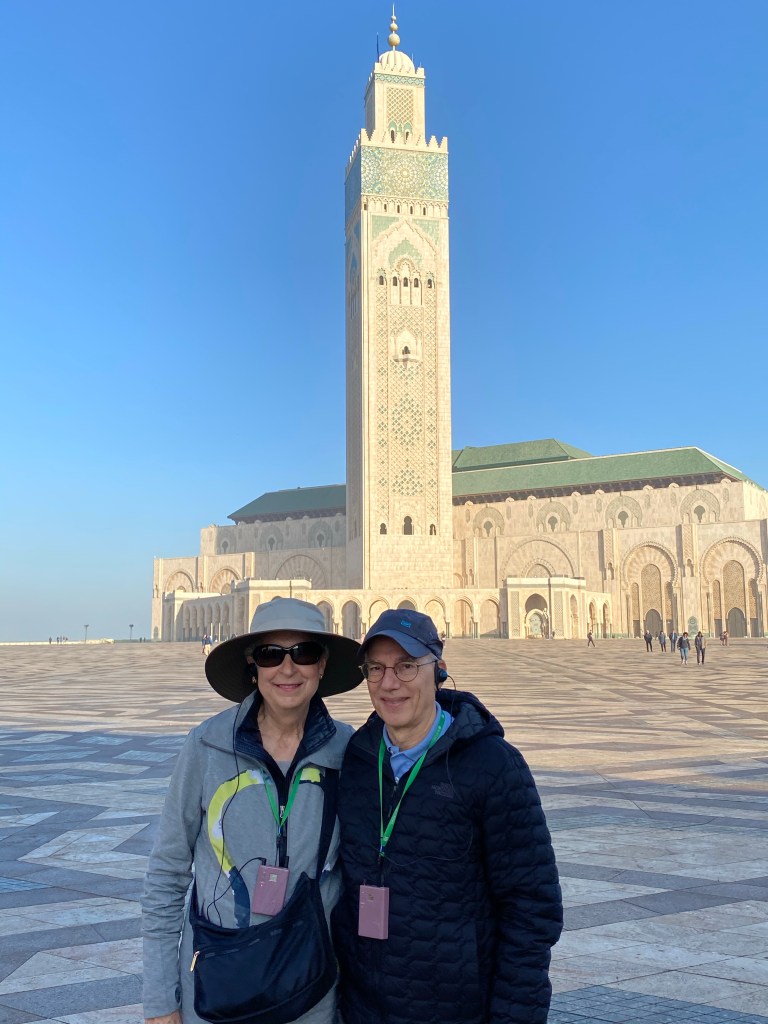
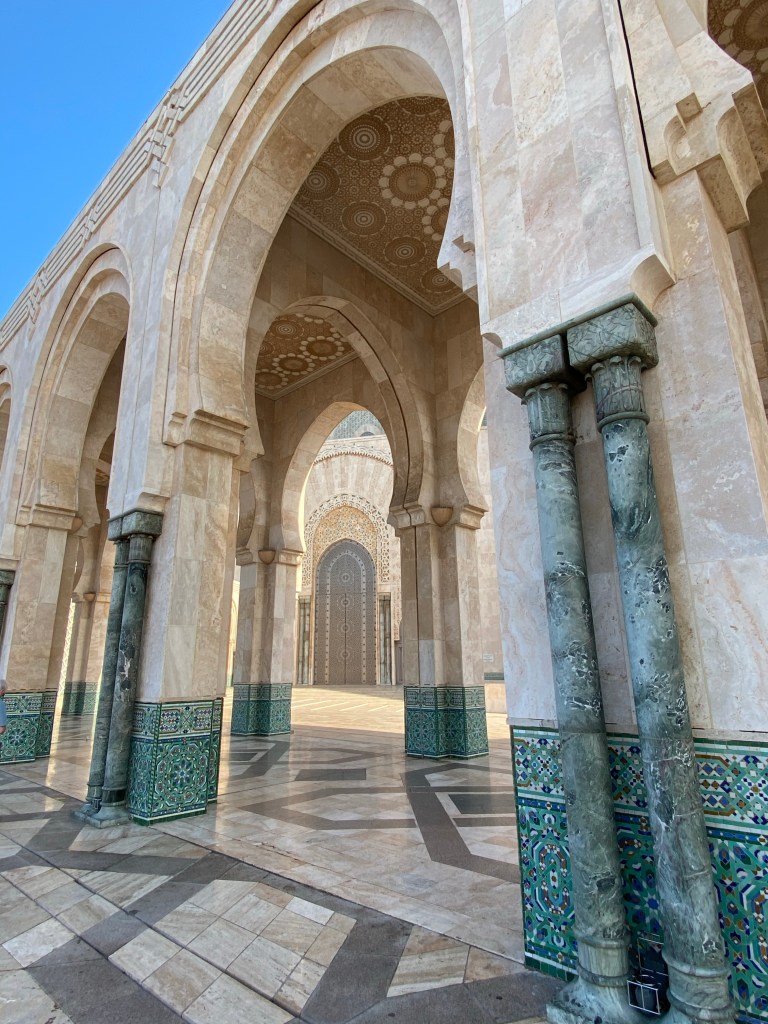
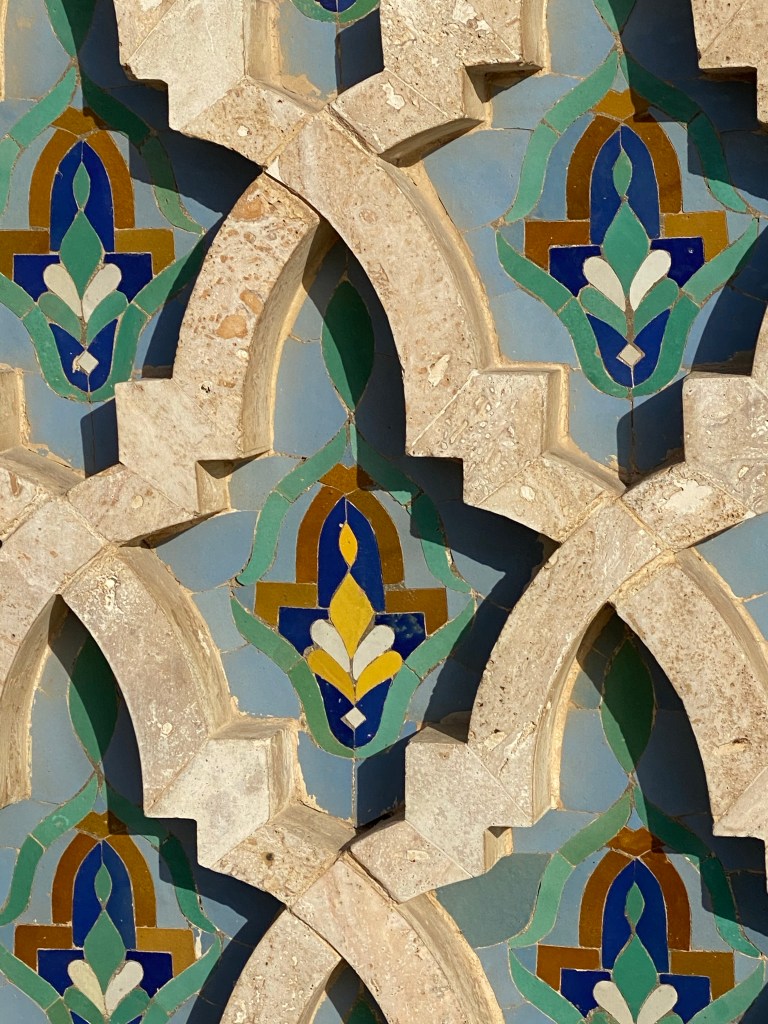
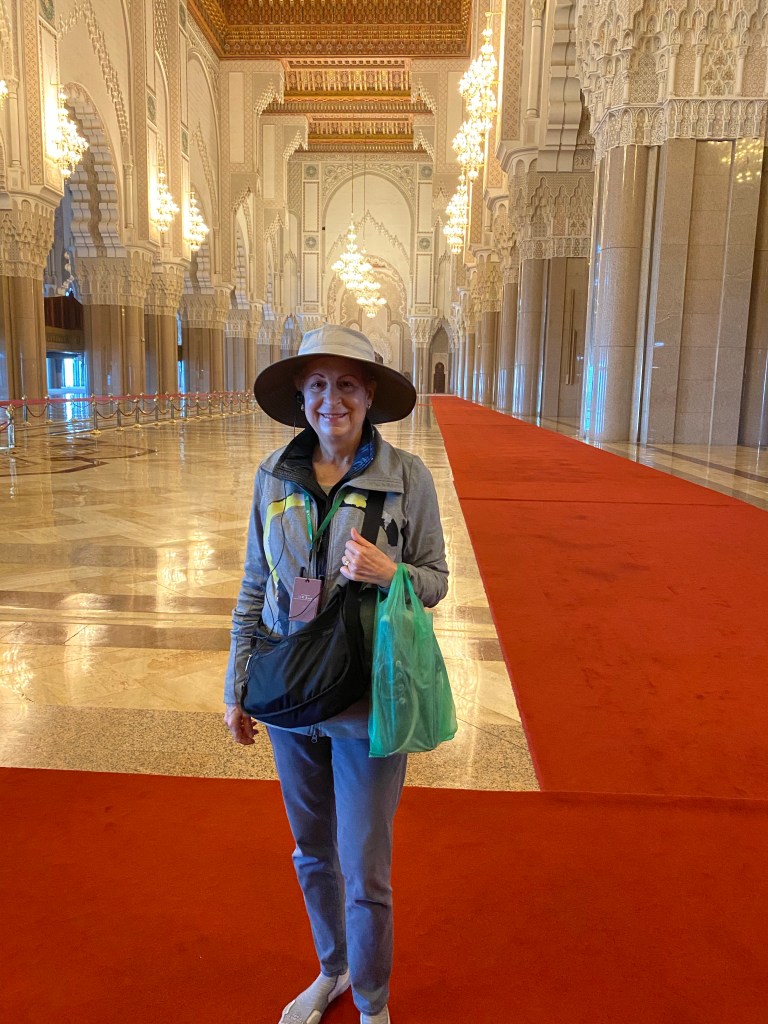
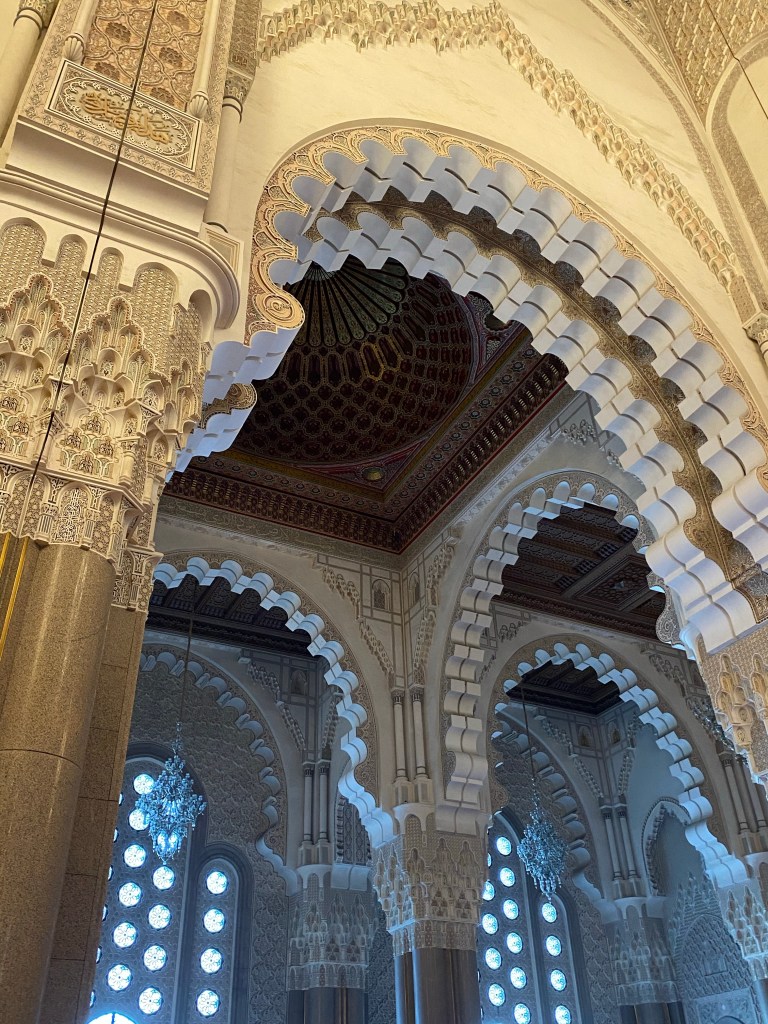
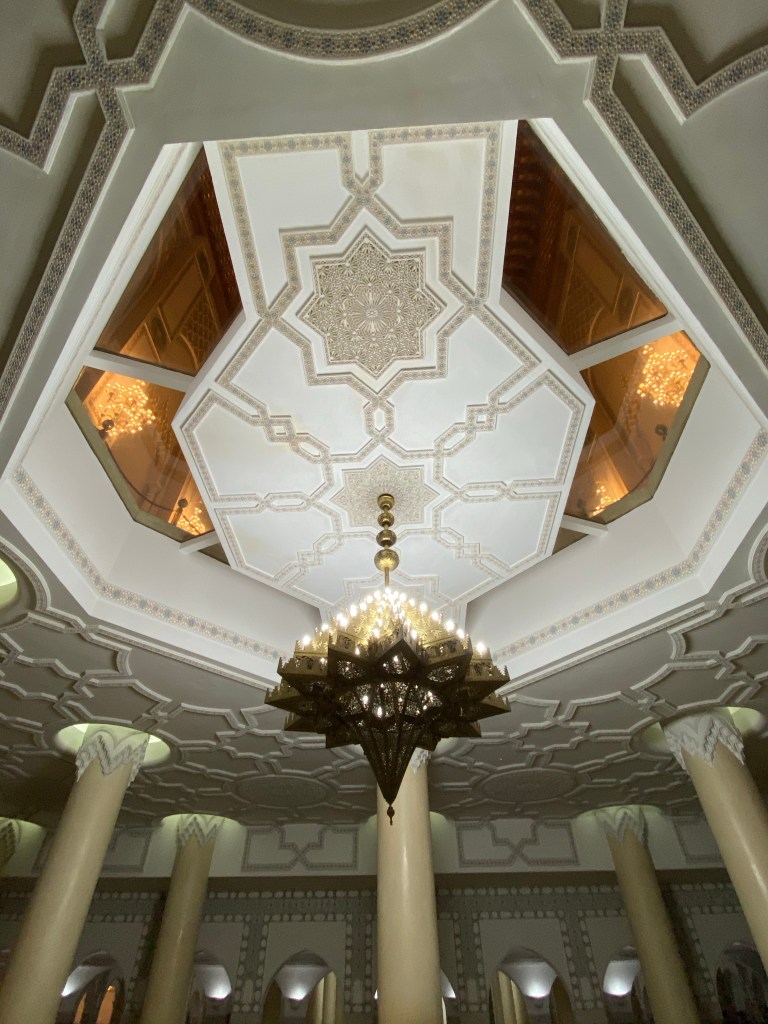
We first went to the Hassan II Mosque. This is a fabulous mosque that was built in the 1990s, so is hundreds of years younger than most of the other mosques we have seen. It’s hard to describe how beautiful the mosque is. First it is massive in scale. 25,000 worshipers can attend a prayer service inside the mosque at one time, plus another 80,000 in the mosque’s courtyard. It took 7 years to build using 3 eight hour shifts each day & required many different types of artisans including wood carvers, mosaic work, experts in plaster etc. The chandeliers are Italian Morano crystal & they are everywhere. Pictures tell the story of all the detail work so see below.

Exterior detail
Mosaic exterior detail
Interior area for prayers
Interior prayer room detail

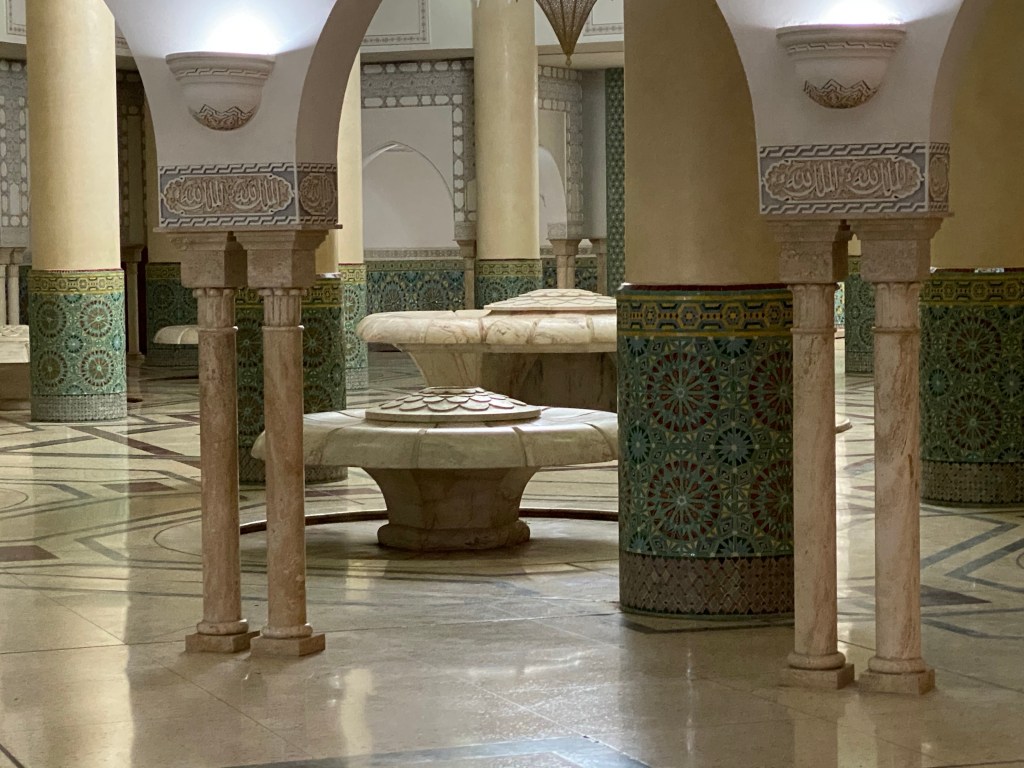
The lower level is for washing before prayers. The fountains of rain water used for washing are themselves works of art & there were too many to count. Even this lower area is filled with beautiful artistic detail. See below.

Fountains used for washing before prayers
Ceiling detail

We had a very interesting lecture that portrayed Islam as a peaceful & moral religion.

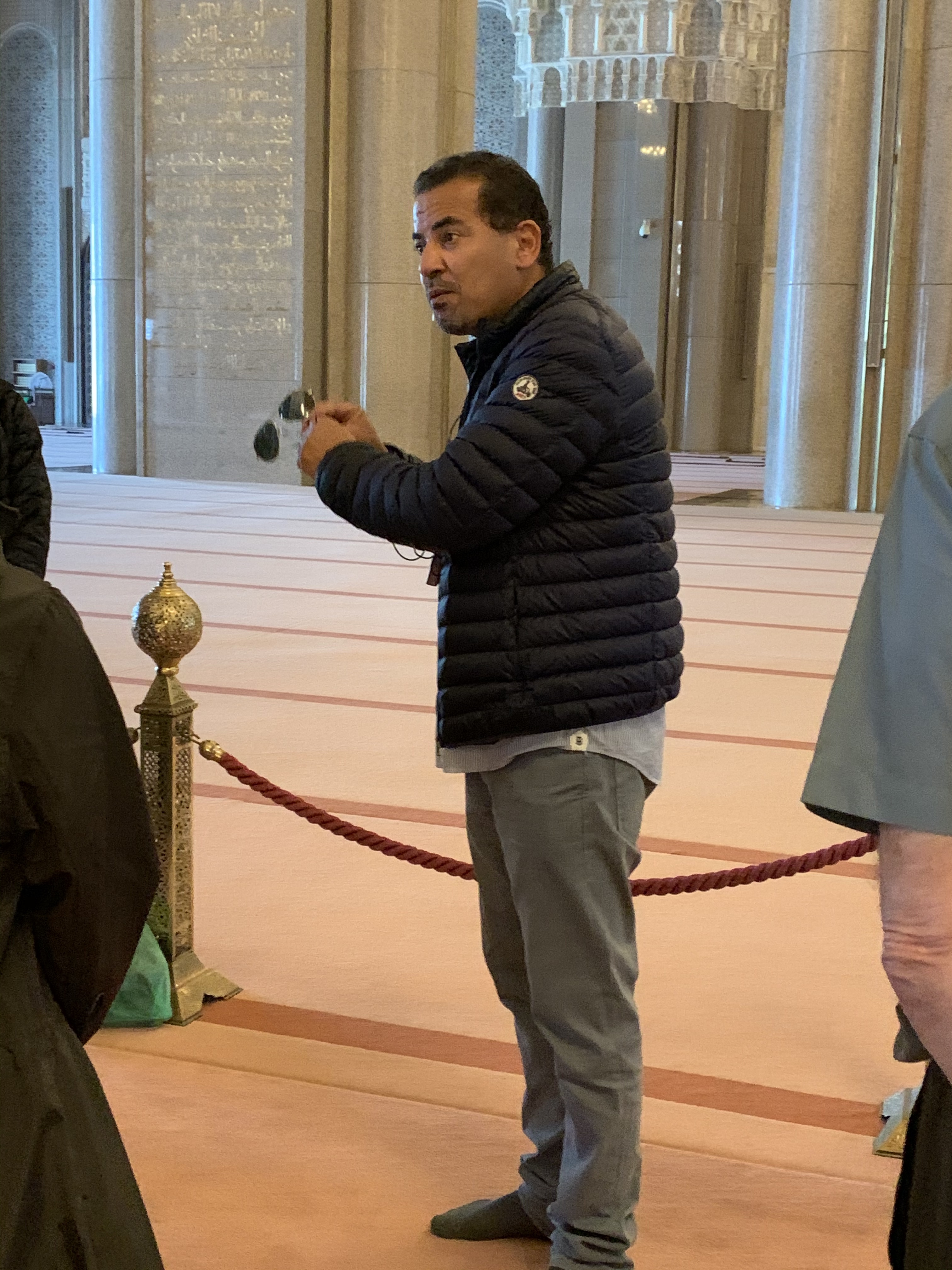
Our guide Ahdnan

Moroccan people really condemn the extremist elements in the religion & we learned that France sends all their Imams to Morocco for training & they cannot preach without being certified in Morocco. The hijab is banned in Morocco. One really interesting thing is they cannot question anything in the Koran, they must accept it as it is written. Our local tour guide said that the Koran is not open to interpretation. However, as in all religious texts, people interpret it very differently. That is how terrorists justify horrible violence in the name of Islam, but most Muslims view it as a peaceful and tolerant religion.

Note from Jim – I felt good after my little episode outside the mosque, so I was able to enjoy it. It was beautiful and very interesting.

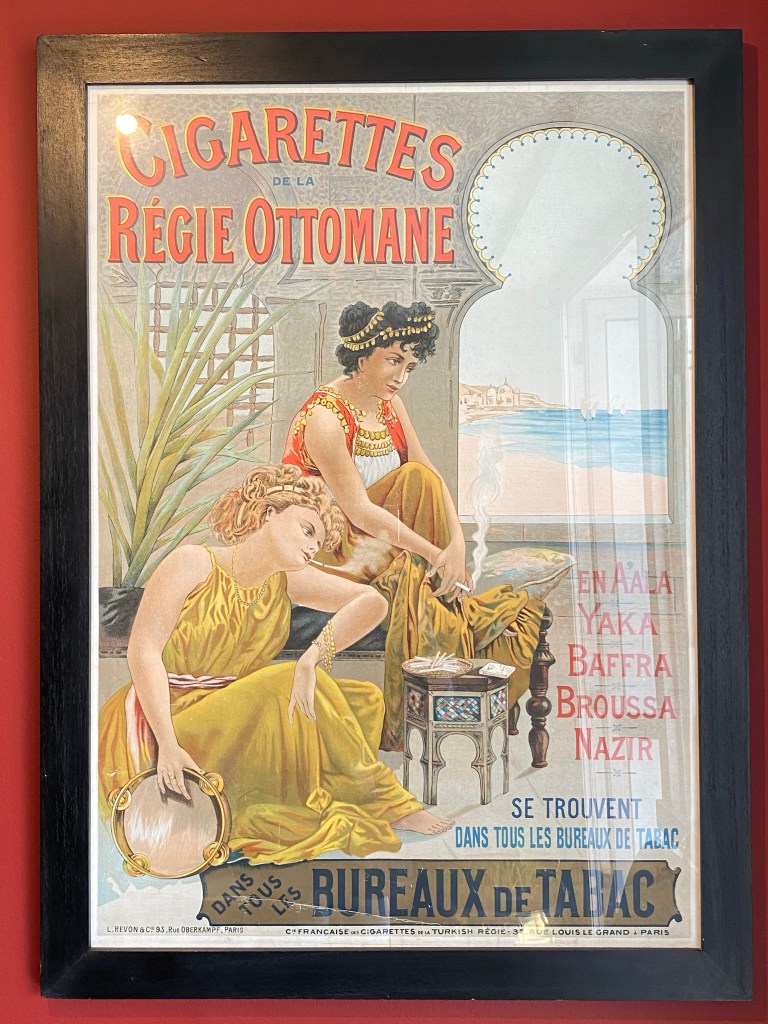
We then stopped at a museum – Musee Abderrahman Slaoui. We viewed a collection of vintage posters, jewelry, pottery etc. The poster below is for cigarettes. Smoking is still very popular in Morocco & is still permitted in restaurants and bars.

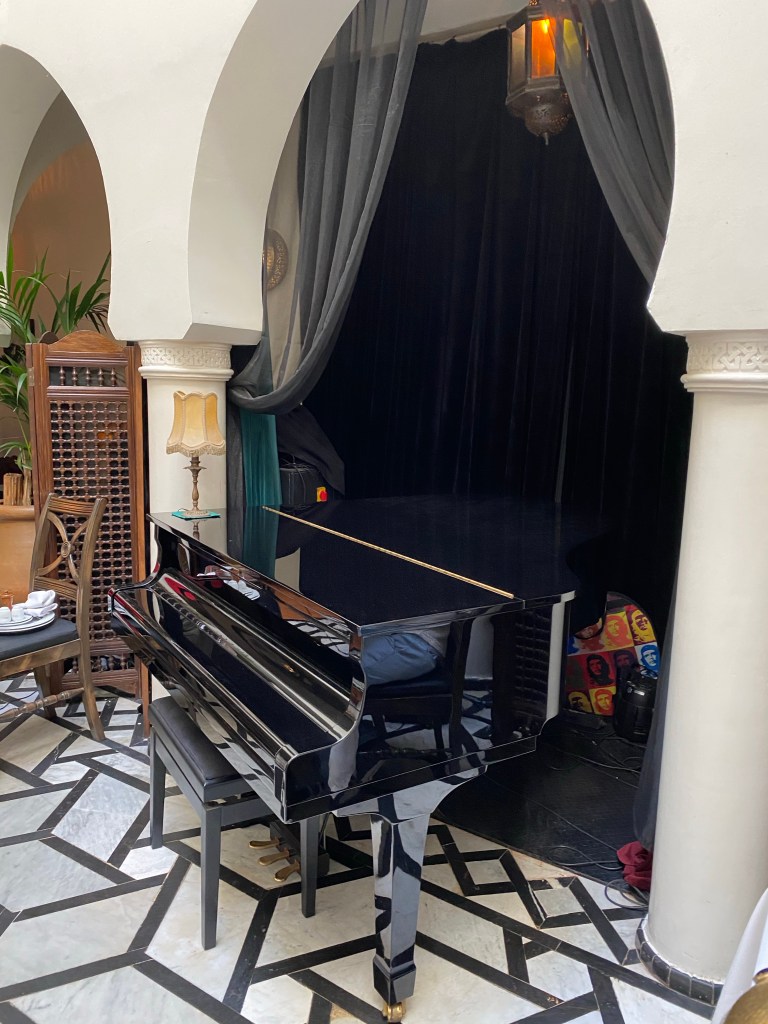
We had lunch at Rick’s Cafe. A recreation of Rick’s Cafe Americana from the movie Casablanca. The movie was actually shot in a Hollywood back lot, so the restaurant is an image of an image. It is located in a beautiful Art Deco building & the piano is a baby grand not an upright.

We then got on the bus for the four hour ride to Marrakech. Jim slept the whole way there (plus he slept through dinner). We are staying at the Marrakech Four Seasons, which is a beautiful, sprawling resort.

Fez, Meknes, and Casablanca. February 20, 2020

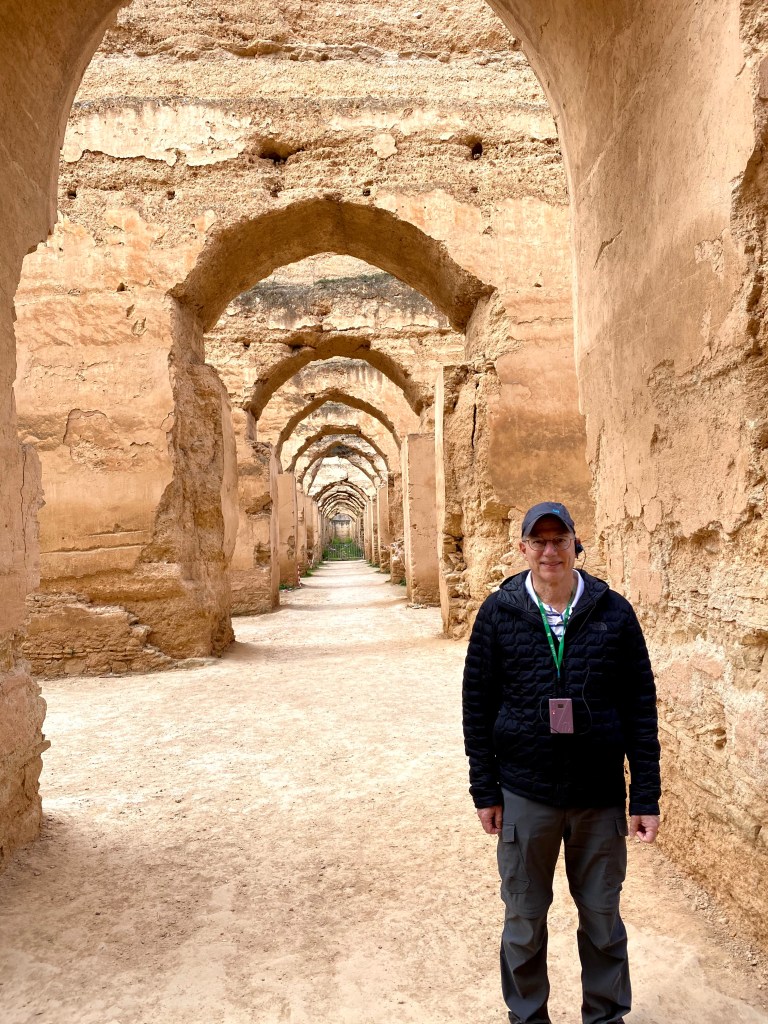
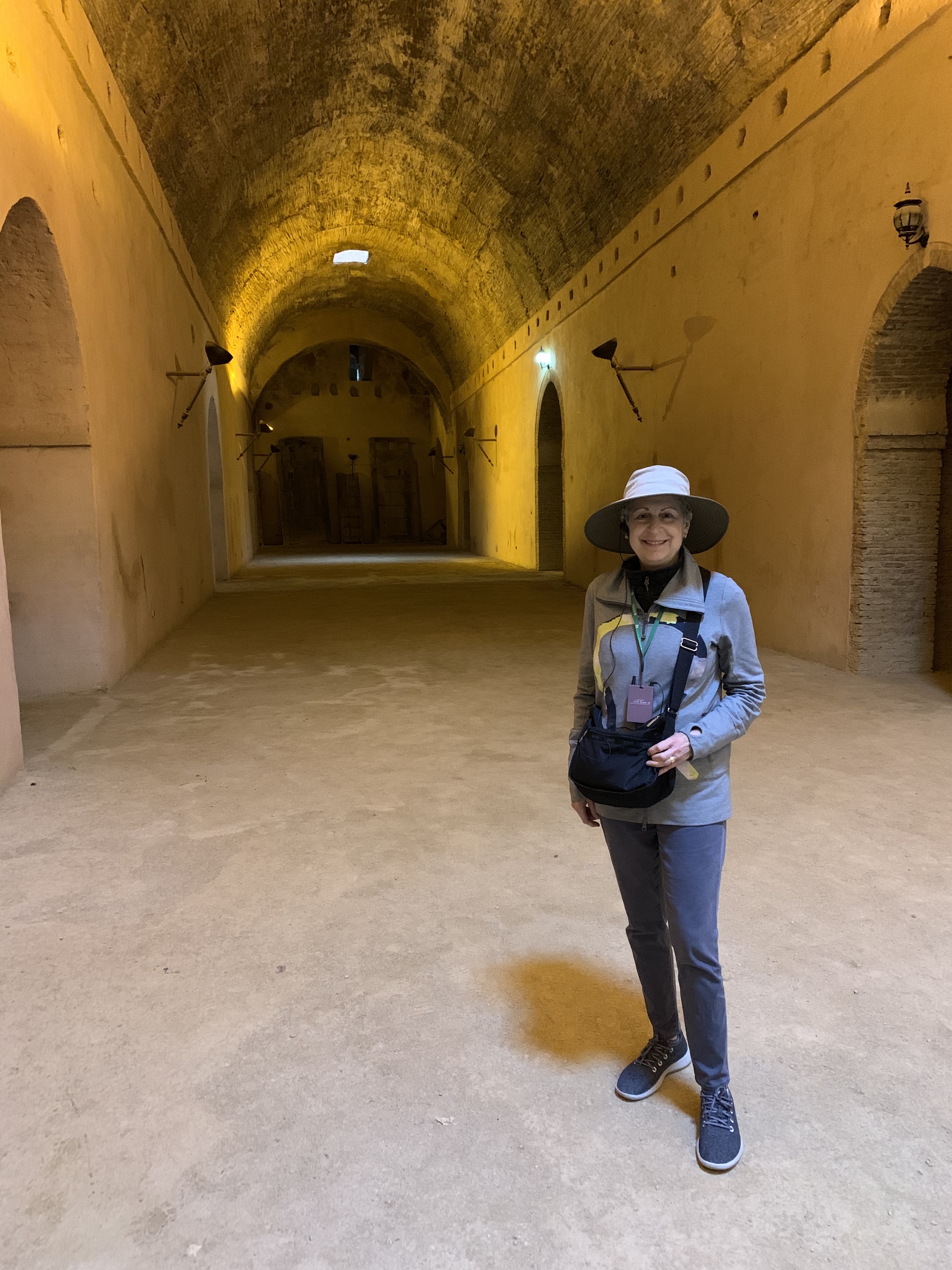
We left the hotel at 9:00 for the drive to Meknes, a medium-sized town on the way to Casablanca. We first stopped at the granary and horse stables built in the 1600s by Sultan Moulay Ismail.

The stables
The granary

They are no longer used but at one point the stables held 12,000 pure bred Arabian horses that were used by the king’s army, and the granary held enough grain to feed all of the horses. The scale of the buildings and the thoughtful design was amazing. There is a lot of talk in the United States about income inequality, which I believe is a serious problem, but it is nothing compared to monarchies where the king had (or has) fabulous wealth and everyone else was extremely poor – either slaves or paid sub-poverty wages. Supposedly the people taking care of the horses worked only for food. We don’t know how they paid for their other expenses.

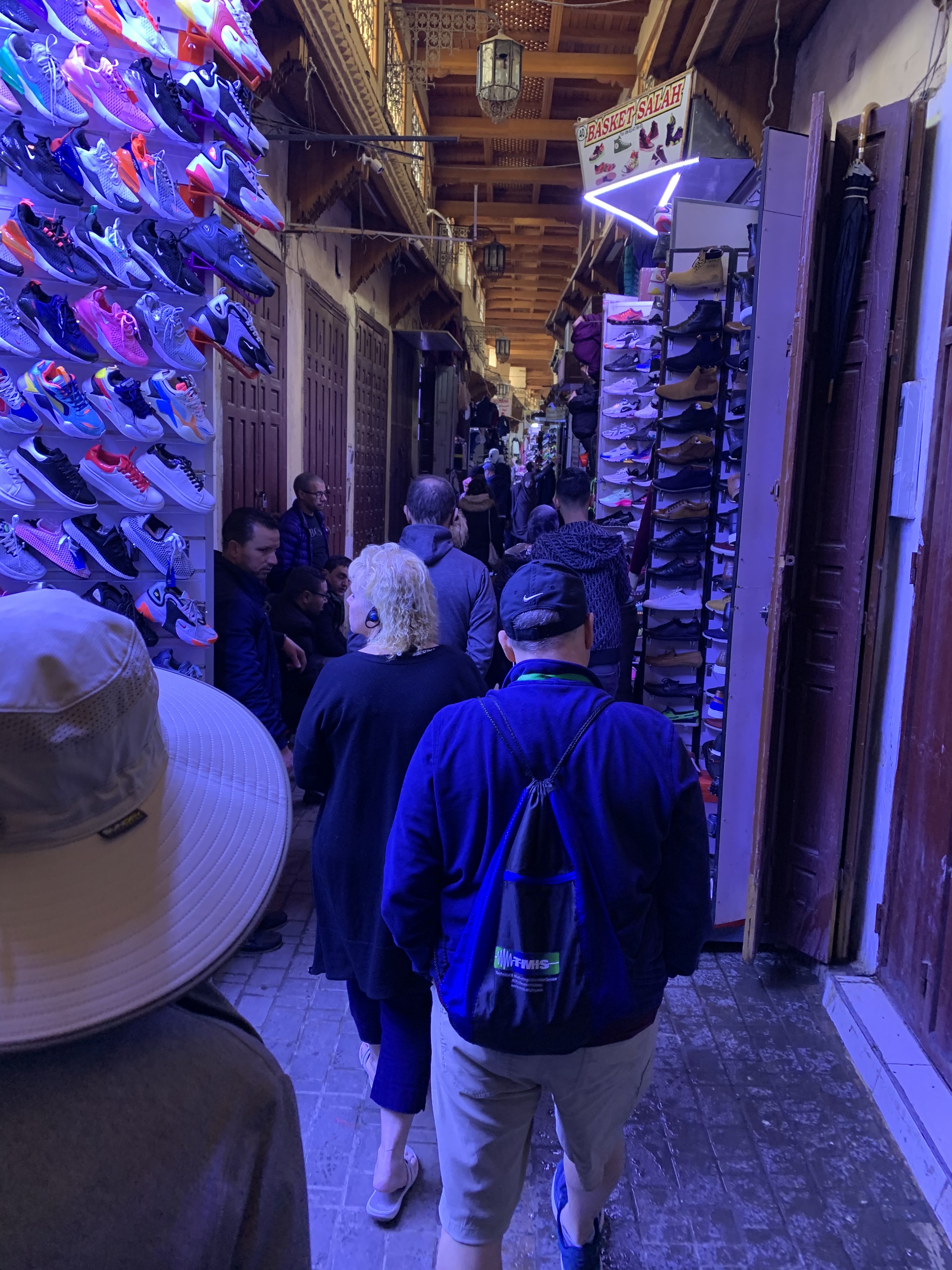
After viewing the granary and stables we walked through the Meknes Medina, which is less hectic than Rabat and Fez, and has a lot more modern goods to sell.

They also had more traditional Moroccan items.

We stopped at a Koranic school where children learned about Islam. The school was closed hundreds of years ago but the building still exists. Children who went there became full-time students for the rest of their lives and spent many years traveling abroad to learn about the world. The school was closed when the French took over Morocco and instituted free public school.

We then walked through the Medina to a restaurant, Riad Bahia, for lunch. The restaurant owner had grown up in the building and came back to restore it and open it as a restaurant. The food was good.

After lunch we got back on the bus for the three hour drive to Casablanca. They showed the movie Casablanca on the way, which was a great movie and made the time go faster. We are staying at The Four Seasons in Casablanca. It is very nice and right on the ocean. We walked along the beach for a while and then went back to the room for dinner.

We had dinner in the restaurant. We are only staying in Casablanca one night so we didn’t really unpack.

Volubilis, Morocco. February 19, 2020

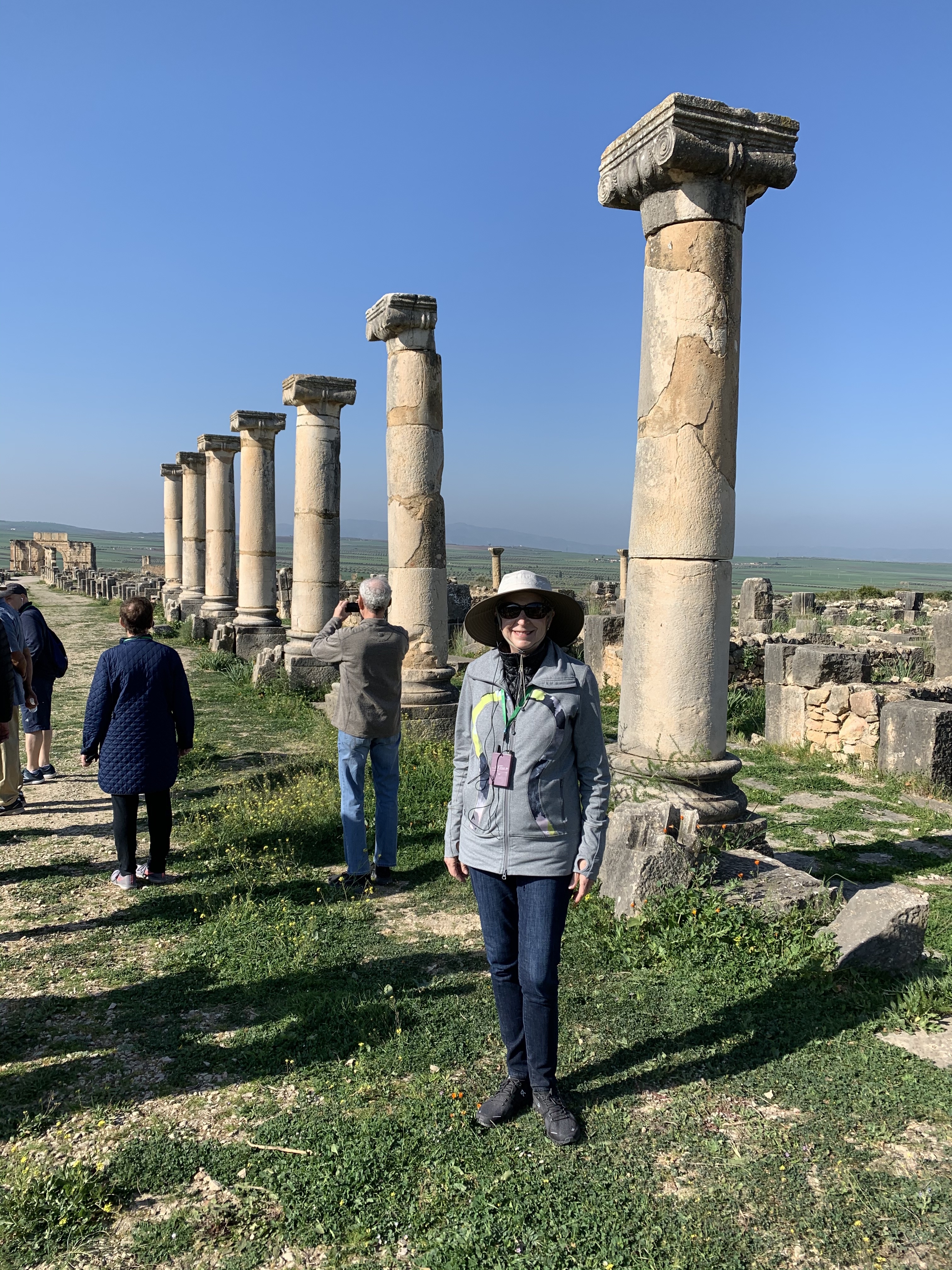
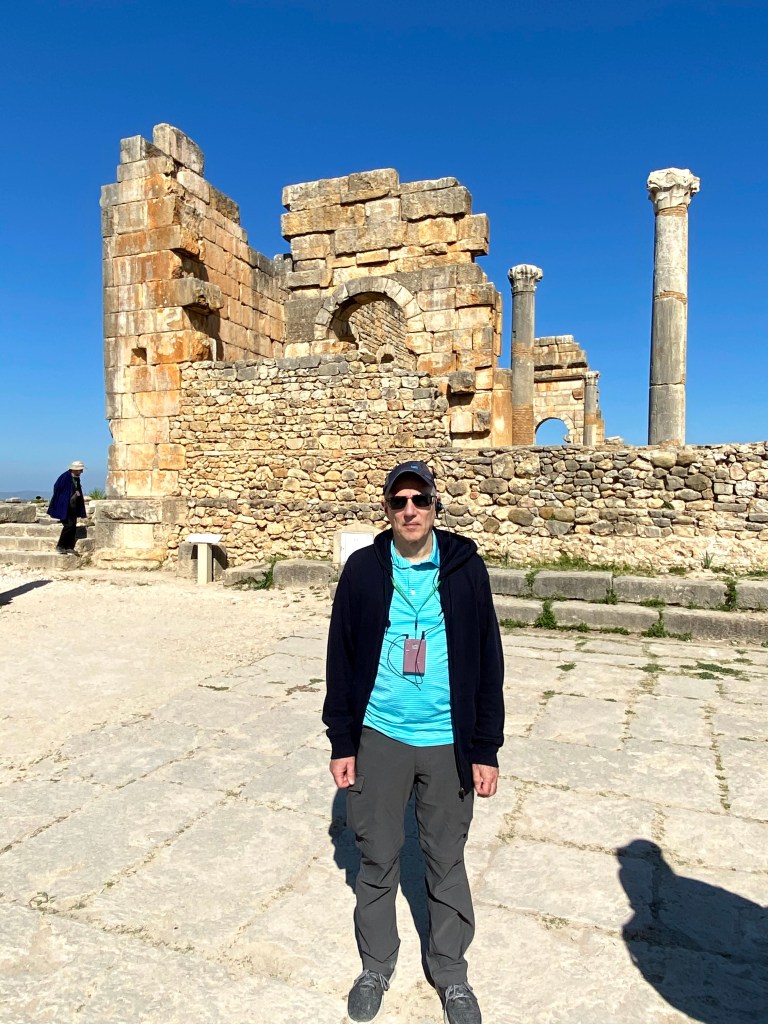
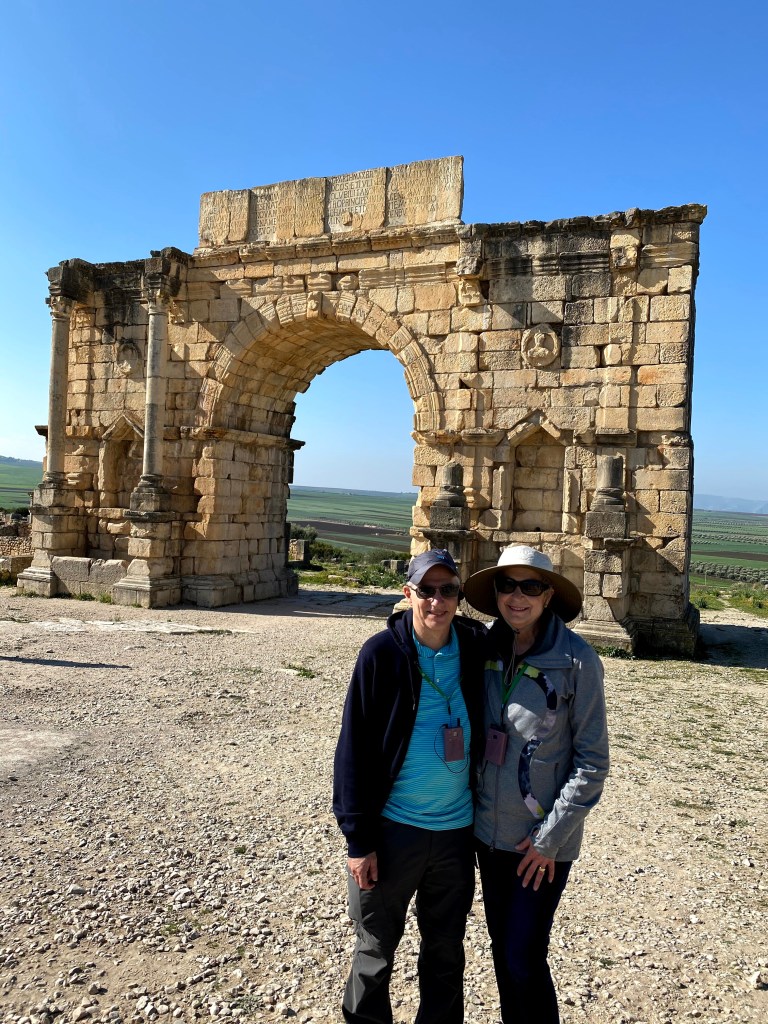
We left the hotel at 8:00 for a two hour bus ride to Volubilis, which is a 2,000 year old Roman city that is being excavated.

Walking around the city was fascinating. They have excavated a lot of rooms, pillars, aqueducts, temples, etc..

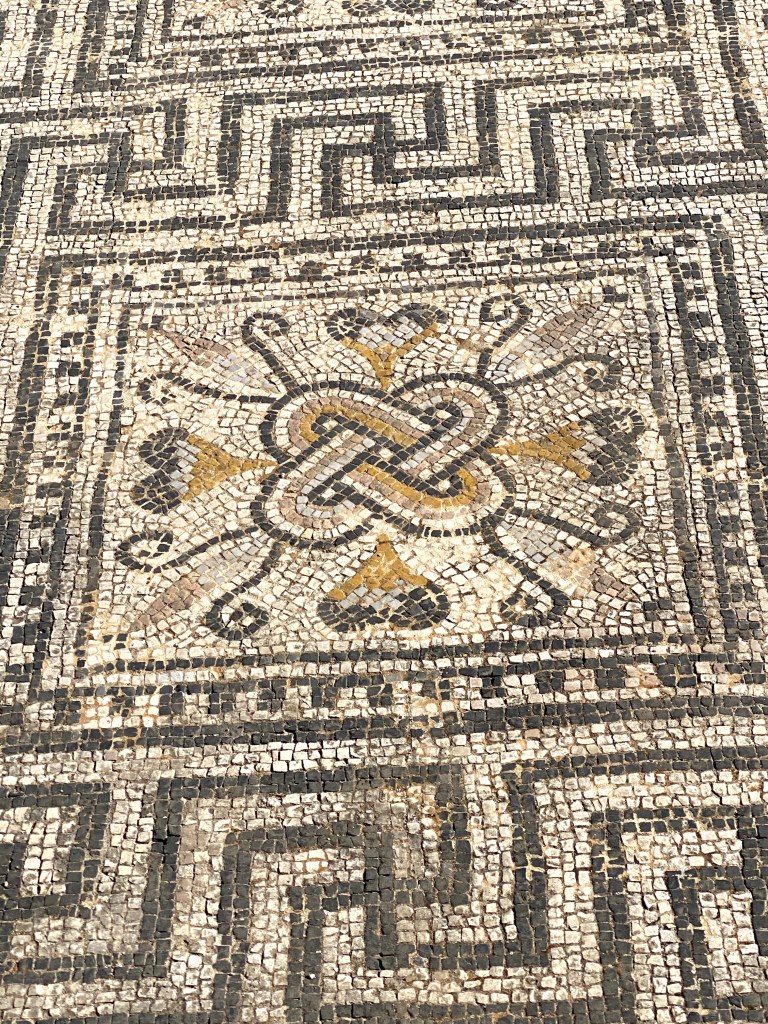
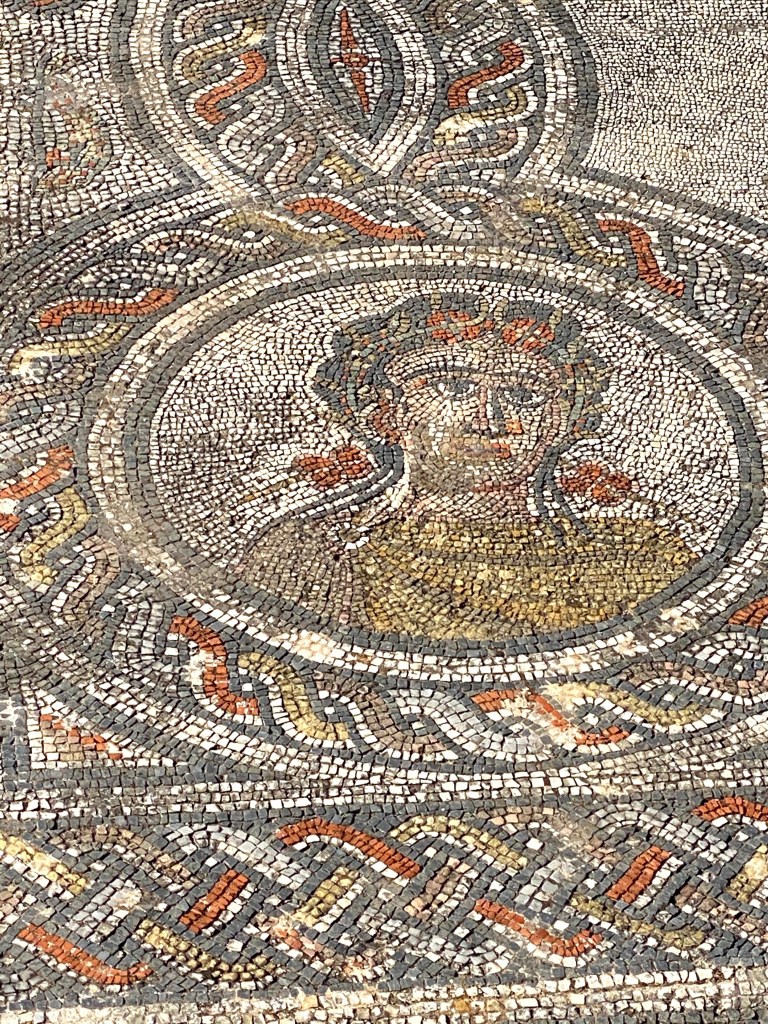
There was even a vomitorium where people went to purge so they could eat more. There were a lot of mosaics on the floors that were in good shape, especially considering they had survived 2,000 years and an earthquake that leveled the town in the 1700s.

It was fun to imagine the city in its prime with Romans walking around, and thinking how great it was that we were actually able to see it.

We spent around two hours there with a very knowledgeable guide.

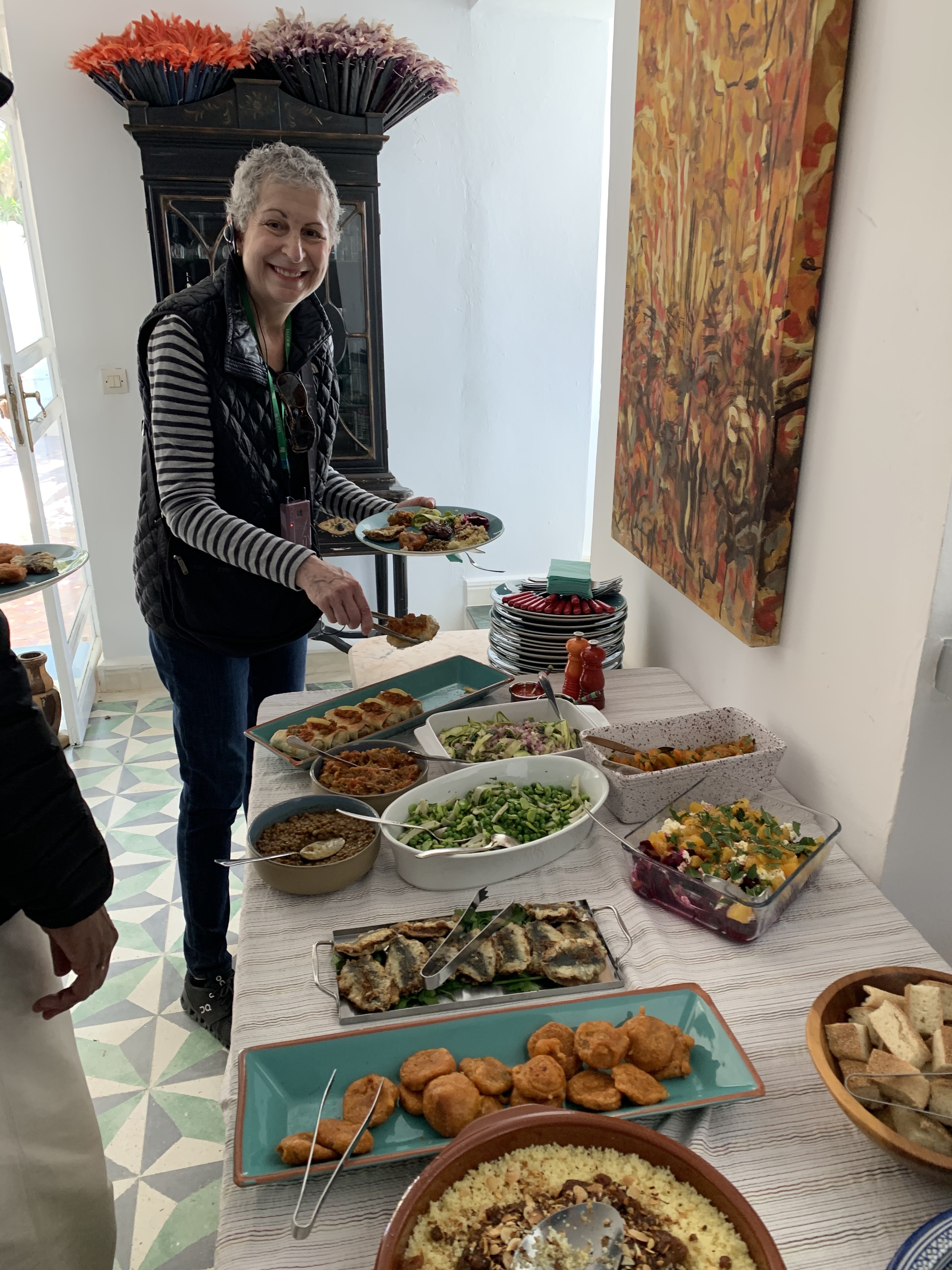
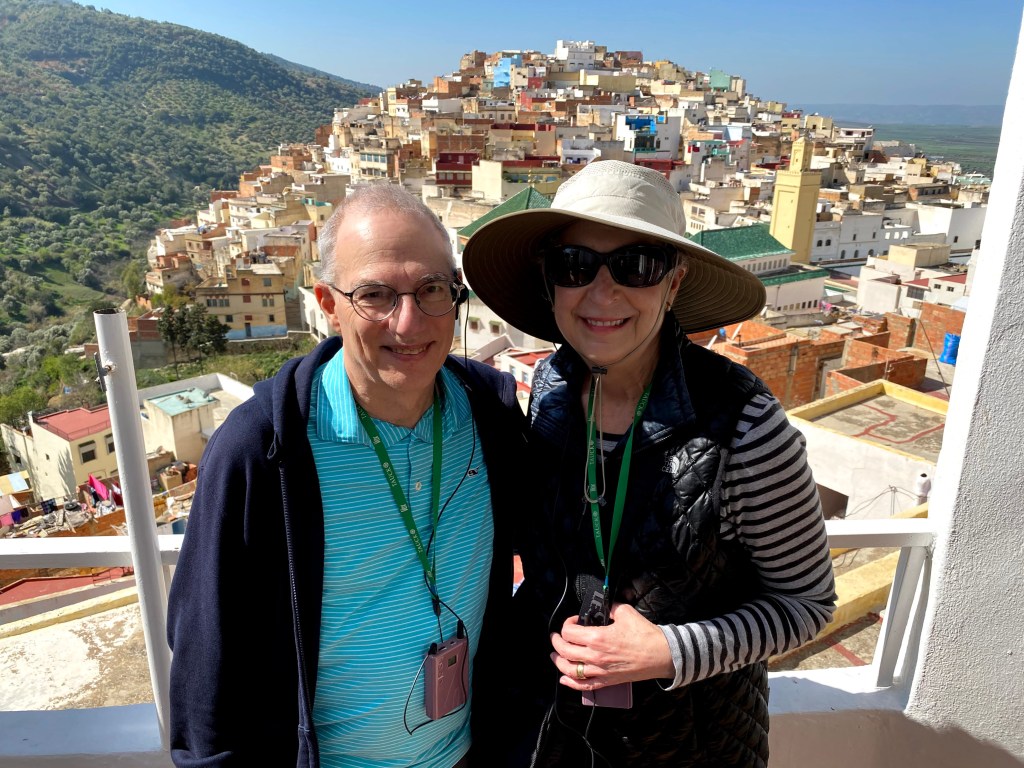
We then went to lunch in Moulay Idriss, a poor Moroccan town off the beaten path. We had a buffet lunch at Scorpion House, which is also where the restaurant owner lives. It was a very long and steep climb to get to the restaurant from where the bus dropped us off, so we worked up an appetite getting there. The food and the view were great.

After eating we listened to a professor talk about women’s issues in Morocco. Here is Barbara’s description of the talk:

At the private home where we ate lunch we had a lecture by a female college professor. She spoke about the role of women in Morocco. Morocco is a society based on the patriarchy. Women have been second class citizens & the reason the men use is due to the fact that they are unclean due to menstruation, along with religious reasons & the traditional role of women as mothers. The professor teaches gender studies & slightly more than half of the university students are women. Most rural women are illiterate & are kept as second class citizens due to this fact. Women in the cities can work to earn their own money & this gives them power. There are women in government & professions. There is free public education but it is difficult for rural women to physically get to school so most don’t attend. Thing are improving for women just not for all women. There was a question about the GLBT community (not by us) & she said they have always openly existed in Morocco which practices “Islam lite”. It sounds similar to the states although there is no legal gay marriage. It was a very interesting lecture.

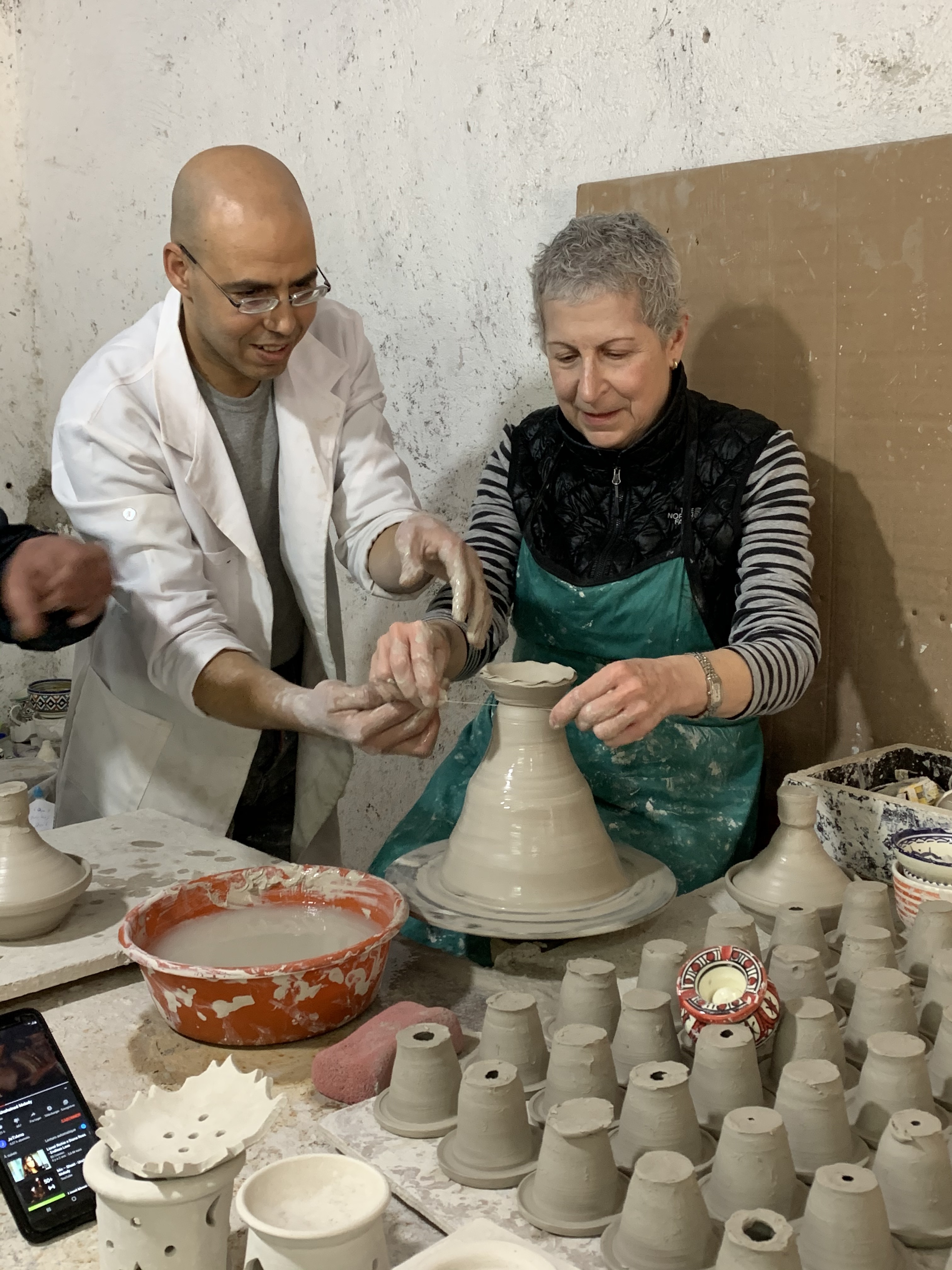
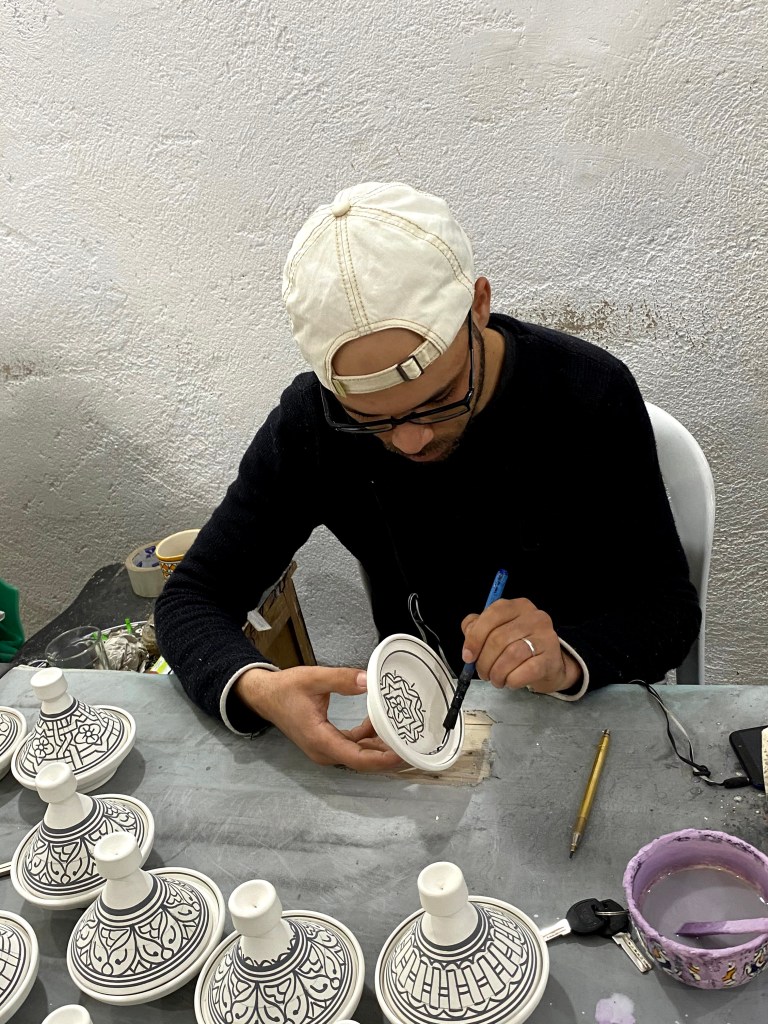
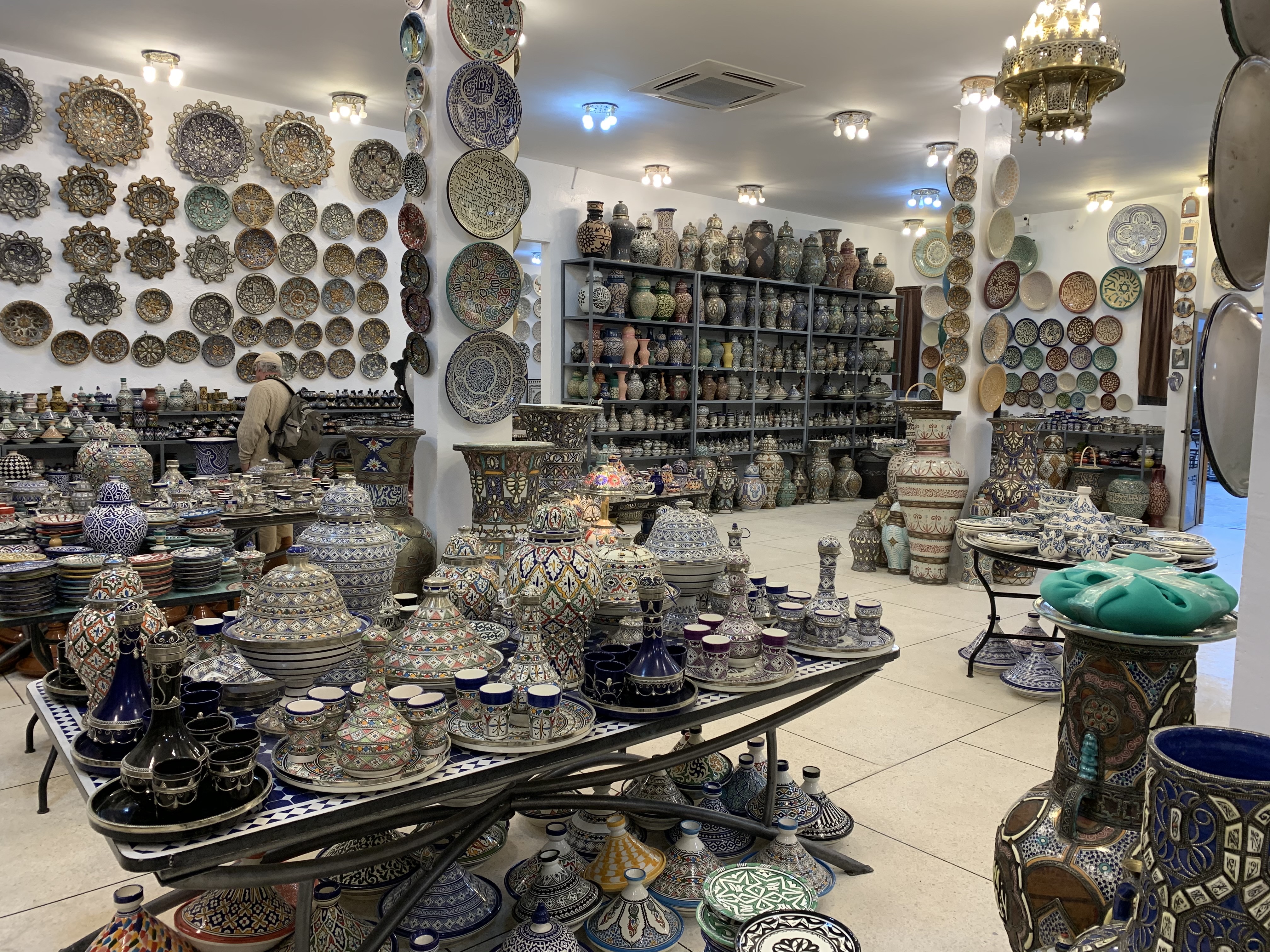
We then had a long bus ride back to Fez. There was an optional tour of a cooperative where they create ceramics and tiles, which we decided to do even though it had been a long day. It was interesting to see how they made ceramics using the same extremely labor intensive techniques they have been using for hundreds of years. For example, they individually chisel the small mosaic pieces even when they are non-symmetrical shapes. Barbara got to try her hand at the spinning wheel, which was fun.

Of course, there was large store selling their products after the tour.

We bought some small candy dishes to be used for candy and nuts during Mah Jong and canasta games.

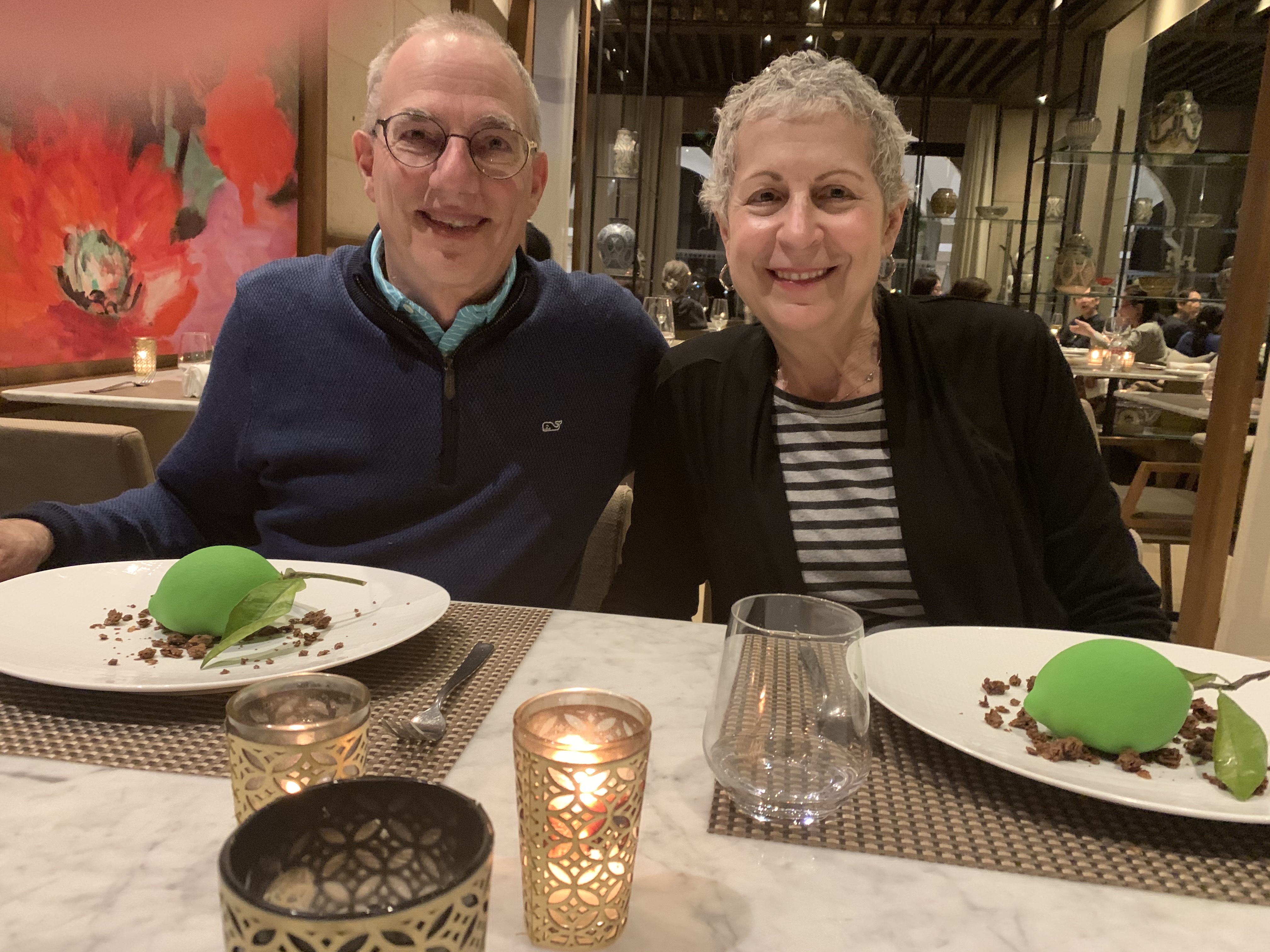
We had 7:00 reservations for dinner. We didn’t get back to the hotel until 7:20, so we were late (I’m good at math). Fortunately we were eating at a hotel restaurant so we just made a quick stop to our room and then went to the French restaurant. We both had sea bass. We had a desert called “The Lime”, which had very green white chocolate on the outside and lime mousse on the inside. It was all very good.

After dinner we went back to the room to pack for the drive to Casablanca tomorrow. This was another great day.

Fez, Morocco. February 18, 2020

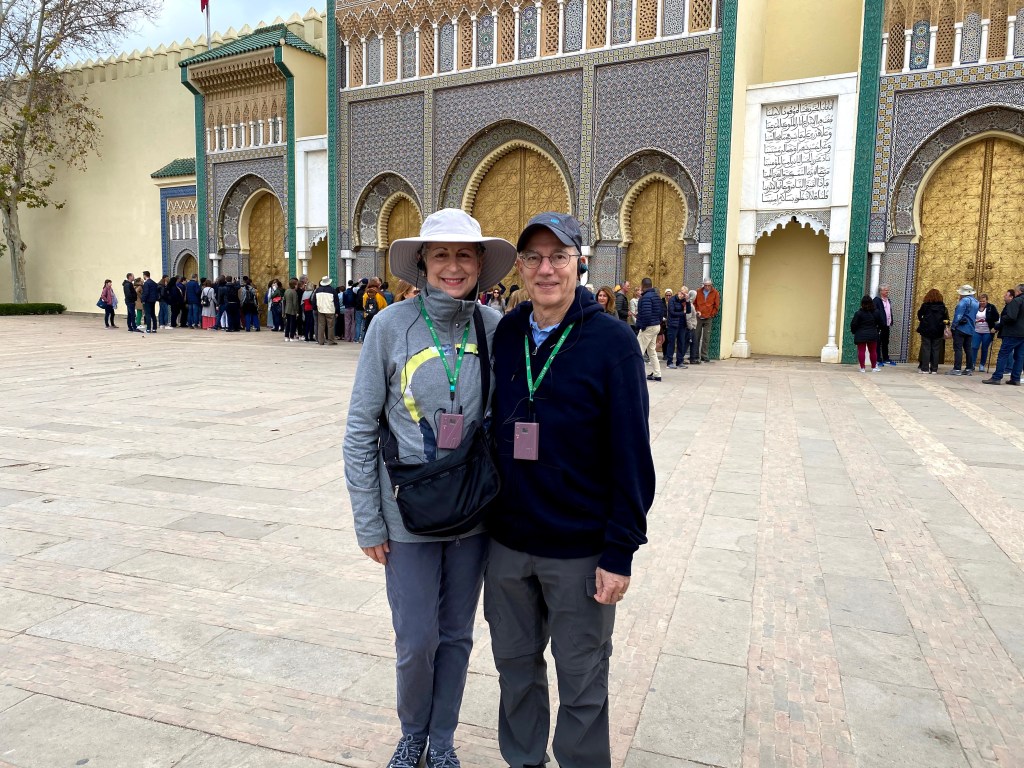
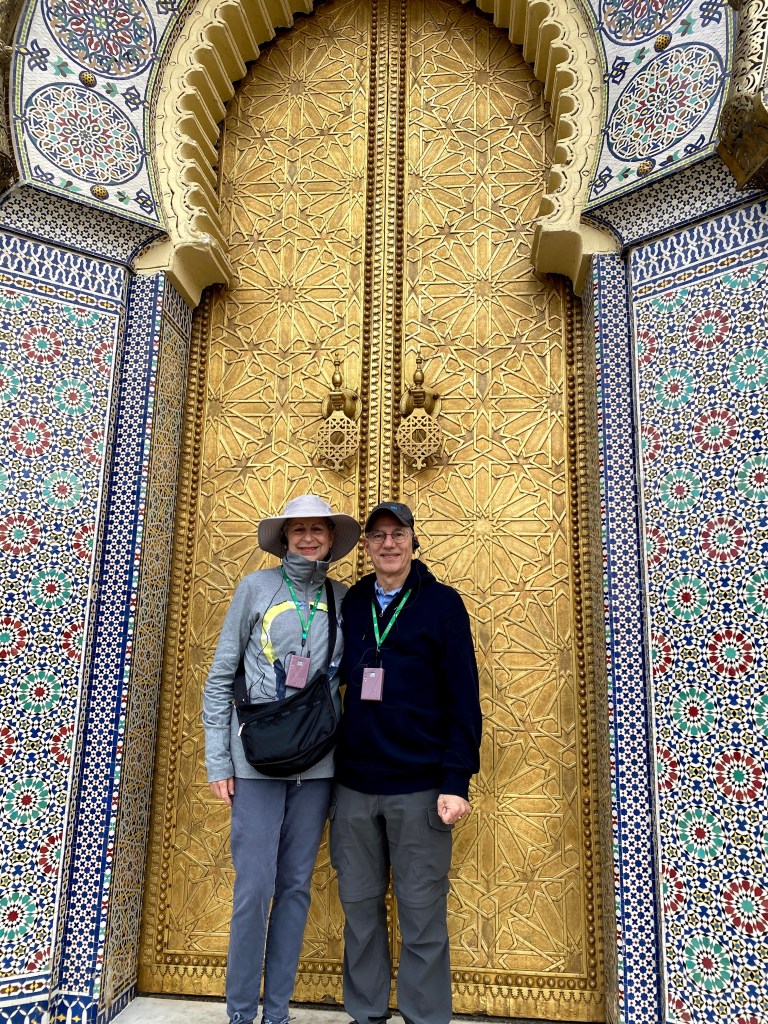
We boarded the bus at 9:00 this morning, which was later than normal, and drove to one of the king’s palaces, where we stopped for pictures.

We then had a choice of three different walking tours – culinary, artisan, or Jewish heritage. We chose the Jewish heritage walking tour, as did almost all of the other Jews on the tour. There were eleven people, including us, on the tour.

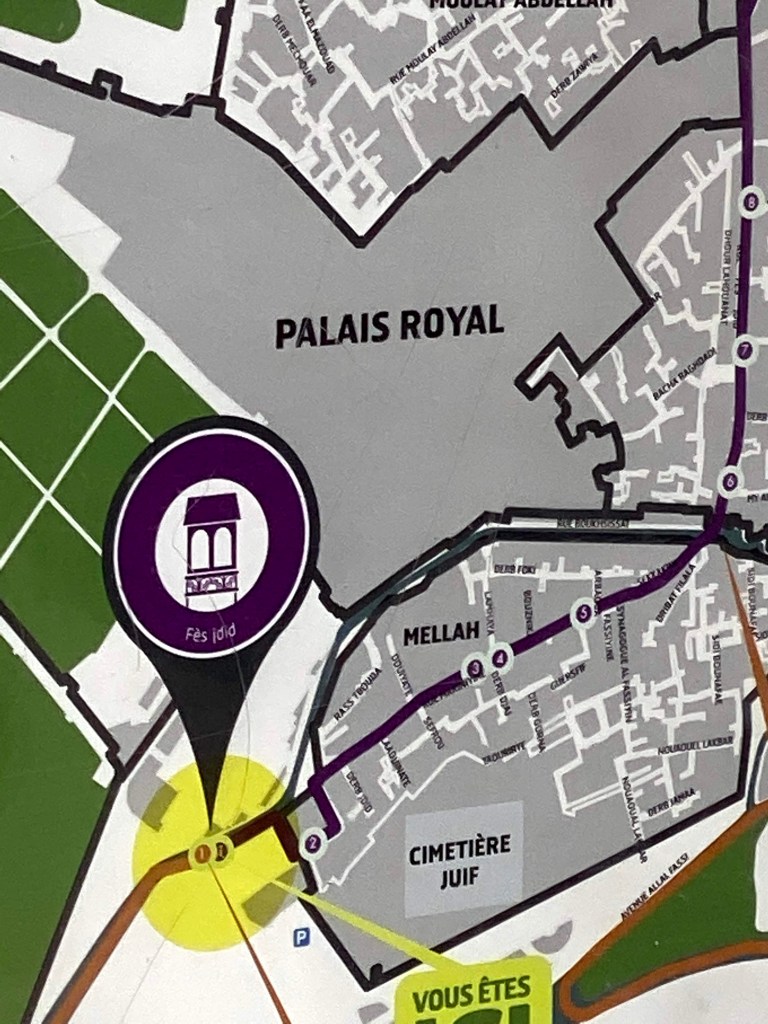
The old Jewish areas of Moroccan cities are called “mellahs”, which means salt. This is because the Jews were active in the salt trade. The mellahs are always right next to the king’s palace, supposedly because many Jews were important advisors to the kings.

There are no Jews currently living in the Fez Mellah, which is now a very poor neighborhood (think of Jewish migration from Chicago’s south and west sides), but there are a lot of artifacts left over, such as indentations from mezuzahs.

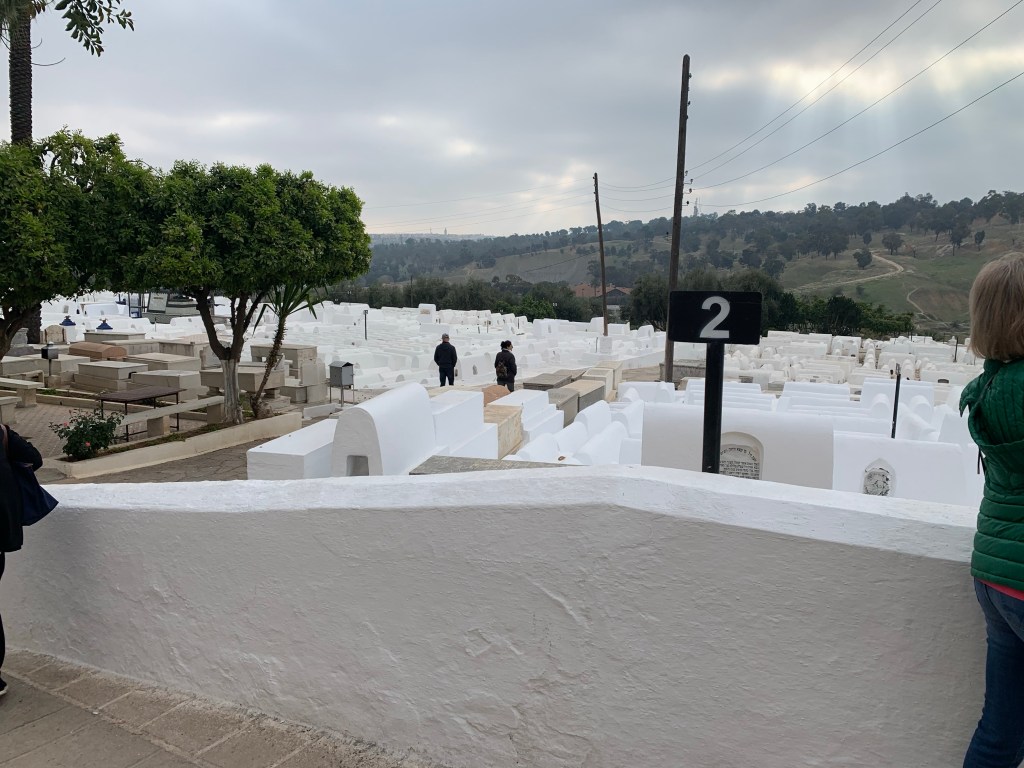
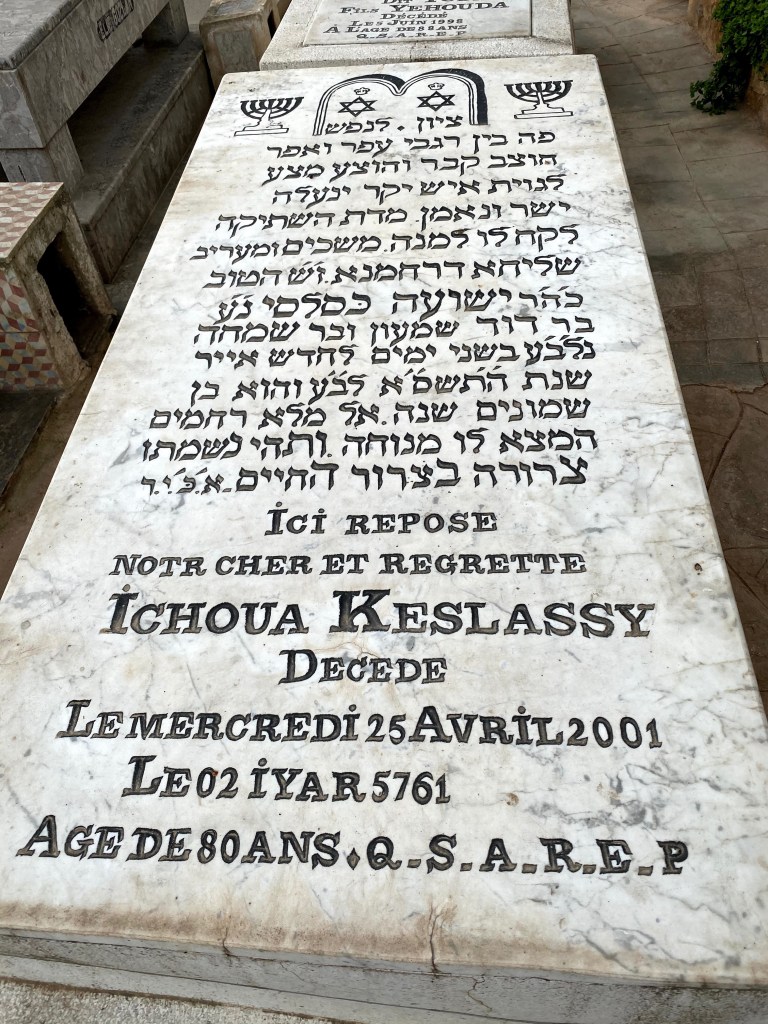
We started out in the Jewish cemetery.

All of the white things are small headstones, which gave it a very different look. It is still an active Jewish cemetery.

During our visit to the cemetery our guide discussed the history of Jews in Morocco. However, the guide was Muslim, and while he seemed knowledgeable he seemed to put a Muslim spin on things. We would have preferred a Jewish guide, but there are only 200 Jews left in Fez so there are none available. For example, he said that there has never been any discrimination against the Jews, and that Moroccan Jews love Morocco, but this doesn’t sound plausible. There used to be around 250,000 Jews in Morocco but most of them left after Israel was formed in 1948. There are now only around 3,000 Jews in the country. He didn’t adequately explain why so many Jews left if they loved their homeland and felt safe there. According to Wikipedia: Riots against Jews from the Arab population and fear that Morocco’s eventual independence from France would lead to the persecution of the country’s Jews, led to a large-scale emigration.

We visited two synagogues that have recently been restored after falling into disrepair. Some wealthy Moroccan Jews paid for much of the restoration.

We then walked back through the Medina to get to the bus, which drove us to a Jewish community center. They served us coffee, tea or soft drinks. They did not serve food, which made me wonder if it was really a Jewish organization. I thought that this part of the Jewish heritage tour was a waste of time especially since we had to take a bus to get there.

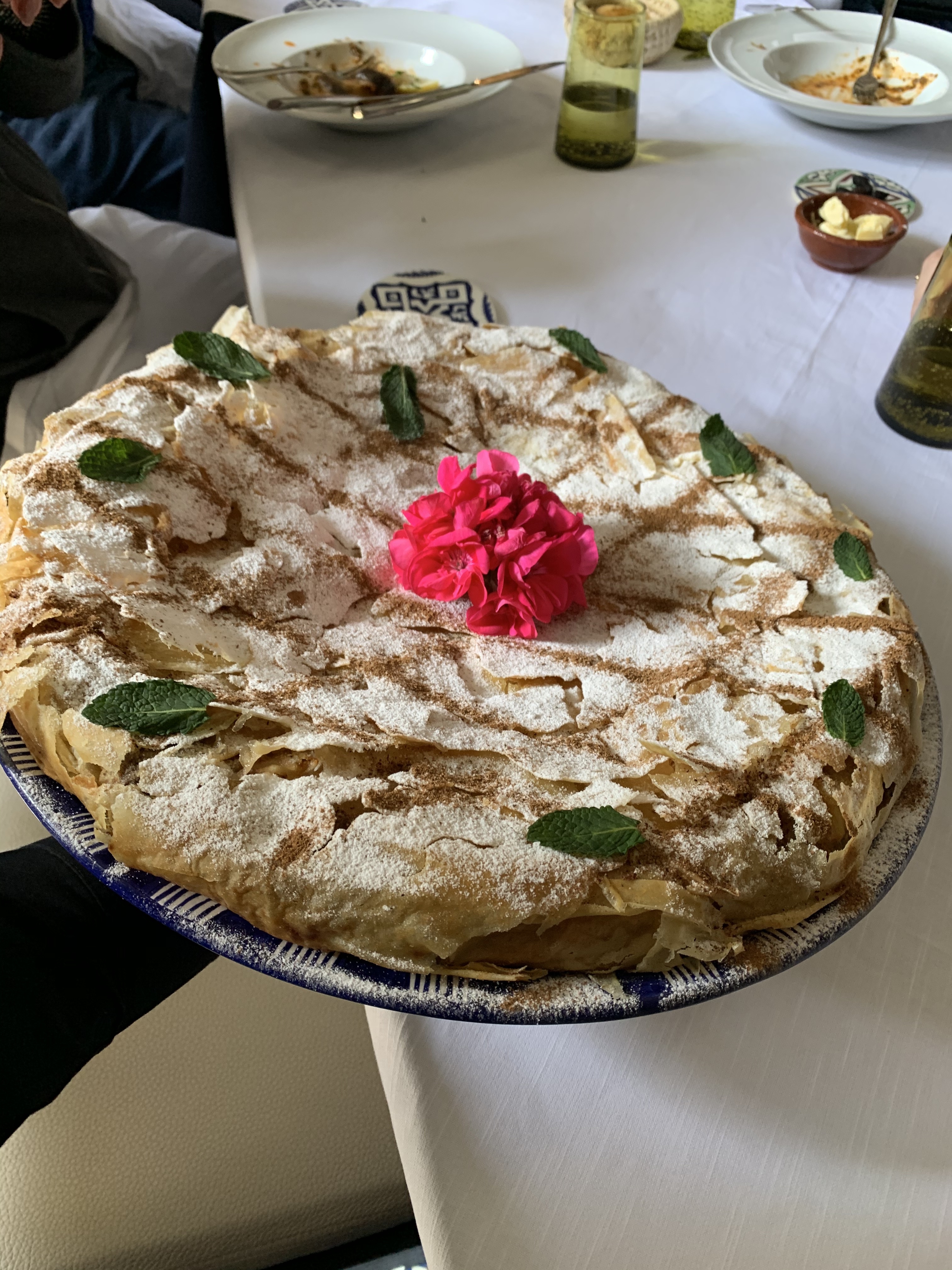
After visiting the Jewish community center for a while we took the bus back to the Medina and had lunch at a riad, which is a home built around a courtyard. There were popular because women were not allowed to be seen unless they were completely covered. We had savory pastilla, which is like a meat pie.

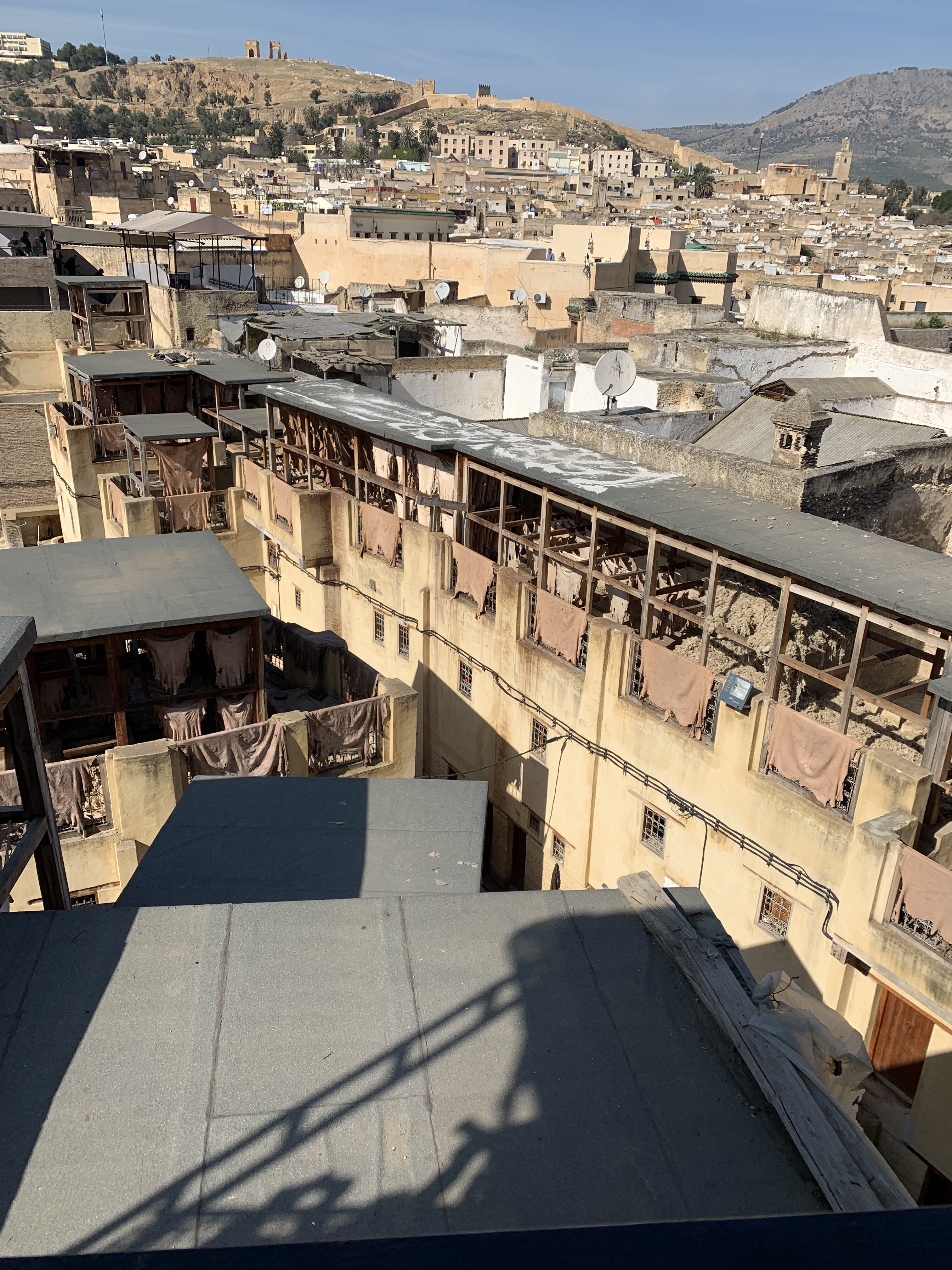
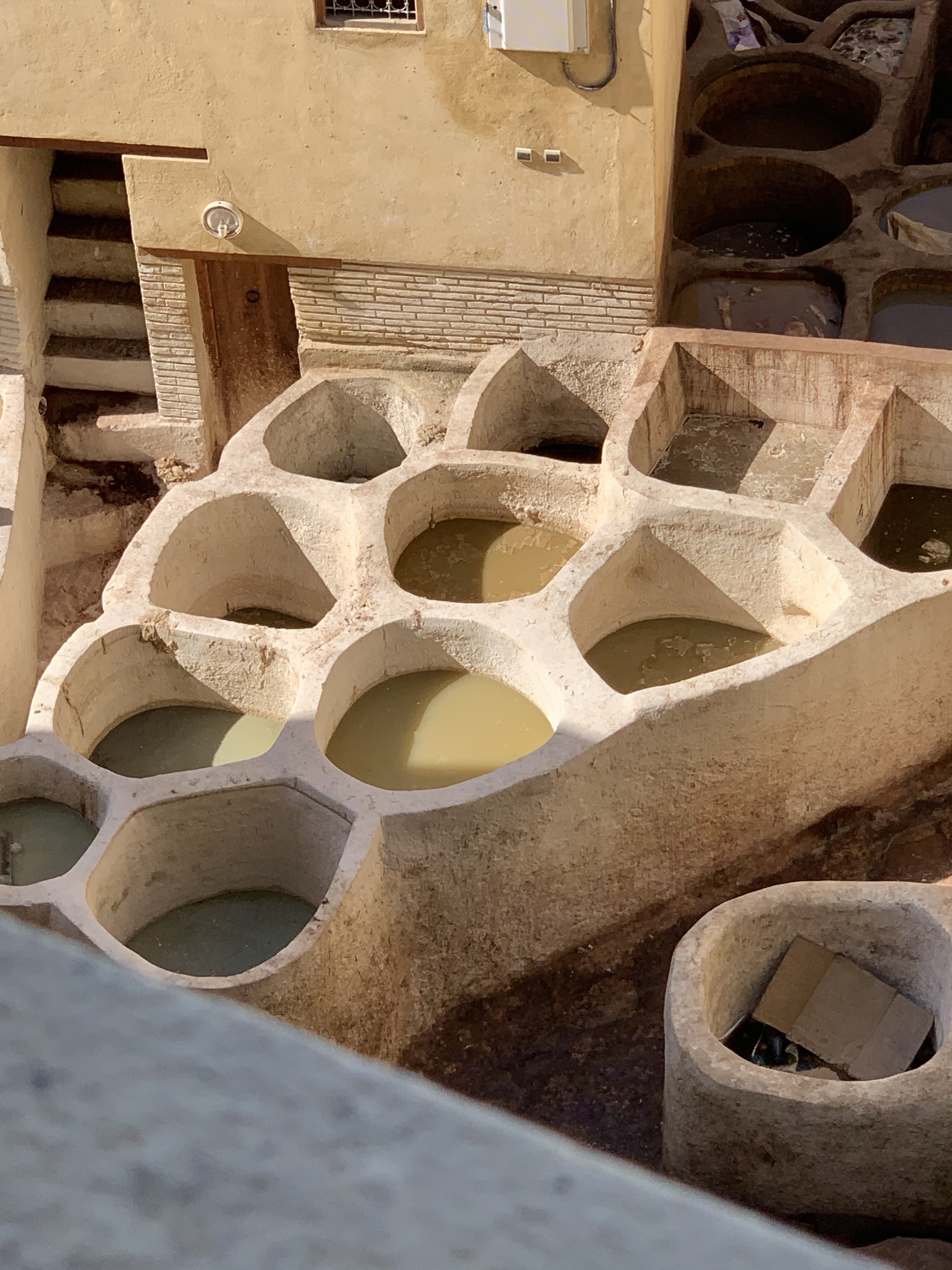
We then walked to a tannery. We went up to the roof and looked down to see how they make leather.

Future pieces of leather
Die vats

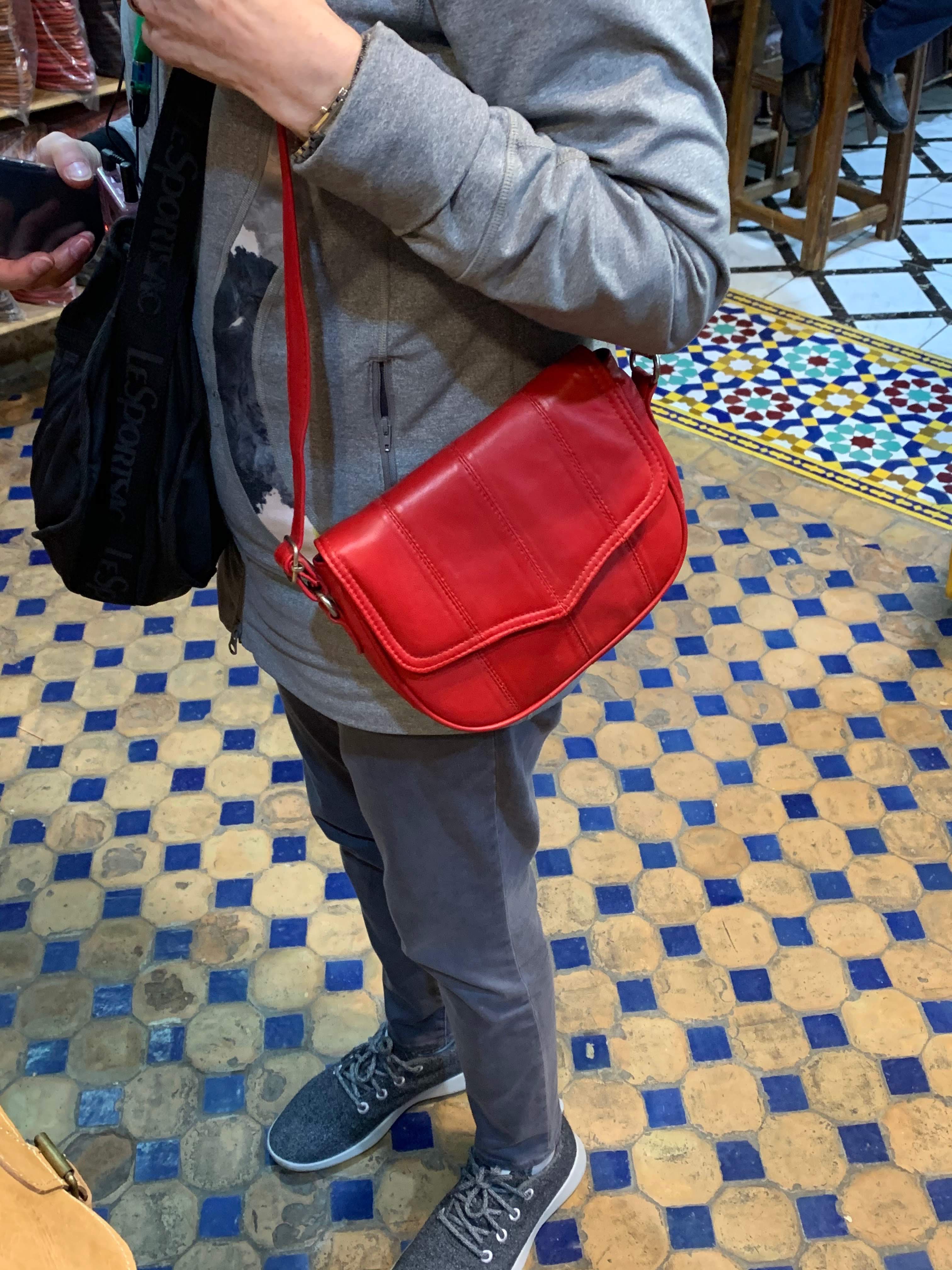
We then looked through their very large leather shop. Rebecca needed a red purse, which put Barbara on a mission. She didn’t want to buy anything without feedback from Rebecca, and messaging was not working so she could not see the picture Barbara was trying to send her.

During the time we were trying to contact her, and it looked like we were not going to be successful, the sales guy was getting more panicky and kept dropping the price. Finally I got on wi-fi and just as we were leaving Rebecca texted “cute”. As we were literally walking out the door the guy said “Give me $60 American”, so we did. It was originally $110.

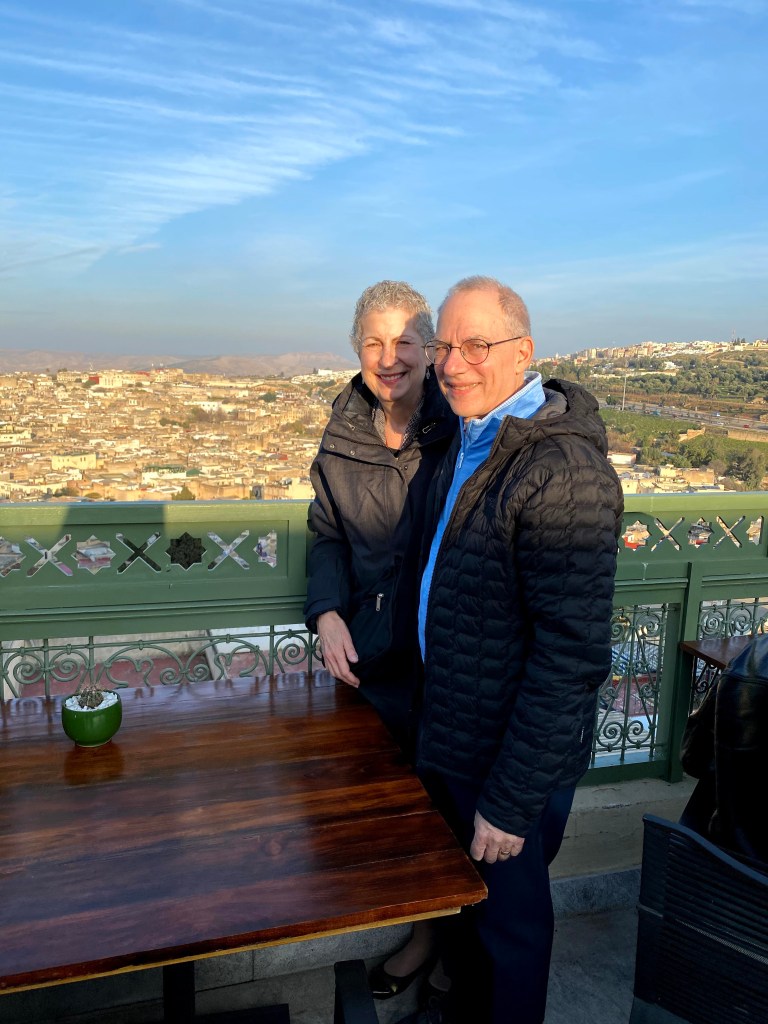
After a short rest back at the hotel we went to dinner. We ate at Palais Faraj, a nice restaurant that was part of a new hotel. We first went up to the roof for a great view.

We then went to eat. The food was excellent. I had lamb and Barbara had fish. This was a good end to a nice day.